
In the ever-evolving world of technology, securing patents for electronic devices is a crucial step for innovators and entrepreneurs. The landscape of rapid technological advancement and intense market competition makes the protection of intellectual property not just a legal formality, but a strategic necessity. Whether you are an experienced inventor or a newcomer to the tech industry, understanding the intricacies of electronic device patents is essential for safeguarding your hard-earned innovations in this dynamic sector.
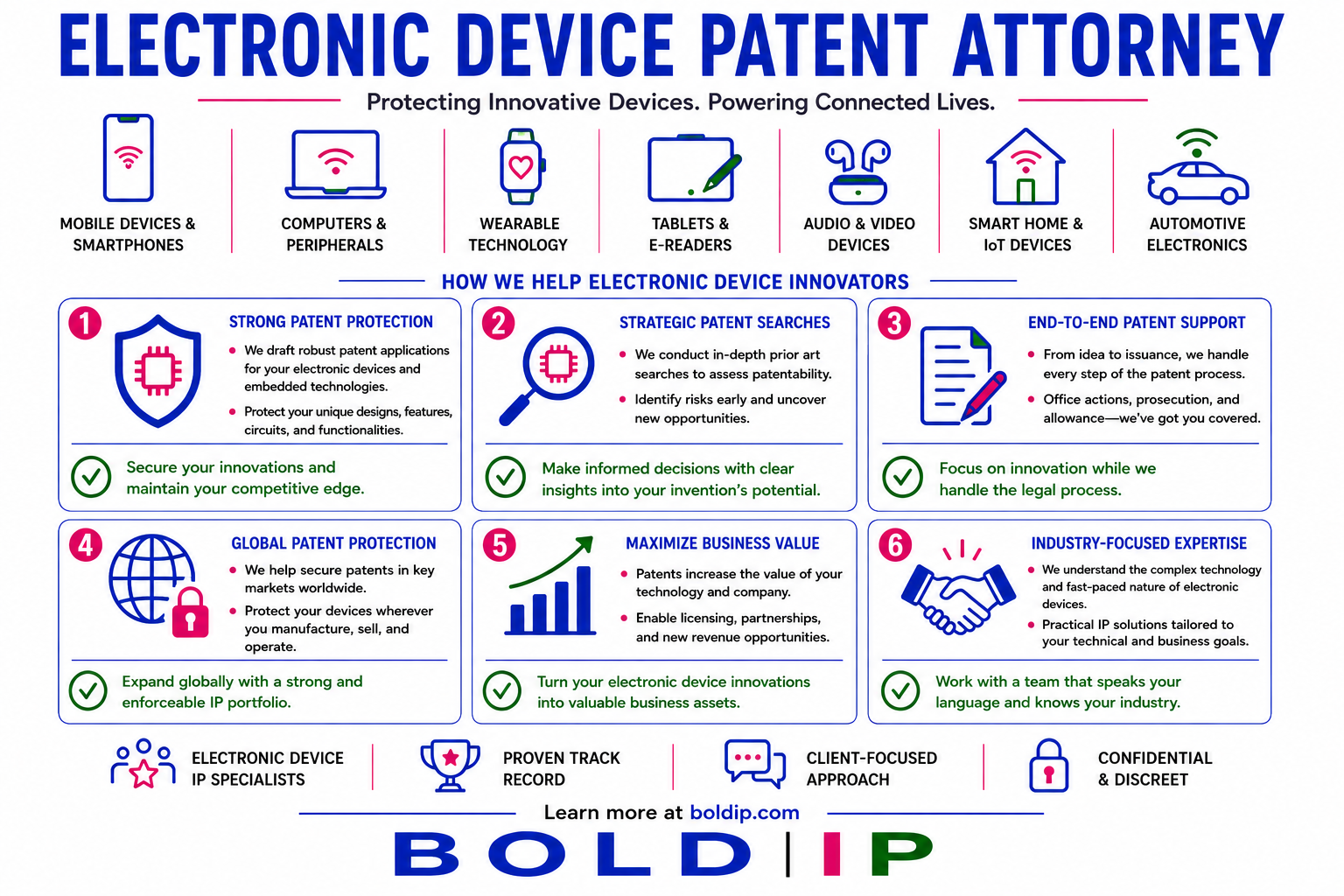

Electronic device patents are a specialized category within intellectual property law, designed to protect unique inventions and innovations in electronics. These patents cover a broad range of products, from small-scale devices like smartphones and wearables to larger systems like home automation devices and even complex machinery. The essence of an electronic device patent is to safeguard the functional and technical aspects of an invention, ensuring that the creator holds exclusive rights to their development.

Obtaining a patent for an electronic device offers significant benefits. Primarily, it grants exclusive rights to the inventor, allowing them to prevent others from making, using, or selling the invention without permission. This exclusivity can be a substantial financial advantage, enabling inventors to capitalize on their innovation through manufacturing, licensing, or selling their patents. Patents also enhance an inventor’s market position, serving as a deterrent to competitors and a valuable asset in negotiations. Furthermore, patents contribute to a positive image of the inventor or company, showcasing their commitment to innovation and technological advancement.

Determining the patentability of your invention is a critical step in the patent process, especially for electronic devices. The key criteria for patentability include novelty, non-obviousness, and utility. Your invention must be new, meaning it should not have been previously disclosed in any public domain. It’s not just about having a great idea; it’s about demonstrating how your idea translates into a practical, innovative solution in the electronics industry. Furthermore, the invention must have a practical application or utility, proving it’s not just a theoretical concept but a tangible, functional device.
Before proceeding with a patent application, conduct a thorough evaluation of these criteria. This often involves researching existing patents and technological advancements in the electronics field to gauge the uniqueness of your invention. Seeking professional guidance can also be invaluable at this stage, as experienced patent attorneys or agents can provide insights into the likelihood of your invention meeting the patent office’s stringent requirements. They can help navigate the complexities of patent law and increase the chances of securing a patent for your electronic device.
Once your electronic device patent application is granted, it’s crucial to actively protect and manage it to maintain its value and enforce your rights. A patent gives you exclusive rights to produce, use, and sell your invention, but it’s your responsibility to monitor the market for any potential infringements. If you find that another company or individual is using your patented technology without permission, you have the legal right to pursue enforcement. This could involve negotiation, licensing agreements, or, in more severe cases, litigation to defend your patent.
Additionally, maintaining your patent involves adhering to post-grant requirements, such as paying maintenance fees at designated intervals to keep your patent in force. Staying vigilant and proactive is essential. It’s advisable to work with a patent attorney who can help monitor potential infringements and guide you through the legal processes involved in defending your patent rights. Their experience can be invaluable in navigating the complex landscape of patent law, ensuring your innovation remains protected and continues to provide competitive advantage in the market.
Staying ahead in the game of patent protection is not just a legal necessity, but a strategic advantage in today’s innovative landscape. Being proactive in detecting and preventing patent infringement protects the core of your creative endeavors and business interests. For qualified guidance and support in navigating these challenges, please reach out to us at Bold Patents for a

Written by Patent Attorney J.D. Houvener, this updated edition provides inventors, entrepreneurs, and startups with practical guidance for protecting ideas, avoiding costly mistakes, and navigating the patent process with confidence.
Whether you’re exploring a new invention, building a startup, or preparing to file a patent application, our team is here to help you move forward with confidence. Get personalized guidance from experienced patent professionals who understand the challenges inventors face.







We are a full-service patent and trademark prosecution firm. We help inventors and entrepreneurs research, protect, and monetize their intellectual property in the marketplace.
Schedule a Discovery Call 601-298-8425
Copyright © 2026 - Bold Patents• All Rights Reserved. Digital Marketing By: 