
Today’s inventors don’t compete only in their hometown—or even their home country.
Products are designed in one country, manufactured in another, sold worldwide, and copied almost instantly.
That means protecting an invention internationally requires more than simply filing a U.S. patent application.
It requires a thoughtful strategy that aligns your intellectual property with your business goals.
The good news?
You don’t need patents in every country.
You need patents in the right countries.
This chapter explains how international patent protection works, how the Paris Convention and the Patent Cooperation Treaty (PCT) fit into the process, and how Alex built a global strategy without exhausting the company’s budget.
Reading Time: 14 minutes
Video: 3 minutes
Alex always envisioned selling the product internationally.
Manufacturing discussions began in Asia.
A distributor expressed interest in Europe.
Canadian retailers started asking questions.
Suddenly, the invention wasn’t just an American opportunity.
It was a global one.
Alex’s first instinct was to patent everywhere.
The patent attorney smiled.
“Let’s start with where your business will actually operate.”
Instead of chasing dozens of countries, they focused on three simple questions:
Those questions shaped an international patent strategy that protected the business without wasting resources.
One of the biggest misconceptions inventors have is believing a U.S. patent protects them everywhere.
It doesn’t.
Patent rights are territorial.
A U.S. patent generally protects your invention only within the United States.
If you want protection in other countries, you typically need to pursue patent rights in those jurisdictions.
The key is deciding where protection creates real business value.
You rarely need patents in every country.
Instead, ask:
Those answers usually identify a manageable list of countries worth protecting.
For Alex, that meant focusing on:
Rather than filing everywhere, Alex invested where the business opportunities—and risks—were greatest.
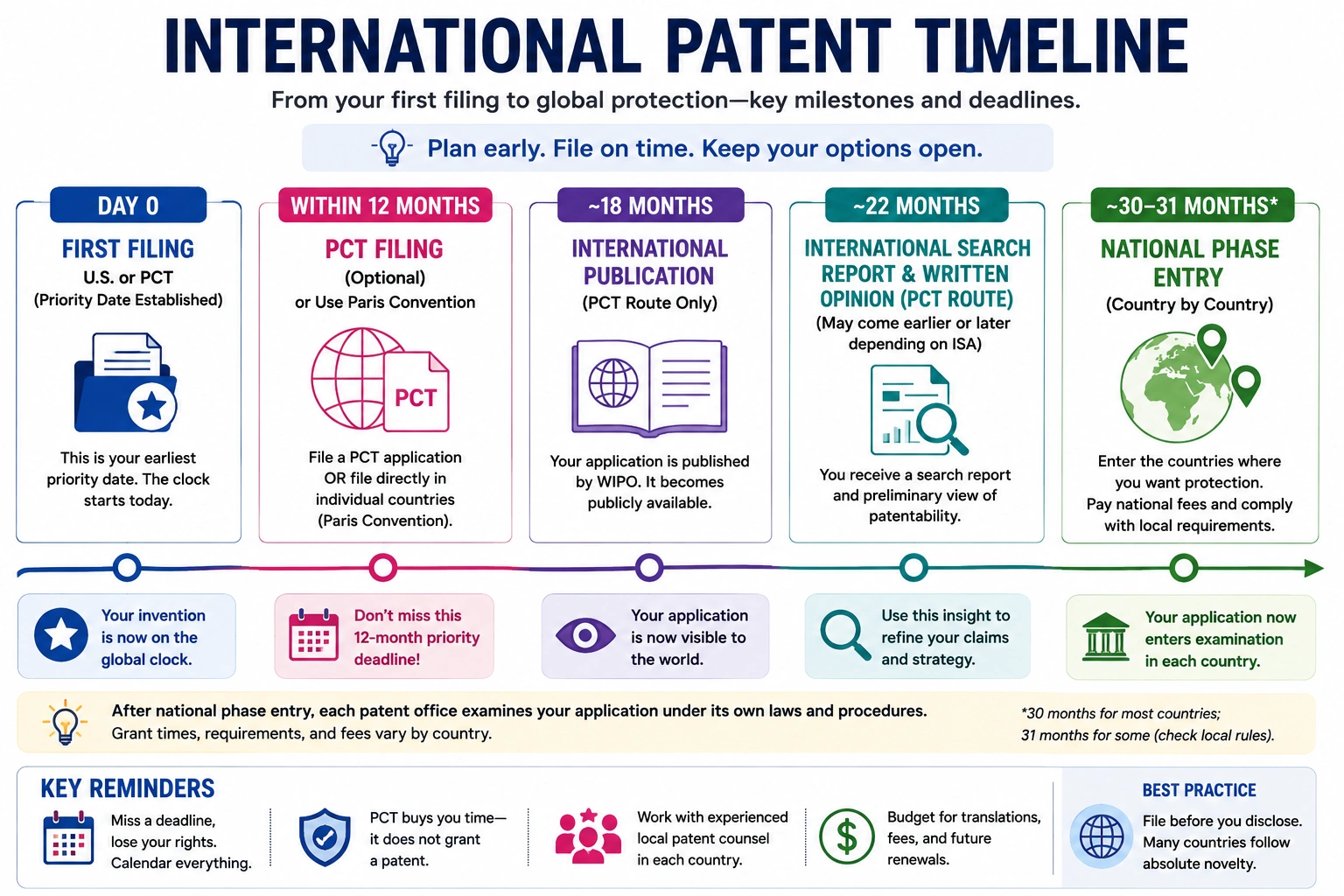
The Paris Convention allows inventors to file in individual countries while claiming priority to an earlier application.
Key features:
Best for businesses with a focused international strategy and a limited number of target countries.
The Patent Cooperation Treaty (PCT) provides another path.
Contrary to popular belief:
A PCT application is not an international patent.
Instead, it gives inventors additional time before deciding where to pursue protection.
Benefits include:
For Alex, the additional time allowed engineering to mature while fundraising progressed before committing to significant international costs.
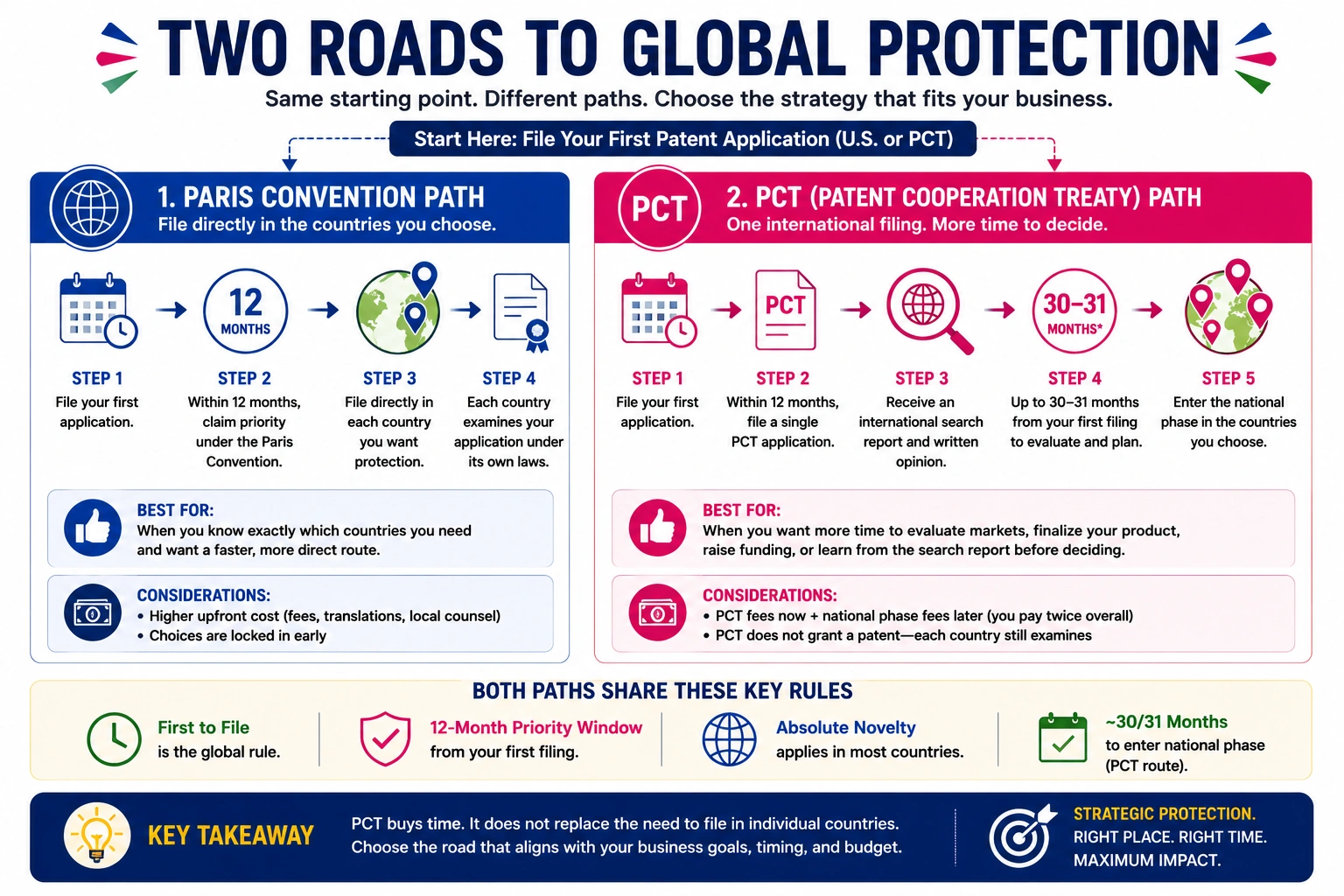
Outside the United States, many countries follow a strict rule known as absolute novelty.
That means public disclosure before filing may permanently destroy patent rights.
Unlike the U.S., many foreign jurisdictions offer little or no grace period.
The safest strategy is simple:
File before you disclose.
Whether you’re exhibiting at a trade show, pitching investors, or launching a product, protecting your invention first preserves your international options.
Alex created a simple framework.
Every country had to satisfy at least one of these criteria:
Where will products be sold?
Where will products be built?
Where are competitors most likely to manufacture or copy the technology?
If a country didn’t fit one of those categories, it probably wasn’t worth the investment.
This disciplined approach prevented unnecessary filings and focused resources where they mattered most.
Strong international patent applications begin with strong U.S. applications.
Alex’s application emphasized:
Rather than rewriting the invention for every country, the application was drafted to “travel well.”
Engineering clarity translates better than marketing language.
Different patent offices evaluate inventions differently.
European examiners often focus heavily on:
Applications benefit from clearly explaining how the invention solves a real engineering problem.
China offers several forms of protection.
Many companies pursue both:
Utility models may issue more quickly and can provide early business leverage while the invention patent continues through examination.
Translation quality is especially important because inaccurate technical translations may weaken future enforcement.
AI can be extremely helpful when managing international portfolios.
Examples include:
However, AI should never replace:
A machine can organize information.
Experienced professionals ensure your patent rights survive in each country.
International patent protection is an investment.
Major expenses often include:
Successful companies budget these costs years in advance.
Just as importantly, they periodically review whether each patent still supports the business.
Sometimes the smartest decision is allowing protection to lapse in countries that no longer align with company goals.
Patent offices frequently learn from one another.
If claims are allowed in one major jurisdiction, programs such as the Patent Prosecution Highway (PPH) may help accelerate examination in other participating countries.
Alex used early examination success to improve efficiency throughout the international portfolio.
The claims weren’t copied word-for-word.
They were thoughtfully adapted to satisfy each country’s legal requirements.
Avoid these common pitfalls:
❌ Assuming a U.S. patent provides worldwide protection
❌ Waiting until after public disclosure to think internationally
❌ Filing in every country instead of the right countries
❌ Relying on machine translation for patent documents
❌ Ignoring annual foreign renewal fees
❌ Forgetting that international patents should support business strategy—not simply increase patent counts
International patent strategy isn’t about collecting flags on a map.
It’s about protecting the places that matter to your business.
Every foreign filing should answer one simple question:
“What business objective does this patent support?”
If the answer is revenue, manufacturing, competitive positioning, or licensing, the investment may make sense.
If not, it may simply become an expensive trophy.
The strongest global portfolios are surprisingly focused.
They protect meaningful markets—not every market.
No. Patent rights are generally territorial. Protection in other countries usually requires additional filings.
No. The PCT streamlines the filing process and preserves options, but each country ultimately decides whether to grant patent protection.
Rarely. Most businesses focus on countries tied to revenue, manufacturing, or competitive risk.
Many countries follow absolute novelty rules, meaning public disclosure before filing can eliminate patent rights.
AI can assist with organization, but professional translation and local patent counsel remain critical for protecting international rights.
✔ Patent rights are territorial.
✔ Most businesses should protect inventions in strategic—not every—markets.
✔ The Paris Convention and PCT offer different international filing strategies.
✔ Filing before public disclosure preserves global opportunities.
✔ International patent strategy should align with business strategy.
🎥 Video: Foreign Patent Rights: Protecting Your Invention Around the World
Learn how international patent protection works, when to use the Paris Convention or PCT, and how to build a global patent strategy that supports your business without overspending.
International patent protection isn’t about filing everywhere—it’s about filing where it matters.
During a Discovery Call, we’ll identify your highest-value markets, discuss international filing options, and develop a global patent strategy aligned with your products, customers, and long-term business goals.
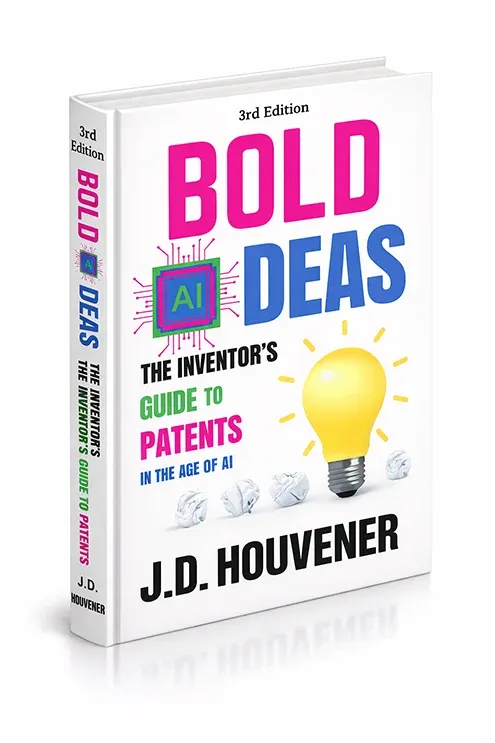
Written by Patent Attorney J.D. Houvener, this updated edition provides inventors, entrepreneurs, and startups with practical guidance for protecting ideas, avoiding costly mistakes, and navigating the patent process with confidence.
Whether you’re exploring a new invention, building a startup, or preparing to file a patent application, our team is here to help you move forward with confidence. Get personalized guidance from experienced patent professionals who understand the challenges inventors face.






We are a full-service patent and trademark prosecution firm. We help inventors and entrepreneurs research, protect, and monetize their intellectual property in the marketplace.
Schedule a Discovery Call 601-298-8425
Copyright © 2026 - Bold Patents• All Rights Reserved. Digital Marketing By: 