
In the business world, patenting unique methods and processes is key to gaining a competitive edge and safeguarding intellectual property. A thorough understanding of what qualifies as a patentable business method, along with the benefits and application process, is vital for entrepreneurs and business owners. Patents in business methods and processes not only protect innovative strategies but also enhance the value and longevity of your business ideas in a rapidly evolving market.

Business methods and processes patents are a specific type of intellectual property protection that covers new, non-obvious, and useful ways of doing business. This can include a wide range of corporate activities, from banking and finance to online retailing and data management systems. The key factor is innovation in the approach or process, not necessarily in the product or service itself. These patents are designed to protect unique methods that a company uses to conduct its business, which can be as critical to commercial success as the products or services they offer.
The scope of what can be patented under business methods and processes is broad and continually evolving. For example, a novel method of processing online payments, a unique system for managing customer relationships, or an innovative approach to logistics and supply chain management can all potentially qualify. These patents ensure that businesses have the exclusive right to use and benefit from their innovations, preventing others from copying or profiting from their proprietary methods. This exclusivity is a powerful tool for maintaining competitive advantage and fostering ongoing innovation within a company.


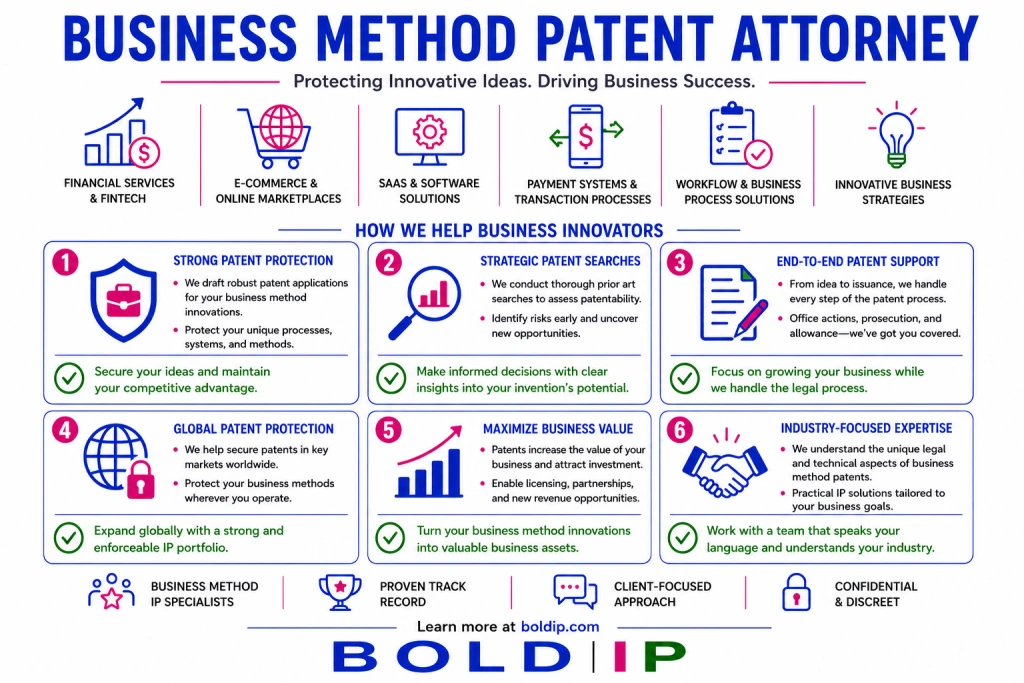
Securing a patent for your business method is more than just a legal safeguard; it’s a strategic decision that reinforces your position in the market. With a patent, you gain exclusive rights, preventing competitors from replicating your unique process, thereby adding significant value to your enterprise. This exclusivity not only protects your intellectual property but also serves as a deterrent, maintaining your distinctiveness in the market.
Further, a patent elevates your business, signaling a commitment to innovation and enhancing your appeal to investors. In competitive industries, it boosts credibility and opens avenues for additional revenue through licensing, offering a blend of financial benefit and proprietary control. Ultimately, patenting your business method catalyzes growth, attracts investment, and cements your standing in the industry.
Deciding whether to patent a business method or process hinges on a few critical factors. First, consider the uniqueness and potential market impact of your method. If it offers a significant competitive advantage or is a key differentiator in your industry, securing a patent can protect this asset from competitors. Additionally, evaluate the longevity and applicability of the method. If it’s likely to remain relevant and useful for several years, a patent can safeguard your long-term interests. However, consider the costs and time involved in obtaining and maintaining the patent. For some businesses, the investment in patenting might outweigh the benefits, especially if the method is likely to evolve rapidly. Balancing these considerations will help determine if patenting is a strategic move for your specific business method or process.
The patent application process for a business method begins with thoroughly preparing your application, which is crucial for its success. This includes a detailed description of your business method, outlining how it is novel, non-obvious, and useful. You must also provide claims, which are legal statements defining the scope of protection sought. These claims must be clear and specific, delineating exactly what is being patented. Additionally, it’s often advisable to conduct a patent search beforehand to ensure that your method is indeed unique. A well-prepared application can significantly enhance the likelihood of approval.
Once the application is prepared, it must be submitted to the appropriate patent office, such as the United States Patent and Trademark Office (USPTO) in the United States. The application will then undergo an examination process, where a patent examiner reviews it against existing patents and publications to assess its eligibility. This process can be lengthy and may require responses to queries or objections raised by the examiner. Successfully navigating through these stages requires a solid understanding of patent law and often the assistance of a patent attorney to address complex legal and technical issues effectively.
Understanding the nuances of patenting a business method or process can be challenging, but it’s a vital step in protecting your innovative strategies. If you’re looking to navigate this path successfully, we at Bold Patents are here to offer our experience and support. Feel free to reach out to us for tailored guidance and to ensure your unique business methods are safe

Written by Patent Attorney J.D. Houvener, this updated edition provides inventors, entrepreneurs, and startups with practical guidance for protecting ideas, avoiding costly mistakes, and navigating the patent process with confidence.
Whether you’re exploring a new invention, building a startup, or preparing to file a patent application, our team is here to help you move forward with confidence. Get personalized guidance from experienced patent professionals who understand the challenges inventors face.







We are a full-service patent and trademark prosecution firm. We help inventors and entrepreneurs research, protect, and monetize their intellectual property in the marketplace.
Schedule a Discovery Call 601-298-8425
Copyright © 2026 - Bold Patents• All Rights Reserved. Digital Marketing By: 