

Patent law has a pivotal role in safeguarding innovation and fostering progress in our rapidly evolving world. As inventors and businesses strive to protect their intellectual property, patents serve as powerful legal instruments to safeguard a market advantage. A U.S. patent attorney can explain the intricacies of patent law and navigate the complex landscape of intellectual property rights with confidence.
The patent filing process can be complex, and you want to hire a patent attorney with the necessary experience, knowledge, and resources. At Bold Patents, our attorneys have years of experience in handling patent applications and navigating the complexities of patent law. We understand many technical and complex industries and the ways that patent law uniquely applies to those fields.
Our attorneys also know how patent law affects innovators in different ways, depending on:
Throughout your case, we can provide detailed and knowledgeable counsel about the ideal ways to protect your invention. We can take the time to understand your unique circumstances, along with your business or other financial goals. With this information, we can then tailor our legal services to your needs and the field in which you are innovating.
Patents are exclusive rights granted by a government to inventors, providing them with legal protection and an incentive to create their inventions. A patent is a strong tool that grants inventors a monopoly over their inventions for a limited period.
To qualify, an invention must meet certain criteria, including novelty, usefulness, and non-obviousness. Patents cover a wide range of inventions, from groundbreaking technological advancements to unique designs. Different types of patents exist, each tailored to specific types of inventions. There are utility patents, design patents, and plant patents.
The patent application process involves a thorough examination of the invention’s novelty and non-obviousness. A prior art search is conducted to see if the invention is already publicly disclosed or obvious to someone skilled in the field. The application requires detailed descriptions, including claims that define the scope of the protection being requested.
There are different patents available for those seeking a patent for their ideas and inventions. These include:

The most prevalent kind of patents are utility patents, which cover novel and practical apparatuses, processes, compositions of matter, and improvements made to them. These patents safeguard inventions with particular, useful applications and cover an invention’s method of operation.

A useful item’s ornamental design is protected by design patents. These highlight an object’s aesthetic qualities. This kind of patent is essential for sectors like fashion, furniture, and consumer electronics, where a product’s look greatly influences the decision of the consumer.

Asexually reproduced plant varieties that are novel and distinctive are eligible for plant patents. A plant variety must be new, obscure, and asexually propagated by techniques such as tissue culture, grafting, or budding to be eligible for a plant patent.

Rather than being a specific type of patent, this is an early filing tool that allows you to start the process before filing a plant or utility patent. Inventors can get an early filing date through a provisional patent. Then, inventors can file the complete patent application within a year by submitting a provisional patent application.
Inventors who require more time to improve their innovation or get funding can benefit from this kind of application. The term “patent pending” may be used by the inventor to denote that a patent application is being processed during this time.
The United States Patent and Trademark Office (USPTO) has an inventory of nearly 1.25 million patent applications as of early 2026. There are 789,483 unexamined applications for utility, plant, and reissue patents, along with 67,277 unexamined applications for design patents.
Certain qualifications must be met to secure a patent. These include:
The patent application process involves several steps to secure legal protection for an invention. These include:
According to the USPTO, the process of reaching a final decision takes 27.90 to 44.80 months from the initial filing date, on average, as of February 2026.
Once a patent is granted, the patent holder has exclusive rights to their invention. These typically include the right to prevent others from making, using, selling, or importing the patented invention without permission. This exclusivity provides inventors with a valuable tool to:
Patent rights are time-limited, typically lasting between 15 and 20 years from the date of filing, and they provide inventors with a temporary monopoly over their invention.
Enforcement of patent rights is crucial for making sure the exclusive rights granted to patent holders are respected and upheld.
In the case of patent infringement, the patent holder can take legal action to protect their rights. This often involves initiating a legal claim, where the patent holder seeks remedies, such as injunctions to stop the infringing activities and financial compensation for damages caused.
Once you have successfully secured patent protection, it is important to enforce and assert your rights. The first step in enforcing a patent is keeping an eye out for possible infringement. To prevent unlawful use of their patented technology, patent holders should:
Frequent monitoring lets you engage in prompt legal action, as it can identify possible infringers. Some steps to enforce a patent include:
Sending a cease-and-desist letter to the alleged infringer is frequently the first action taken when patent infringement is discovered. This letter may include a demand for damages or compensation. It can also formally request that the infringer cease using, producing, or selling the patented invention.
A letter requesting the cessation of infringement acts as a warning and gives the infringer a chance to settle the matter out of court.
If informal methods fail, the patent holder might have to file a civil claim. Filing a case in a court that has authority over patent concerns is known as patent litigation.
To determine if infringement has taken place, the court will examine all available information, including the patent claims and infringing conduct. Professional witness testimonies and lengthy legal arguments are necessary in litigation, which can be complicated and expensive. At Bold Patents, we help with steps prior to litigation, which are less costly. If litigation is needed, we have a network of patent litigators we can connect you with.
Patent issues are frequently settled by agreements for licenses or settlements. A settlement could include money exchanged or other conditions that the parties agree upon.
The claimed infringer may utilize the patented technology via license agreements, provided that certain requirements are met, such as paying royalties or licensing fees. Settlement and licensing can be a quicker alternative to litigation.
Recent developments in patent law have been heavily influenced by advancements in technology, such as:
The rise of software and artificial intelligence (AI) has posed unique challenges for patent law. Courts and patent offices around the world have grappled with defining patent eligibility criteria for software-related inventions. Similarly, AI-generated inventions raise questions regarding inventorship and the ownership of intellectual property rights.
Another area of recent focus in patent law is the biotechnology and pharmaceutical sectors. Advances in genetic engineering, gene editing technologies, and personalized medicine have presented novel patentability issues and raised ethical concerns.
Courts have had to determine the boundaries of patent-eligible subject matter in these fields, particularly when it concerns naturally occurring biological materials and diagnostic methods. Striking a balance between incentivizing innovation and ensuring access to healthcare remains a key challenge in patent law.
Emerging technologies, such as 3D printing, are also impacting patent law. These technologies introduce new considerations, including data security and the challenges of enforcing patents in a digital and globally connected landscape.
As these technologies continue to evolve, patent laws and regulations will need to adapt to provide effective protection and encourage innovation, all while addressing the unique issues they present.
The role of a patent attorney is to represent and guide you throughout the patent filing process and defend your patent rights. The attorneys at Bold Patents can assist you in the various stages of the patent process, from conducting prior art searches and assessing patentability to preparing and filing patent applications.
We possess the skills to draft strong patent claims and specifications. Our firm can accurately describe your invention while enhancing its scope of protection. We are also adept at navigating the examination and prosecution process, responding to office actions, and advocating for our clients’ interests.
Our guidance and advice can enable our clients to have the highest possible chance of securing a patent. In addition, once you obtain your patent, we can enforce your rights and navigate the intricacies of the legal system.
The key difference between a patent attorney and a patent agent is that a patent attorney can provide you with legal advice, as they have passed the legal Bar examination to be licensed in the state where they practice.
Both patent attorneys and patent agents:
An attorney can handle certain aspects of patent protection that a patent agency cannot. Often, a patent lawyer has a master’s or doctoral degree, including a Juris Doctor (J.D.). While a patent agent might have these educational qualifications, they don’t always. Because a patent attorney carries a J.D., they can:
In the United States, several factors can affect the cost of hiring a patent lawyer, including the intricacy of the innovation, the attorney’s fee structure, and the location of the firm. Generally, patent attorneys bill either hourly for more involved tasks, like patent prosecution and research, or flat fees for basic services, like application filing.
Due to the intricacy of patent rules, court processes, and professional involvement, patent litigation in the United States can be exceedingly costly. Legal fees, professional witnesses, and court expenditures all contribute to the total cost of the case. These costs vary greatly based on the case’s size, the length of the trial, and whether it settles out of court or goes to trial.
The selling price of a patent can fluctuate, depending on the patent’s value, market demand, industry relevance, and potential profitability. Factors such as the technology’s stage of development, its commercial application, and the strength of the patent also influence the price. Some patents may sell for relatively modest sums, while others could command significant amounts if they are highly sought after.
Since anybody may submit their own applications through the U.S. Patent and Trademark Office, you do not need a lawyer to seek a patent. However, many inventors consult a patent attorney to enhance their chances of success and seek the appropriate protection of their ideas, given the intricacy of patent law and the exacting requirements for preparing claims.
Contact us today to schedule a discovery call about your patent case. Let us show you how we can protect your innovative creations.
If you’re ready to take the next step in protecting your intellectual property by using our online patent services, call 601-298-8425 or schedule your appointment online.
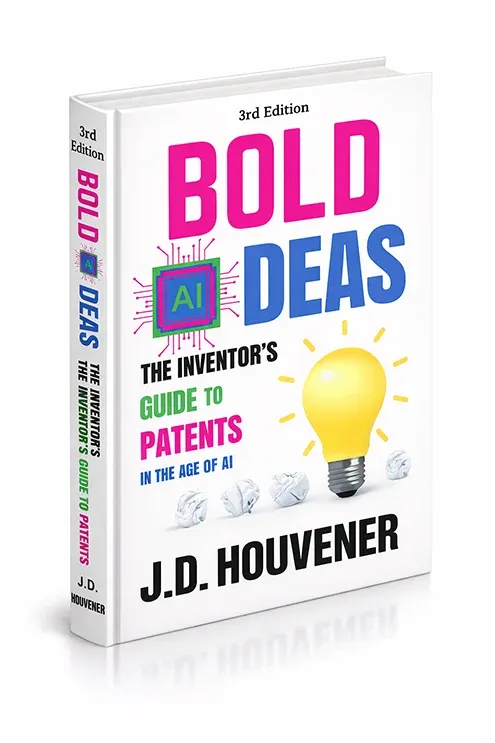
Written by Patent Attorney J.D. Houvener, this updated edition provides inventors, entrepreneurs, and startups with practical guidance for protecting ideas, avoiding costly mistakes, and navigating the patent process with confidence.
Whether you’re exploring a new invention, building a startup, or preparing to file a patent application, our team is here to help you move forward with confidence. Get personalized guidance from experienced patent professionals who understand the challenges inventors face.







We are a full-service patent and trademark prosecution firm. We help inventors and entrepreneurs research, protect, and monetize their intellectual property in the marketplace.
Schedule a Discovery Call 601-298-8425
Copyright © 2026 - Bold Patents• All Rights Reserved. Digital Marketing By: 