Before you can even consider applying for a trademark, you’ll want to consider completing a trademark search. Without one, you could complete the application and pay all that money only to learn that the name you’ve chosen isn’t eligible for trademark protection, and it’s already registered by someone else! A trademark search service will help you locate those possible conflicts before you run into that problem.
Not all trademark search services are the same. There are a few different kinds that will give you a basic understanding of the eligibility of your name or other trademarked materials. At Bold Patents, we offer more than trademark search services. We can also provide legal opinions if you run into any trouble. We have years of experience in trademark and intellectual property law, and can leverage that to your benefit.
There are several basic kinds of marks that you may be considering for trademark protection. Some common forms of marks that can be trademarked include:

A wordmark is anything letter-based or number-based, like a business or product name or a slogan. A wordmark has no claim to the logo design.

A design mark covers the way something looks. The most common example is a logo, but other things like typefaces or specific color schemes may be part of this as well. They can apply to symbols, images, and other designs that represent the company.
A combination mark is a trademark combining wordmarks and design marks into a single mark.
A slogan mark is a form of a wordmark, when a phrase or tagline is important to the business and its brand.
A sound mark applies when the trademark is for a specific sound that is associated with a company.
A trade dress is a trademark that applies to the visual appearance of a product or its packaging when it is distinguished from competitors.
It’s far easier to search existing wordmarks than it is to check on designs. Most online databases easily support word-based searches, but design searches are trickier. However, there are still several methods that can make the search easier. When you hire Bold Patents, we usually recommend that newer business owners focus on protecting their wordmarks before moving to design mark protection. But either way, they’ll need to search.
Conducting any trademark search can be complicated, as you will need to review the logos, slogans, wordmarks, and many other trademarks of any business, particularly those in your industry. Conducting this search might include:
Another company’s trademarked logo or word might not be an exact match for yours, but it could still prevent you from securing a trademark. The USPTO could reject your trademark if it would create confusion because of its similarity to a registered trademark.
As of the second quarter of 2026, the USPTO reported 3.6 million active trademarks. In the fourth quarter of 2025, there were 220,595 new applications. There is a lot of ground to cover in a search to determine if you can trademark your business’s logo, slogan, or other mark. When you buy trademark search services, it is much easier to determine if your logo is trademarkable.
You can only trademark something if you’re the only person using the name in that specific industry. For example, you could open a grocery store called “Apple Grocery Store”, but you would face legal issues if you opened a printing service called “Apple Printers.”
Your name also can’t be similar to someone else’s, where it could be easily confused with that brand. It’s this area where many people stumble. They search their mark and find no exact matches, so they assume they’re safe. But even a close match can get you in trouble if you’re in the same industry.
That’s why there is such a market for online trademark search service providers. It’s not just about the search. It’s about the opinion you can get from experienced patent search services.
Here are a few different types of trademark search options.
Pros | Cons | |
Self ServiceYou use the USPTO’s search database (TESS) to locate names like yours. |
|
|
DatabasesYou use the database of a private company after paying a fee. |
|
|
Online Legal ServicesYou pay an online legal service provider to perform the search and return a basic opinion. |
|
|
Full-Service FirmsYou work with a full-service legal firm that will complete a comprehensive search and then provide a detailed legal opinion. |
|
|
At Bold Patents, we strive for transparency. If you have a very unusual name, no design marks, and little competition, you may be safe going with one of the free or lower-cost options. If that’s the case, we’ll tell you so.
However, there are three times we always recommend you consult with an experienced legal expert like Bold Patents:
In those cases, you need a detailed legal opinion. Trademarks are a tricky part of the law that can create a lot of expenses for you if they’re not handled right. That’s why we take a collaborative approach with our trademark clients, to walk them through the risks and benefits of protecting their intellectual property.
Trademark classes are used by the USPTO and internationally to organize the different goods and services in which different companies or products exist. This makes the process of searching the databases easier, and also determines other aspects like fees. There are 45 classes of goods or services. Some of these include:
It’s important to identify the goods or services that you are operating in, as this is where you should first search for overlapping trademarks. When you conduct a trademark search, you can’t just review the class that your company or product is in, but also review coordinated classes that are related to your industry.
At Bold Patents, we offer trademark search services and the information you need to protect your IP. If you’re ready to take the next step, connect with us on our contact page or call 866-797-9521 for more information.
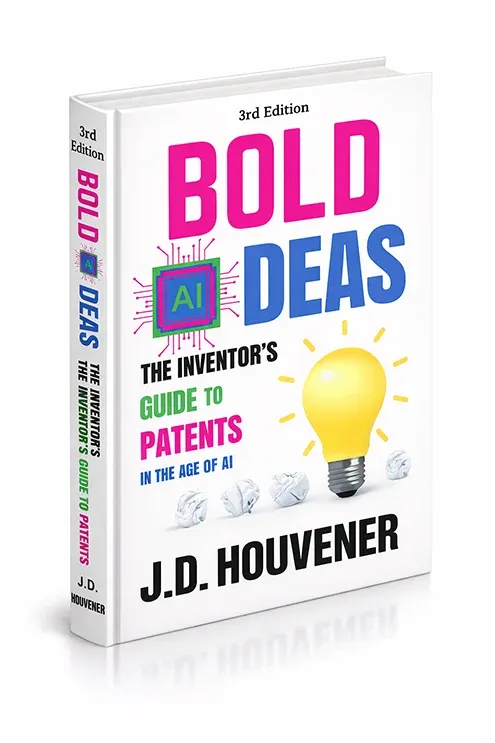
Written by Patent Attorney J.D. Houvener, this updated edition provides inventors, entrepreneurs, and startups with practical guidance for protecting ideas, avoiding costly mistakes, and navigating the patent process with confidence.
Whether you’re exploring a new invention, building a startup, or preparing to file a patent application, our team is here to help you move forward with confidence. Get personalized guidance from experienced patent professionals who understand the challenges inventors face.

We are a full-service patent and trademark prosecution firm. We help inventors and entrepreneurs research, protect, and monetize their intellectual property in the marketplace.
Schedule a Discovery Call 601-298-8425
Copyright © 2026 - Bold Patents• All Rights Reserved. Digital Marketing By: 