

Transportation and logistics are a significant sector in our current economy, for both consumer and commercial needs. In these fast-growing sectors, innovation enhances companies’ ability to meet these needs and provides them with a crucial competitive advantage in the field. When you create an invention, you need to file for patent protection. A transportation & logistics patent attorney can help you secure your rights to groundbreaking creations.
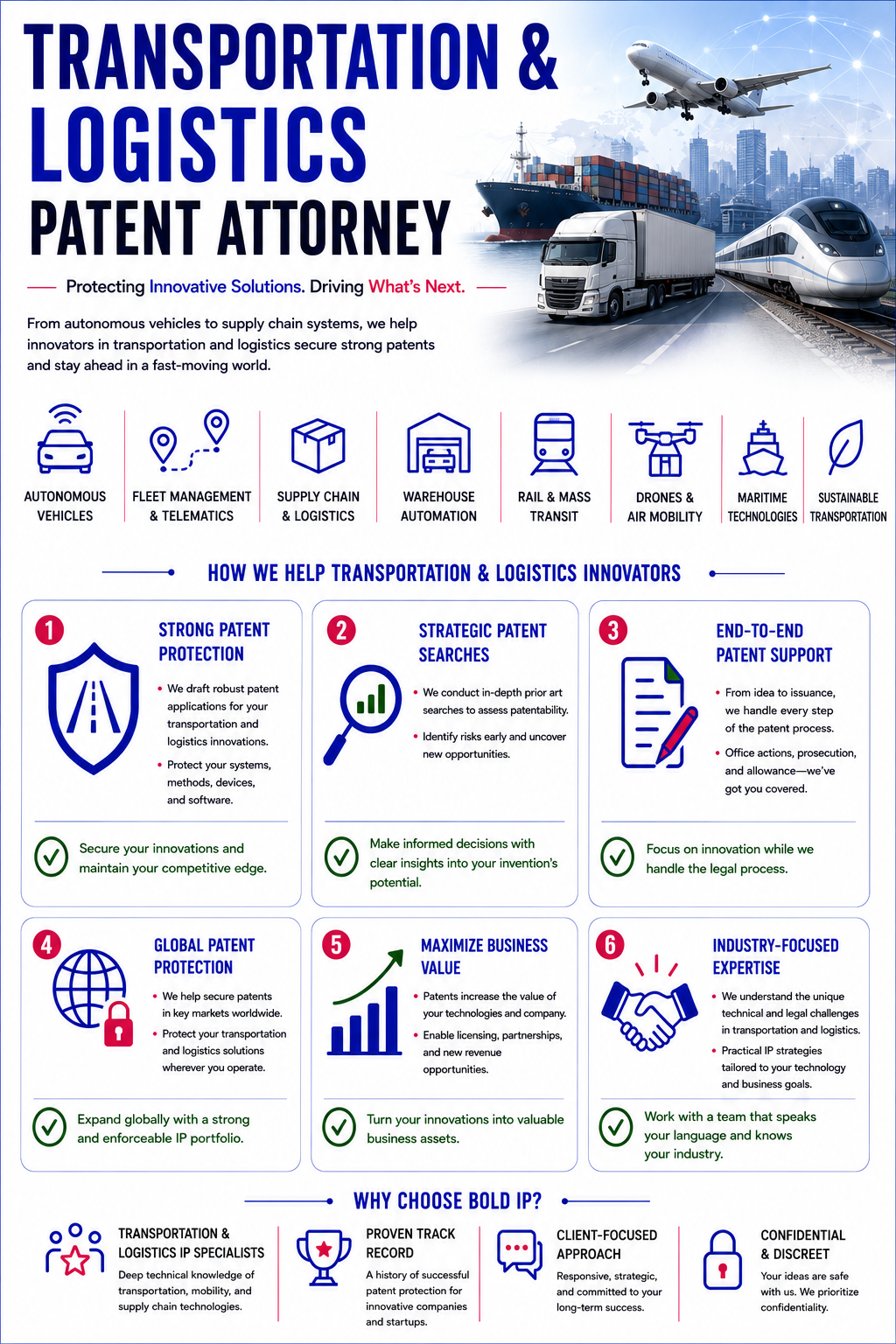
Logistics and transportation patents encompass innovations such as improved package tracking systems and autonomous vehicle systems. You can get patent protection whether you are an established company, a new start-up, or an independent innovator.
When you secure patent protection, you have the right to prevent infringement, meaning you can take action to prevent others from selling, making, and using your invention without your permission. If you don’t have patent protection, you can face infringement battles and lose market share and revenue.

There are unique challenges in securing transportation and logistics patents, including:
However, there are also unique opportunities in areas such as:
AI in logistics patents is another element that’s both an opportunity and a challenge. AI can be used in transportation and logistics innovations for analysis and predictions, inventory management, autonomous navigation systems, and real-time management for logistics. It’s crucial that AI-fueled innovations are properly and fully protected.
Innovation in these fields occurs in many forms, including:
They can be created by start-ups, existing research and development departments, and individual inventors.
When you file for a patent, you file with the U.S. Patent and Trademark Office (USPTO) in one of three types of patents. Transportation and logistics innovation patents may include:

Utility patents. These patents are designed to protect new or improved processes, machines, articles of manufacture, or compositions of matter. This may include a new system to automatically sort packages or a software algorithm to optimize shipping and delivery routes.

Design patents. These patents are for the ornamental design of or applied to an article of manufacture. This includes the design and appearance of a delivery drone, the shape of a unique shipping unit, or the aesthetic look of a modular cargo container.

Plant patents. These patents apply to new plant varieties that are invented or discovered through asexual reproduction. These are less common patents in the transportation and logistics sector. However, some inventions may require plant patents, such as new plant varieties used for sustainable packaging or as part of a fuel system.
Transportation, logistics, and supply chain patent protection come in many forms, including:
There are numerous other patents that can be filed for innovative, useful, and non-obvious inventions in the field. It’s essential to understand the options for patent protection in the transportation and logistics sector. There are currently 814,500 unexamined patent applications in the USPTO’s inventory as of May 2025, and there are 805,773 applications in the inventory that are for utility, plant, and reissue patents.
Some common innovations in transportation and logistics include warehouse automation patents, autonomous vehicle patents, AI-powered shipping route optimization software patents, and other solutions for smart warehousing. Bold Patents can help you secure patents for your new and useful inventions.
AI-generated work and its patentability in an evolving area of law, so an invention generated with AI may or may not qualify for patent protection. The patentability may rely on the amount of human contribution. At Bold Patents, we stay up-to-date on the current laws that affect AI inventions to provide you with accurate advice and information throughout the patent process.
Yes, you need a patent attorney experienced in transportation and logistics patents, as the field is technical and complex. When you hire a patent attorney, they need to be aware of the specifics of the industry and how patent law impacts those inventions, as well as the unique challenges facing inventors.
The patenting process for transportation and logistics inventions includes some of the following steps:
The process of filing an application with the USPTO may take an average of between 26.2 months and 42.8 months, depending on whether you file a Request for Continued Examination. Every invention is unique, and more complex and technical inventions may require longer processing times.
An attorney supports you at each step, including consulting on patentability, drafting an application, and helping you manage your patent portfolio. When you work with an experienced patent attorney, they can help speed up the process by avoiding errors in your application, creating a comprehensive application, and responding to USPTO office actions efficiently.
At Bold Patents, we have secured patents for innovators in the transportation and logistics sectors. We understand how patent law affects these fields, and we offer personalized and strategic legal representation to help you secure a competitive advantage.
We can help you gain a competitive edge in the transportation and logistics sector. Contact Bold Patents today.

Written by Patent Attorney J.D. Houvener, this updated edition provides inventors, entrepreneurs, and startups with practical guidance for protecting ideas, avoiding costly mistakes, and navigating the patent process with confidence.
Whether you’re exploring a new invention, building a startup, or preparing to file a patent application, our team is here to help you move forward with confidence. Get personalized guidance from experienced patent professionals who understand the challenges inventors face.







We are a full-service patent and trademark prosecution firm. We help inventors and entrepreneurs research, protect, and monetize their intellectual property in the marketplace.
Schedule a Discovery Call 601-298-8425
Copyright © 2026 - Bold Patents• All Rights Reserved. Digital Marketing By: 