
One missed deadline can cost valuable rights.
One delayed decision can increase costs.
One overlooked opportunity can limit future protection.
That’s why successful inventors don’t simply understand patents—they manage a timeline.
Alex discovered that the strongest patent portfolios weren’t built by chance.
They were built one deadline at a time.
By turning the patent process into a clear roadmap, Alex always knew what came next, what decisions mattered, and how to stay ahead.
This chapter walks through the complete patent journey—from your first sketch to patent issuance and beyond.
Reading Time: 16 minutes
Video: 13 minutes
When Alex filed the first patent application, it felt like crossing the finish line.
The patent attorney laughed.
“Actually…you’ve just started the race.”
Over the next several years Alex learned that patents are built on calendars.
Every stage had a deadline.
Every deadline created a decision.
Rather than reacting at the last minute, Alex built a master patent calendar that tracked every major milestone—from the first invention note through maintenance fees years after the patent issued.
That calendar eventually became one of the company’s most valuable business tools.
The moment inspiration strikes, documentation begins.
Alex immediately recorded:
Just as importantly, Alex avoided public disclosure.
No trade shows.
No crowdfunding campaigns.
No social media announcements.
No product launches.
Protect the invention before promoting it.

Before investing in a patent application, Alex commissioned a professional patentability search and reviewed the results with patent counsel.
The search helped answer important questions:
The goal wasn’t to discourage innovation.
It was to build a stronger patent.
A provisional application gave Alex an early filing date while providing twelve months to continue improving the invention.
The application included:
Alex resisted the temptation to file a rushed, incomplete application.
Quality at the beginning created flexibility later.
With the provisional filed, Alex continued innovating.
This period focused on:
The invention continued to evolve.
The patent strategy evolved with it.
International protection requires planning.
Alex evaluated questions such as:
Global decisions are easier when made early.

Alex never waited until the final month.
Three months before the provisional deadline, work began on the non-provisional application.
This included:
Starting early reduced stress and improved quality.
The twelve-month deadline is one of the most important dates in the patent process.
Alex filed:
Preparation turned a stressful deadline into a routine milestone.
Eventually, the USPTO assigned an examiner.
The first Office Action arrived.
Alex approached examination methodically.
Patent prosecution became a technical discussion—not an argument.
Most applications require multiple rounds of examination.
Alex viewed each Office Action as another opportunity to improve the patent.
Possible activities included:
Patience often produced stronger patents.
When the Notice of Allowance arrived, Alex celebrated—but also prepared for the next stage.
Immediately after issuance:
An issued patent marks the beginning of commercialization.
Patent ownership requires ongoing attention.
Alex scheduled regular reviews for:
A patent portfolio should continue supporting the business long after issuance.
Alex found AI helpful at many stages of the process.
Examples included:
However, Alex followed one consistent rule.
Never upload confidential inventions, unpublished patent applications, or trade secrets into public AI platforms.
AI helped manage the timeline.
Human judgment managed the strategy.
Instead of remembering dozens of deadlines, Alex tracked recurring milestones.
✓ Invention captured
✓ Patent search completed
✓ Provisional filed
✓ International strategy reviewed
✓ Non-provisional drafted
✓ Office Action received
✓ Patent granted
✓ Maintenance fees scheduled
The calendar became just as important as the patent application itself.
Avoid these common timeline mistakes:
❌ Waiting until Month 12 to draft the non-provisional
❌ Publicly disclosing the invention too early
❌ Confusing patentability with freedom-to-operate
❌ Missing international filing opportunities
❌ Forgetting maintenance fees
❌ Treating prosecution as an argument instead of a collaboration
❌ Waiting until after grant to think about licensing
One of the biggest lessons I’ve learned is that successful inventors don’t simply react to deadlines.
They plan for them.
The patent process becomes much less intimidating when viewed as a series of manageable milestones rather than one enormous legal project.
Every major filing, every Office Action, every continuation, and every maintenance fee fits into a predictable timeline.
Once you understand that timeline, you can make better business decisions with far less stress.
Ideally, around Month 9—about three months before the provisional application expires.
Many utility patents take several years from filing to issuance, although timelines vary depending on the technology, the patent office, and whether accelerated examination is used.
Not necessarily. Many inventors use the twelve-month priority period to evaluate international opportunities before making broader filing decisions.
Yes. Many inventors continue refining their technology while preparing the non-provisional application or filing additional patent applications.
Because every important patent right is connected to a deadline. A well-managed calendar reduces mistakes, lowers stress, and protects valuable intellectual property.
✔ Patents are built around deadlines.
✔ Strong documentation begins on Day One.
✔ Start the non-provisional application well before Month 12.
✔ Think about international protection early.
✔ Continue building your portfolio after filing.
✔ Organization is one of the most valuable patent tools you can own.
🎥 Video: The Complete Patent Timeline Explained
Follow Alex’s complete patent journey—from the first invention note through filing, examination, patent issuance, and long-term portfolio management—and learn how to avoid costly timing mistakes.
A successful patent strategy isn’t built around a single filing date. It’s built around a well-planned roadmap.
During a Discovery Call, we’ll help you map your invention onto the patent timeline, identify critical deadlines, evaluate international opportunities, and create a strategy that keeps your intellectual property aligned with your business goals.
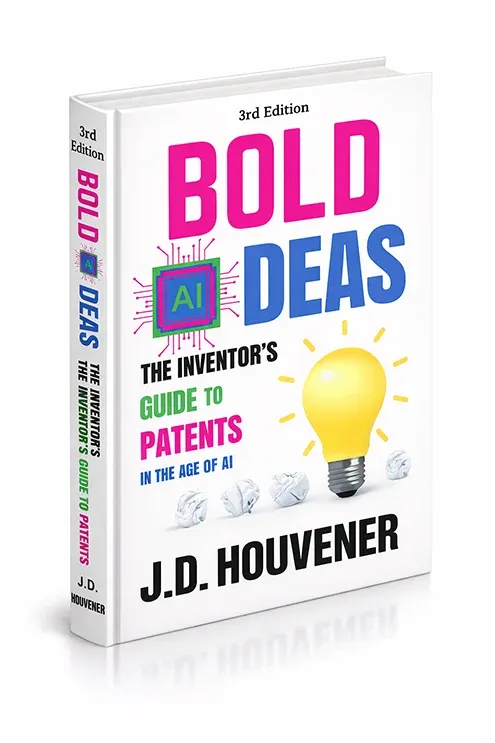
Written by Patent Attorney J.D. Houvener, this updated edition provides inventors, entrepreneurs, and startups with practical guidance for protecting ideas, avoiding costly mistakes, and navigating the patent process with confidence.
Whether you’re exploring a new invention, building a startup, or preparing to file a patent application, our team is here to help you move forward with confidence. Get personalized guidance from experienced patent professionals who understand the challenges inventors face.






We are a full-service patent and trademark prosecution firm. We help inventors and entrepreneurs research, protect, and monetize their intellectual property in the marketplace.
Schedule a Discovery Call 601-298-8425
Copyright © 2026 - Bold Patents• All Rights Reserved. Digital Marketing By: 