
Many inventors have heard the phrase “patent pending.”
Far fewer understand what it actually means.
A provisional patent application can be an excellent strategic tool, but it is not a patent. Likewise, a non-provisional application is much more than a formality—it’s the application the USPTO examines and, if approved, becomes an enforceable patent.
Choosing the right filing strategy requires balancing speed, budget, technical readiness, and long-term business goals.
Done well, a provisional application creates a strong foundation.
Done poorly, it can create a false sense of security.
This chapter explains how to use each filing strategically so your “patent pending” status becomes the beginning of valuable patent protection—not the end of your planning.
Reading Time: 13 minutes
Video: 10 minutes
Alex had finally reached the point where the invention was working consistently.
Friends encouraged filing “something” quickly.
Others suggested waiting until everything was perfect.
Alex’s patent attorney offered different advice.
“Don’t rush—but don’t wait forever.”
Instead of treating the provisional application as a shortcut, Alex treated it as the first chapter of the eventual patent.
The provisional documented the invention thoroughly.
Over the following months, Alex continued refining the technology, testing improvements, and developing additional embodiments.
Nine months later, instead of scrambling before the deadline, the non-provisional application was already well underway.
The result wasn’t simply a timely filing.
It was a stronger patent.
Although both filings begin the patent process, they serve different purposes.
A provisional application:
A non-provisional application:

One of the biggest misconceptions is that filing a provisional application automatically protects every future version of an invention.
It doesn’t.
A provisional secures an early filing date only for what it adequately teaches.
Anything omitted—or described only generally—may not receive that earlier priority date.
Think of it as taking a snapshot of your invention on the filing date.
Everything visible in the picture receives the date.
Everything outside the frame does not.
Alex didn’t view the provisional as a substitute for a full patent application.
Instead, it became a strategic planning tool.
The provisional provided time to:
Approximately nine months after filing the provisional, drafting of the non-provisional began—leaving three months of buffer before the twelve-month deadline.
Many weak provisional applications resemble marketing brochures.
Strong provisional applications resemble shortened patent applications.
A quality provisional should include:
The more complete the disclosure, the stronger the foundation for the later non-provisional application.
One of the most expensive mistakes inventors make is filing an overly brief provisional simply to obtain a filing date.
If the application fails to:
that early filing date may provide far less protection than expected.
A filing date is valuable only when supported by meaningful disclosure.
Innovation rarely stops after the first filing.If meaningful improvements are developed during the twelve-month period, additional provisional applications may be filed covering those new features.
This approach can preserve priority for genuine new subject matter without sacrificing the earlier filing date for the original invention.
AI can assist with:
However, AI should never replace the inventor’s technical knowledge or the attorney’s legal judgment.
Every technical description should be reviewed carefully to ensure it accurately reflects the invention and supports future patent claims.

Successful provisional strategies begin well before the deadline.
A practical timeline often looks like this:
Month 0
File a robust provisional application.
↓
Month 6
Evaluate improvements and consider supplemental provisional filings if genuine new matter exists.
↓
Month 9
Begin drafting the non-provisional application.
↓
Month 12
File the non-provisional (or PCT application if pursuing international protection).
Sometimes filing a non-provisional first makes more sense.
Examples include:
Patent strategy should always fit the business—not follow a rigid formula.
Avoid these common errors:
❌ Treating a provisional like a placeholder
❌ Waiting until month twelve to begin drafting
❌ Assuming “Patent Pending” equals patent protection
❌ Leaving important embodiments out of the provisional
❌ Relying on marketing language instead of technical disclosure
❌ Forgetting about international filing deadlines
One of the biggest myths I encounter is that provisional applications are supposed to be quick and simple.
I don’t see them that way.
The strongest provisional applications often resemble abbreviated non-provisional applications.
Why?
Because the provisional becomes the foundation you’ll rely upon later.
Every embodiment you teach today creates options tomorrow.
Every important feature you leave out may become impossible to claim with the earlier filing date.
The goal isn’t simply becoming “patent pending.”
The goal is building a patent application that ultimately matures into valuable intellectual property.
No. A provisional application never becomes an issued patent by itself. It establishes an early filing date and may support a later non-provisional application.
Generally, twelve months. During that period, applicants typically file a corresponding non-provisional application to preserve the priority date.
Yes. Meaningful improvements can sometimes be captured in additional provisional applications before filing the non-provisional.
Not necessarily. Some inventions are ready for immediate non-provisional filing, depending on technical maturity and business objectives.
No. Patent Pending indicates that an application has been filed. Enforceable patent rights generally arise only after a patent issues.
✔ Provisional applications establish priority—they do not become patents.
✔ Non-provisional applications are examined and may mature into enforceable patents.
✔ Strong provisional applications contain meaningful technical disclosure.
✔ Begin preparing the non-provisional well before the twelve-month deadline.
✔ Patent strategy should support both legal protection and business objectives.
🎥 Video: Provisional vs. Non-Provisional Patent Applications: Which Should You File?
Learn how each application works, when to use them, and how thoughtful planning can strengthen your patent strategy from the very beginning.
Whether you’re considering a provisional application or are ready to file a non-provisional patent application, the right strategy can save time, strengthen protection, and support long-term business growth.
During a Discovery Call, we’ll evaluate your invention, discuss your timeline, and recommend the filing approach that best fits your goals.
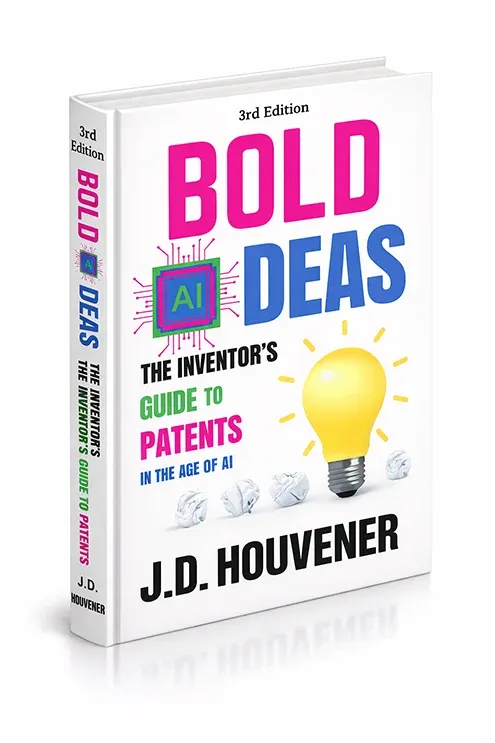
Written by Patent Attorney J.D. Houvener, this updated edition provides inventors, entrepreneurs, and startups with practical guidance for protecting ideas, avoiding costly mistakes, and navigating the patent process with confidence.
Whether you’re exploring a new invention, building a startup, or preparing to file a patent application, our team is here to help you move forward with confidence. Get personalized guidance from experienced patent professionals who understand the challenges inventors face.







We are a full-service patent and trademark prosecution firm. We help inventors and entrepreneurs research, protect, and monetize their intellectual property in the marketplace.
Schedule a Discovery Call 601-298-8425
Copyright © 2026 - Bold Patents• All Rights Reserved. Digital Marketing By: 