

Posted on April 11, 2026

Patent infringement can significantly impact the value and utility of your invention. When someone uses, sells, or manufactures your patented invention without permission, they are violating your exclusive rights granted by the patent. What should I do if someone is infringing on my patent?
It’s critical to understand what steps you need to take when faced with potential patent infringement to effectively protect your intellectual property. Acting swiftly and strategically can help enforce your rights and prevent further unauthorized use of your invention.
Understanding Patent Infringement
Patent infringement refers to the unauthorized use, production, or sale of an invention or idea protected by a patent. This is when a party engages in activities that have been exclusively granted to the patent holder without their permission, meaning they are infringing on the patent.
This infringement can take the form of either making, using, selling, or importing into the United States the patented invention. Both direct and indirect infringements are considered legally actionable:
- Direct infringement. Direct infringement is the most straightforward type of patent infringement and occurs when someone uses a patented invention without authorization.
- Indirect infringement. Indirect infringement happens when someone contributes to or induces another party to infringe a patent. This could include selling a component of a patented invention or providing instructions on how to use a patented process.
The impact of patent infringement can be substantial for the patent owner. Not only can it result in financial loss due to unauthorized sales, but it can also diminish the value of the patented invention and undermine the incentive for innovation. That’s why it’s crucial for inventors and patent owners to know how to identify and take action against patent infringement.
Identifying Patent Infringement
Identifying patent infringement can be a complex task, as it often requires a detailed understanding of the patented technology and its marketplace.
To determine if your patent is being infringed upon, you need to perform an infringement analysis. This involves comparing the alleged infringing product or process with the claims of your patent. A patent doesn’t grant you the right to make, use, sell, or import, but rather the right to exclude others from doing so.
There are various tools and resources available to monitor for potential patent infringement. For example, patent databases, market research, and industry publications can be instrumental in keeping tabs on the activities of competitors and emerging technologies in your field. It also helps to maintain meticulous records and documentation of your invention process to make it easier to identify potential infringement.
Consulting a Patent Lawyer
In the face of potential patent infringement, consulting a patent lawyer should be one of your initial steps.
A patent lawyer can assist in determining whether infringement has indeed occurred, using their extensive knowledge and experience in intellectual property law. They can perform a comprehensive infringement analysis, taking into account all legal nuances and technicalities. A patent lawyer can advise you on the best course of action based on the specific circumstances surrounding your case.
Cease and Desist Letter
A cease and desist letter is an official document sent to an individual or business to stop alleged illegal activity. In the context of patent infringement, this letter typically outlines your patent rights, describes the alleged infringement, and demands that the infringing party cease their unauthorized activities. The goal of a cease and desist letter is to resolve the infringement issue without resorting to litigation, saving both time and money.
Crafting a cease and desist letter requires a delicate balance. It needs to be firm enough to convey the seriousness of the infringement, but cannot make unfounded accusations or threats. A poorly written letter could undermine your position or even expose you to legal liability. It’s always a good idea to consult with a professional like those at Bold Patents before taking such a step.
Filing a Patent Infringement Civil Claim
Filing a patent infringement civil claim is a significant step in asserting your rights as a patent holder. This legal action typically involves submitting a formal complaint to a federal court, outlining your patent, the alleged infringement, and the damages you’ve incurred as a result. You should be ready to provide clear evidence of the infringement and demonstrate how it has harmed you economically.
The role of the court when resolving patent disputes is to determine whether infringement has occurred and, if so, decide the appropriate remedy.
The court may order the infringer to cease their activities and award monetary damages to the patent holder to compensate for any economic losses. In some cases, the court may also grant a permanent injunction, preventing the infringer from continuing their unauthorized use of the patented invention in the future. The legal process can be lengthy and costly, but it can also be necessary to fully protect your intellectual property rights.
What to Do If You Suspect Patent Infringement
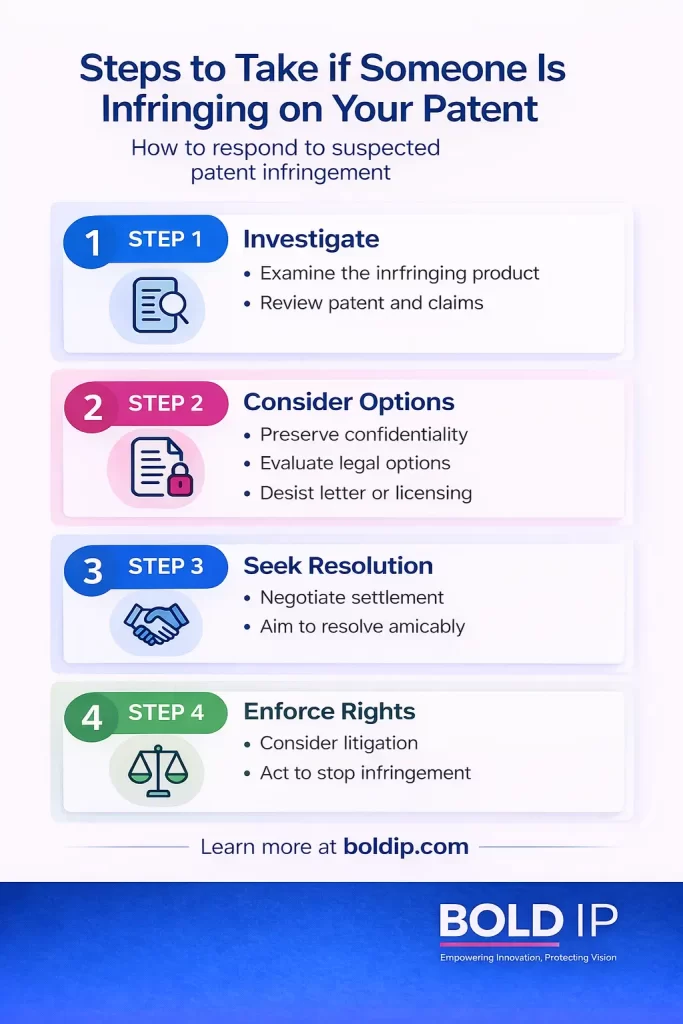
If you suspect patent infringement, it’s critical to act decisively. Start by identifying the potential infringement, consulting with a patent lawyer, potentially sending a cease and desist letter, and if necessary, filing a patent infringement civil claim. Each step is crucial to effectively protect your intellectual property rights and prevent further unauthorized use of your invention.
What Is Not Considered Patent Infringement?
There are some cases where the use of your patented invention by others is not considered patent infringement. It’s crucial to understand these exceptions so you take action against actual infringement and not protected actions. Something may not be considered patent infringement under exceptions like:
- Research and experimental use. This includes using the patented invention for inquiry and amusement experimentation, as long as it has no commercial consequences. It also includes research use of the invention related to regulatory submissions.
- Government use. Governmental entities are able to use patents without consent to serve public needs. However, patent holders may receive compensation.
- Prior use rights. If someone was commercially using an invention for a set period of time before the patent holder filed for a patent of that invention, that person can continue using the invention.
- Maintenance. Someone is able to repair an invention without it being considered reconstruction, which is infringement.
FAQs
What Happens If Someone Infringes on a Patent?
If someone infringes on a patent, the patent holder can take legal action against them. This can include many steps, including filing a civil claim against the infringing party. This claim can be for the damages caused by the use of the patent, such as loss of revenue. The court determines whether infringement occurred and the monetary damages caused based on the evidence. Then, the court may award those damages, as well as issue an injunction to the infringing party.
How Much Does It Cost to File a Claim Against Someone for Patent Infringement?
The cost to file a claim against someone for patent infringement can be costly, but depends on the facts of the case. You should consider the costs of an infringement defense attorney, court filing fees, other court costs, and the costs of other professionals to support your case. There are steps prior to filing a claim to prevent infringement, including cease-and-desist letters or negotiations for a monetary settlement, which can be less costly.
What Is the Most Common Form of Violation of Intellectual Property?
There are many common forms of violating intellectual property. For patents, the most common form of violating patent rights occurs when another party sells the invention without permission from the patent holder.
For trademarks, IP violations occur when another brand selling the same type of goods or services uses the same logo, slogan, or other identifying mark, or one that is confusingly similar. Copyright IP violations occur when another person copies or reproduces the art of another without permission.
How Can You Fight Patent Infringement?
You can fight patent infringement in many ways, including sending cease and desist letters, entering into settlement negotiations, and taking the infringement case to court to litigate it. You can also fight patent infringement preemptively by using tools like confidentiality and nondisclosure agreements or licensing agreements.
You should also make a plan for monitoring for patent infringement. An experienced patent attorney can help you create this plan and take other steps to protect your patents.
Hire a Patent Lawyer to Defend Your Patent Rights
When you hire a patent lawyer at Bold Patents, we can guide you through this process and provide the legal knowledge necessary to navigate these complex issues. We can also connect you with our network of patent litigators.
Don’t hesitate to reach out to us to schedule a free Discovery Call. We are committed to safeguarding your hard-earned innovation.