Last Modified on October 06, 2026

For many inventors, coming up with the idea is only the beginning. The bigger challenge is proving the idea has value, getting in front of the right companies, and ultimately turning the invention into a business.
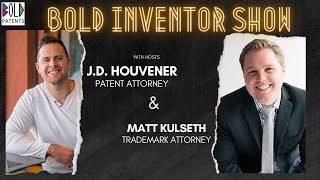
On this episode of the Bold Inventor Show, J.D. Houvener and Matt Kulseth sit down with Bold client Tom Stegeman, an inventor who developed a unique swimming product with his partner, Jay. After creating and testing a prototype with 100 swimmers, including elite-level athletes, Tom and Jay took a strategic approach to finding a licensing partner.
Tom shares how they researched potential companies, got past gatekeepers, used coaches and industry contacts to make introductions, prepared a one-minute pitch, evaluated NDAs, and ultimately landed a licensing deal.
The episode also covers trademark conflicts, design patents, trade dress, freedom-to-operate searches, trade secrets, accidental patent infringement, and a Shark Tank-style analysis of another swimming product.
The Bold Inventor Show
J.D.: Hello out there! Welcome to the Bold Inventor Show. I’m your host, J.D. Houvener, with my co-host, Matt Kulseth.
Matt: What’s up, dude? How’s your day?
J.D.: Busy, man. Just living the trademark dream.
Matt: It’s going really well. It’s actually kind of unusual because this time of year, things tend to slow down a little bit.
J.D.: How about you?
Matt: Busy too. I’m working on getting over the hump. We’ve got a lot of meetings back-to-back, but we had a really fun business planning meeting and we’re working on some exciting things for the future.
J.D.: Nice. Bold Patents and beyond. We’ve got lots of good things on the horizon.
Today we’re talking about monetizing patents and trademarks, including licensing deals. We’re going to be joined by one of our clients, Tom Stegeman, who recently got a licensing deal for his invention.
Before we get started, a reminder: We’re attorneys, but we’re not providing legal advice on this show. Please don’t share confidential information. This broadcast is for general legal information and education, and attending the show does not make you a client of Bold Patents.
Can You Use a Trademarked Name for a Different Business?
J.D.: Let’s jump into some questions. This one comes from Reddit. The title is “Website versus Podcast.”
Someone asks: Can an editorial website share a name with a trademarked podcast? If not, do I need to come up with an entirely different name, or could I adjust the name enough so it’s not exactly the same?
Matt: Just like every good attorney answer, it really depends.
We need to look at the services involved. There are 45 different classes of goods and services at the USPTO. Classes 1 through 34 cover products, and Classes 35 through 45 cover services.
If the podcast and website are offering completely different services, there may not be a likelihood of confusion even if the names are identical.
For example, if your podcast is about cars and the other website provides website editing services, those are very different services.
But if the two businesses are both focused on something similar, say they’re both about business, consulting, or podcast-related services, then you’ve got a much bigger issue.
J.D.: So if we had a “Bold Inventor Podcast” and someone had a “Bold Inventor Website” focused on inventors, that could be a problem because they’re targeting essentially the same audience.
Matt: Exactly. If the services and audiences overlap, that’s where you can start running into likelihood-of-confusion issues.
Can You Copy Another Company’s Packaging?
J.D.: Let’s move over to the patent side.
Someone asks about manufacturing a product in the U.S. and duplicating the packaging box from another brand. The box has a particular shape and way of being glued together, and the inventor wants to reverse-engineer it and recreate the die cuts.
Their attorney believes the basic design may not be patentable, but they want to conduct a more thorough search before going into production.
Matt: The bulletproof answer is to have a patent attorney conduct a freedom-to-operate analysis.
You want to know whether you’re stepping on the toes of existing patent owners or potentially pending patent rights.
If you know who makes the product, you can search that company’s patents and look at the relevant patents element by element.
J.D.: And that’s where a claim chart can become useful. You can compare the elements of the product against the claims of the patent.
But if you don’t do your homework and start making a product that’s very similar to somebody else’s protected product, you could receive a cease-and-desist letter and potentially face a patent infringement claim.
Matt: I’ve actually been through the box manufacturing process. Custom boxes can involve die cutting, creating folds, and cutting the paper from large sheets.
My advice would be to make sure you’re not directly copying somebody else’s protected design.
J.D.: There’s no magic percentage where you can say, “I’m 25% different, so I’m safe.” That’s not how it works.
Matt: Right. And you also have to consider trade dress.
Trade dress can protect the overall appearance or look of a product or its packaging when that appearance serves as a source identifier.
J.D.: There’s some overlap between design patents and trade dress, but they’re not the same thing.
With a design patent, you’re looking at the ornamental appearance of a particular product design. With trade dress, you’re looking more broadly at whether the appearance identifies the source of the goods or services.
Matt: And with design patents, the ordinary observer test is important. Essentially, would an ordinary observer think the accused design is substantially the same as the patented design?
What’s the Fastest Country for Trademark Registration?
Matt: Here’s another trademark question:
“I’m trying to trademark more, and it doesn’t matter which country it’s in. I’m willing to pay extra to have it accepted faster. What country accepts trademarks the fastest?”
J.D.: Why wouldn’t it matter which country?
Matt: That’s what I was thinking too.
J.D.: The first question is: Why do you need the trademark registration so quickly?
Trademark rights are country-specific. If you’re trying to establish rights in the United States, getting a registration somewhere else doesn’t automatically give you U.S. trademark rights.
Some large companies do file trademark applications in foreign jurisdictions strategically before entering other markets, but there can be complications and additional legal costs.
Matt: And if you’re trying to get Amazon Brand Registry in the United States, a foreign trademark registration isn’t going to substitute for a U.S. trademark application.
J.D.: Exactly. If you’re trying to establish Amazon Brand Registry in the United States, you can work with a U.S. trademark attorney to file a U.S. application and use the application information for the appropriate Brand Registry process.
The bigger question is what you’re actually trying to accomplish. Don’t spend money getting a foreign trademark registration just because it’s supposedly faster if it doesn’t accomplish your business objective.
What Happens If You Accidentally Infringe a Patent?
J.D.: Here’s a question from Quora:
“What are the consequences of accidentally infringing upon a patent by creating a product?”
I actually like the good-hearted nature of this question. Unfortunately, whether you did it intentionally or not, patent infringement can still create civil liability.
Matt: And actual knowledge isn’t necessarily required for someone to have an infringement issue.
J.D.: Right. This is an important distinction.
You generally aren’t looking at criminal liability for ordinary patent infringement. This is primarily a civil matter.
A patent owner could potentially send a cease-and-desist letter or seek other remedies.
If you haven’t made any sales yet, sometimes the situation can be resolved by stopping production, changing the product, or working out another solution.
Matt: And if you’ve already invested significant money into the product, you may want to explore whether a license is possible.
J.D.: Exactly. If you’ve invested heavily in R&D and accidentally developed something that falls within somebody else’s patent rights, you might explore licensing the patent or potentially purchasing the patent portfolio.
The important lesson is to do your research before you invest heavily in manufacturing.
Can You Add “Media” to Someone Else’s Trademark?
Matt: Here’s another trademark question.
Someone says they found a name they like, but a sunglasses company has a trademark for that name on a pair of sunglasses. They want to know if they could use the same name and add “Media” to the end because their company is a media company.
J.D.: Very likely, potentially, but again, it depends.
Matt: If their trademark is extremely distinctive, something they completely made up and that doesn’t resemble an ordinary English word, the scope of protection can potentially be broader.
J.D.: And if your media company is working with sunglasses companies or operating in the optical industry, suddenly those businesses aren’t so far apart.
Matt: Exactly. If you’re providing media and marketing services specifically to sunglasses companies, you’re starting to blur the lines.
J.D.: That’s why you really need to look at the actual marks, the goods and services, and how the businesses operate.
Patent or Trade Secret for a New Method?
J.D.: Here’s a question involving the natural gas utility industry.
Someone has developed an idea that uses existing components in an unconventional way to improve safety, reduce customer risk, and provide operational and financial benefits to the utility owner.
The question is whether they should investigate getting a method patent.
Matt: To me, this sounds like it could potentially be a trade secret.
If you’ve found a method that gives your business a competitive advantage, keeping that information in-house may make sense.
J.D.: Trade secrets cover an enormous body of work.
If you’re going to keep something as a trade secret, you need to take reasonable steps to keep it confidential. That includes having appropriate agreements and procedures with employees, contractors, and other people who have access to the information.
Matt: There’s also consideration involved in contracts. If you’re giving an employee access to your company’s secret sauce, you want to make sure the confidentiality obligations are properly established.
J.D.: And here’s an interesting point: You can actually license know-how or confidential information.
But licensing a trade secret can increase the risk because you’re now sharing that secret with another company and potentially more employees, contractors, and vendors.
Matt: So if you think the method could be licensed to multiple utility companies, a patent might be worth exploring.
J.D.: Exactly. That’s where the business strategy matters. Are you trying to keep the information inside your own company, or do you want to commercialize and license it to others?
Meet Tom Stegeman: From Prototype to Licensing Deal
J.D.: Tom, welcome to the Bold Inventor Show!
Tom: Thanks, guys. I’m not very IT-techie, so I’m here.
J.D.: You made it! You did great.
Tom is a Bold client, and he’s got two patent documents behind him. Tom, you’ve got a design patent and a utility patent, right?
Tom: Yes. Bold Patents got me my design patent first, and we just got our utility patent as well. We’re rocking.
The biggest thing I wanted to share with everyone is that we had a very unique way of getting into companies.
Once we had this idea and got ahold of Bold Patents, we realized we thought we had a really good idea.
We made a prototype and tested it. It’s an athletic item related to the swimming world.
I’ve been a swimmer all my life, and I came up with this idea out of the blue. We didn’t think it would actually work, but it did.
In fact, we had 100% positive results from 100 swimmers who tried it, from novice swimmers all the way up to people who had won medals at the Olympics.
J.D.: That’s incredible.
Tom: We didn’t have a final product yet, but we licensed it.
The first thing my partner Jay and I did was look at how valuable our idea was. We knew we didn’t just have an improvement over something that already existed.
That’s important because a lot of companies don’t want another way to strap something onto a product they’ve already got. They don’t necessarily want to retool their manufacturing process.
We had something that we believed was really unique. We called it revolutionary. We were that bold with it, and ultimately it worked.
Research Your Target Companies
Tom: The next thing we did was identify companies in the swimming world that produced swimming products.
We ranked them from one through seven. We started with the biggest companies, the ones you see sponsoring athletes at the Olympics.
But we actually went with number four.
They weren’t the biggest company, but they were based in the United States, had a good reputation, and were known for innovative products.
J.D.: How hard was it to get those companies on the phone or get a meeting with the decision-makers?
Tom: Initially, it was very hard.
My next point is: Take notes.
Take notes on your research of the companies.
We found companies that had already been bought and sold several times in a couple of years. Some were in financial trouble.
You’re going to find out a lot by researching companies and reading reviews.
When you approach these companies, you’re probably going to reach customer service first.
You’ll say, “I’d like to speak with your new product development person or team.”
They’re probably going to tell you they have a portal on their website where you can submit your idea.
Well, you don’t have an NDA in place, so you’re not going to spill your guts about your invention.
That’s why it’s important to take notes. You might find out who the person is that you actually need to contact.
Be Patient and Persistent
Tom: Let’s say you find out the person’s name is John.
The next time you call customer service, you can ask to speak directly with John in product development.
It’s still rare that you’ll get right through.
You’ve got to be patient and persistent.
They don’t want a phone call every single day, but you need to keep working at it.
For us, testing the product with swimmers gave us another avenue.
We were in contact with coaches. We went to pools. We talked to people in the industry.
One coach knew someone who represented one of the companies we wanted to reach.
That coach called the company and said, “You’ve got to check this out. These guys came up with something really cool.”
That’s how we got into one of the companies.
Use Industry Connections
Tom: Another thing is that there are magazines and websites for almost every industry.
We knew somebody who knew an editor at a particular swimming website and magazine.
That person reached out for us and said, “Hey, you ought to check this thing out.”
We couldn’t get into one of the biggest companies directly.
The editor said, “I’ll get you in.”
So I would suggest doing your due diligence on your prototype and presentation. If you can, create a video.
Get your one-minute pitch ready because that’s all the time you may have once you get somebody’s attention.
Your One-Minute Pitch Matters
Tom: We had our one-minute pitch ready.
We said something like:
“Hey, we’ve got a revolutionary new swimming product. We’ve tested it on 100 swimmers with 100% positive results. They all want one, and we think you ought to take a look at it.”
That’s pretty much how we got into these companies.
Then they would say, “Okay, where do we go from here?”
That’s when we could talk about the NDA, CAD drawings, and the prototype.
But we had a video.
We would say, “Let’s set up a Zoom meeting. You can meet me and my partner Jay, see the video, and we can explain everything.”
Read Between the Lines of an NDA
Tom: One thing we learned was that you can learn a lot about a company’s attitude from its NDA.
We had one major company that basically said, “Send us the NDA, and if we like the idea, we’ll give you fair compensation for it.”
We’re like, “Whoa.”
Another company sent us a nine-page NDA.
J.D.: For more than $50,000, I hope!
Tom: Exactly!
You can learn a lot from the NDA.
I suggest having them send you their NDA first so you can review it.
You’re going to get a lot of information from the way they send you the NDA and the way they talk to you on the phone.
J.D.: That’s a great point.
Tom: We eventually created a fairly simple NDA of our own when companies asked us to provide one.
That was one of the few times we didn’t get professional help during the process.
But we did get professional help with our final licensing agreement.
Don’t Just Focus on Making the Product Yourself
Tom: Eventually, Jay and I got frustrated and thought, “Let’s just make it ourselves.”
But we didn’t know the market.
We didn’t know how to manufacture it.
We probably could have figured it out, but let’s say we sold 10,000 units with a $12 profit. That’s $120,000.
Then you take it to an established company and they say, “We’re going to make 100,000 of these in the first year.”
Maybe you get a smaller amount per unit, but they’re doing the manufacturing and distribution. They already know the market. They know the international business. They’ve been through lawsuits before.
That’s worth something.
J.D.: You’re essentially trading some of the potential upside for access to the infrastructure and expertise that already exists.
Tom: Exactly.
Physics Was on Our Side
J.D.: Can you tell us a little more about the invention?
Tom: It’s essentially a swim fin.
Your foot goes into it, but it only goes past the ball of your foot and stops. It’s made of soft silicone.
Jay and I thought there was no way it would stay on your foot.
His son, who was a swimmer at Purdue, even said, “That’s not going to work.”
Jay made a couple of prototypes using 3D printing and laser technology.
He put them on his feet, went into his backyard pool, and called me.
We used to call each other Orville and Wilbur.
He said, “Wilbur, not only does it work, I can’t get it off.”
I said, “What are you talking about?”
When you put it on in the water and squeeze the water out, it creates suction around your foot.
J.D.: Physics is our friend!
Tom: Exactly.
Prove Your Invention Before You Pitch It
Tom: We tested the product on a lot of swimmers.
We had 100 swimmers try it, and the response was extremely positive.
That’s something I would emphasize to anyone making a physical product.
When we started approaching companies, they wanted to know whether we’d tested it, whether we had a prototype, how many people had tried it, and whether we’d done a market study.
We didn’t know exactly what it would cost to manufacture.
But they were more concerned with the reaction to the product.
J.D.: That’s a powerful lesson.
You’re not just telling a company, “I have this great idea.”
You’re showing them that you’ve already done work to validate it.
Tom: Exactly.
Why Did the Company Say Yes?
Tom: After we completed the licensing process and signed the deal, I asked the owners a couple of questions.
First, I asked, “Why did you give us a shot?”
They said, “Because you said revolutionary, and you had testing. You had a video. You had already done so much data that was important.”
Then I asked how many people contacted them with the next greatest invention.
They said they get about one or two a week.
That’s potentially dozens of inventors every year pitching the next big thing.
But they also told me, “You never know if there’s a diamond in the rough.”
So you’ve got to give everybody that one-minute phone call your best shot.
Shark Tank Breakdown: The Tandem Boogie
After Tom’s interview, the Bold Inventor Show team turned to a Shark Tank-style critique of another swimming-related product: the Tandem Boogie, an inflatable boogie board designed for two people to ride together.
The entrepreneurs were seeking $100,000 for 10% equity and explained that their board could be used front-to-back or side-by-side.
J.D.: I think it’s an interesting product. I like the family aspect.
Tom: I would want to see more testing.
The video was very fast, and they talked about how well it worked, but I saw a lot of adults who weren’t actually riding the board.
With the companies we dealt with, they wanted to know exactly how the product worked and how it performed.
If you’re talking about manufacturing 100,000 units, companies are going to want to test the product themselves.
J.D.: That’s a good point.
Matt: From the trademark perspective, “Tandem Boogie” isn’t a particularly strong name.
“Tandem” describes two people, and “boogie” describes a boogie board. It’s fairly descriptive of the product and what it’s designed to do.
They also spelled the name differently, presumably to make it more distinctive.
J.D.: Is that necessarily enough?
Matt: Not necessarily. Misspelling a descriptive term doesn’t automatically create a strong trademark.
There’s also no requirement that every product have a trademark registration.
But if you want to enforce the trademark, license the brand, sell the business, or participate in programs like Amazon Brand Registry, having trademark protection can be important.
The Bigger Lesson: Preparation Creates Opportunities
J.D.: Tom, your story really reinforces something we talk about all the time.
Inventors often think the patent is the finish line.
It’s not.
The patent can be part of the foundation, but you still need to validate the invention, understand your market, identify potential partners, and communicate the value of what you’ve created.
Tom: That’s exactly what we learned.
We took a very slow and methodical approach.
We researched the companies. We built the prototype. We tested it. We created the video. We made our one-minute pitch.
And we kept taking notes.
J.D.: And you found multiple ways into the companies rather than relying on one cold call.
Tom: Exactly.
Look for coaches. Look for editors. Look for industry contacts. Look for people who can introduce you.
There are a lot of second avenues you can take.
And don’t rush.
Take the time to prepare before you start calling companies.
Final Thoughts
Tom’s experience is a great example of what can happen when an inventor thinks beyond simply getting a patent.
The invention was only one piece of the puzzle. Tom and his partner validated the product, tested it with real swimmers, researched potential licensing partners, created a video presentation, prepared a concise pitch, built industry relationships, and stayed persistent.
That preparation helped them stand out in a crowded field of inventors pitching established companies.
And perhaps most importantly, they didn’t try to do everything themselves. They recognized that an established company could bring manufacturing, distribution, market knowledge, and industry relationships that would be difficult and expensive to build from scratch.
J.D.: Tom, thank you so much for sharing your story.
Tom: I’d love to come back and talk more about the licensing process.
J.D.: Absolutely. We’ll have to do a Part Two and talk about what happened during those four months of negotiation and how the licensing agreement was structured.
Matt: I’d definitely like to hear more about that.
J.D.: Thanks, everybody. Go big. Go bold!