Last Modified on June 25, 2026

What Is a Patent?
Ever wonder what a patent really is?
It’s simpler than most people think. A patent is a deal, a bargain between you, the inventor, and the public. You give the world your invention, your idea, your solution, your know-how. In return, the government gives you a limited monopoly. For a set time, usually 20 years, you are the only person who can make, use, or sell that invention.
Think of it like this: you’re trading knowledge for protection. You show the world how something works. You solve a problem nobody else has solved yet. And the reward? You get exclusive rights to profit from it. That’s the essence of a patent.
Patents Are Commercial Tools
Having a patent isn’t just about holding a piece of paper. That certificate on your wall? Sure, it’s nice. It can boost your confidence. Maybe it looks good on your resume. But at the end of the day, a patent is a commercial tool. It’s meant to help you bring a product to market. It’s meant to help you make money.
And this is where many inventors get stuck. Being an inventor doesn’t automatically make you a businessperson. Most inventors are highly technical. They love solving problems, experimenting, analyzing. Selling, marketing, and pitching? Not always their thing. That’s okay. You don’t have to be the best salesperson in the world to succeed.
Options for Inventors
So, what can you do instead?
You have options. One path is to partner with someone. For example, you could be the technical founder or CTO of a startup. Then, find a CEO who loves sales and marketing. Someone outgoing, gregarious, and great at getting products into customers’ hands. Together, you cover both sides: invention and business.
Another option is licensing or selling your patent. Maybe there’s a company already in your industry. You can sell or license your invention to them. In return, you get royalties, a small cut from each unit they sell, or even a lump sum upfront.
Licensing can be a smart move. It lets you focus on inventing, while someone else handles production, distribution, and sales. You still get rewarded for your invention. And the public still benefits because your invention reaches the market.
AI Isn’t a Replacement
Now, there’s a common misconception I want to address.
Some inventors rely on artificial intelligence to describe their inventions. You might think, “I’ll just have AI write my patent application.” And sure, AI tools can help you get started. But here’s the catch: AI can make mistakes. Big ones.
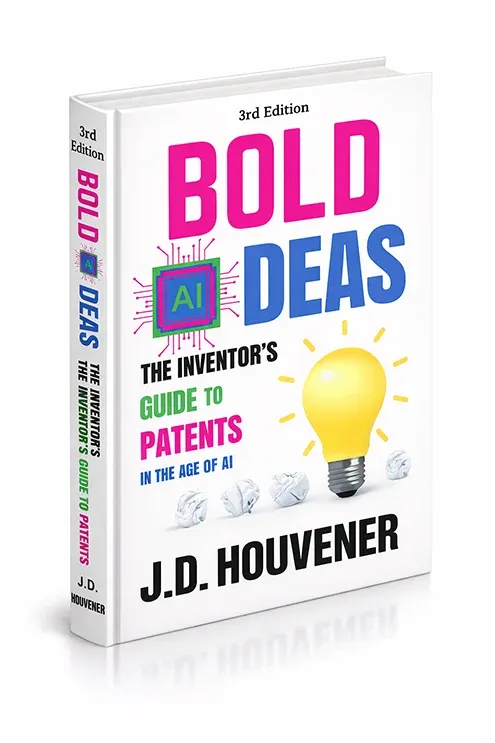
Let me give you an example. I tell this story in my upcoming book, Bold Ax. I created a fictional character, Alex. Alex invented a new type of light bulb. Excited to file a patent, Alex tried using AI to describe every technical detail.
It didn’t go as planned.
When it got to the tiny details, the driver, the thermal path, the electrical connections, AI started to hallucinate. It made up parts that didn’t exist or weren’t physically possible. If Alex had relied solely on AI, the patent could have been rejected. Or worse, it could have been written incorrectly, leaving the invention unprotected.
In the end, Alex had to go back, step by step, with the help of a patent attorney, to ensure everything was described properly. That’s the reality. AI can assist, but it can’t replace human expertise, especially for something as precise as patent law.
Work With a Patent Attorney
So, what does this mean for you?
If you have an invention, don’t go it alone. Talk to a patent attorney. Even a quick conversation can help you understand whether your invention is ready for a patent application. We can help make sure your invention is described clearly, completely, and in a way that protects your rights.
Think of a patent attorney as a guide. You provide the invention. They help you tell the story. And together, you make sure your invention has the best chance to succeed.
The Core Principles
Let’s break it down further.
Your invention is your gift.
You’re sharing knowledge with the world. Even if it’s just a small improvement on something existing, it matters. Every small idea has the potential to make life better.
The patent is your reward.
In exchange for sharing your knowledge, you get protection. A limited monopoly. The right to exclude others from copying or selling your invention. For 20 years. That’s a powerful tool.
The goal is commercial success.
A patent isn’t just for bragging rights. You want your invention out in the world. You want it to solve a problem, improve someone’s life, and ideally, make money.
You don’t have to do it alone.
Inventors don’t have to be CEOs. They don’t have to sell, market, or produce. Partner, license, or sell your rights. Let someone else help bring your invention to market while you keep inventing.
AI is a helper, not a replacement.
Tools like ChatGPT can give you a starting point. But don’t rely on AI to fully describe your invention. Details matter. Physics matters. Accuracy matters.
Example: Coffee Mug Invention
Here’s another way to look at it.
Imagine you invent a new coffee mug. It keeps coffee hot longer. It fits perfectly in a car cup holder. You try to describe it using AI. AI suggests a strange shape, some impossible material, and a design that won’t fit a standard cup holder. If you file your patent that way, it won’t work. The patent could fail. Or someone could copy your idea, tweak it slightly, and you’d have no protection.
Now imagine you work with a patent attorney. You describe every feature, the material, the insulation, the dimensions. Every tiny detail. The patent gets approved. You own the rights. You license it to a company that sells millions of mugs. You earn royalties every time one sells. That’s the difference.
Small Ideas Matter
It’s also worth noting that patents aren’t just for big inventions. Small improvements count too.
A better lid for a water bottle.
A tool that makes a simple task easier.
A software tweak that saves time.
All of these can be patented. And they all have value.
Even small ideas can surprise you. I once worked with an inventor who created a tiny clip for hanging headphones under a desk. Simple, right? But companies paid attention. It solved a real problem, and the inventor earned royalties for years. Small ideas can have big impact.
Timing Is Critical
Let’s talk about timing.
Some inventors wait too long. They think, “I’ll file later.” Maybe they want to refine the idea. Maybe they’re unsure if it’s good enough.
Here’s the risk: someone else could invent the same thing first. Or your idea could leak. Once someone else patents it, you can’t get the same protection. Patents are first-come, first-served.
That’s why talking to a patent attorney early matters. Even if you’re not ready to file, you can get advice. You can protect your concept. You can plan your next steps.
Effort and Commercialization
And yes, patents take effort.
You have to describe your invention carefully. You have to explain how it works. You need drawings or diagrams. You need to anticipate questions from patent examiners. It’s not instant. But that effort is worth it. A properly written patent can protect your invention for decades.
Now, a quick note about commercialization.
Some inventors don’t want to start a company. They just want to invent. That’s okay. You can license your invention. You can sell it. You can still profit without running a business.
Other inventors do want to start a company. That’s also okay. You can be the technical founder. Find someone else to handle sales and marketing. You focus on inventing. Your partner focuses on selling. Together, you cover all the bases.
Recap: Key Points
Let’s recap the main points:
A patent is a trade. You share your invention. The government gives you protection.
Patents are commercial tools. They’re meant to help you make money, not just decorate your office.
Inventors don’t have to be salespeople. Partner or license your invention if selling isn’t your strength.
AI can help, but it can’t replace human expertise. Accuracy matters. Details matter.
Small ideas matter. Even tiny improvements can be patented and have value.
Timing matters. File early. Protect your invention before someone else does.
Effort matters. Writing a patent is work, but the payoff can last decades.
Common Mistakes
Now let’s talk about mistakes I see all the time.
Inventors don’t document their process. Write everything down. Even small sketches or notes matter. They can prove originality later.
Inventors rely too much on online tools or templates. Those can help, but they aren’t a substitute for legal expertise.
Inventors try to do everything alone. You don’t have to. Partners, advisors, and attorneys are there to help.
Inventors wait too long to file. Don’t. Timing is critical.
Avoiding these mistakes can save years of frustration and protect your work.
Practical Tips
A few practical tips for new inventors:
Keep a detailed invention notebook. Dates, diagrams, observations.
Sketch your invention from different angles. Notes alone aren’t always enough.
Talk to a patent attorney early. Don’t wait until the idea is “perfect.”
Consider commercial options: licensing, partnerships, or starting a company.
Don’t rely entirely on AI for technical details. Use it to brainstorm, but validate every detail.
Study similar products. See what exists, then explain clearly how your invention is different.
Final Thoughts
Remember Alex, the inventor from my book? Their story is not unusual. Many inventors try to shortcut the process. They rely on tools that can’t replace human expertise. And it almost costs them.
You don’t have to make that mistake. You can get professional guidance. You can protect your invention. You can bring your idea to the world, safely, securely, and successfully.
Call to Action
So here’s your call to action:
If you have an idea, don’t wait. Don’t rely solely on AI. Speak with a patent attorney. Get advice. Get clarity. Make a plan.
Your invention is your gift. Protect it. Share it. Let it reach the world.
At Bold Patents, we’re ready to help. Book a free discovery call at boldpatents.com. We’ll walk you through your options and help you see if your invention is ready to move forward.
I’m JD Houvener. Invent. Protect. Share. Go big. Go bold.