
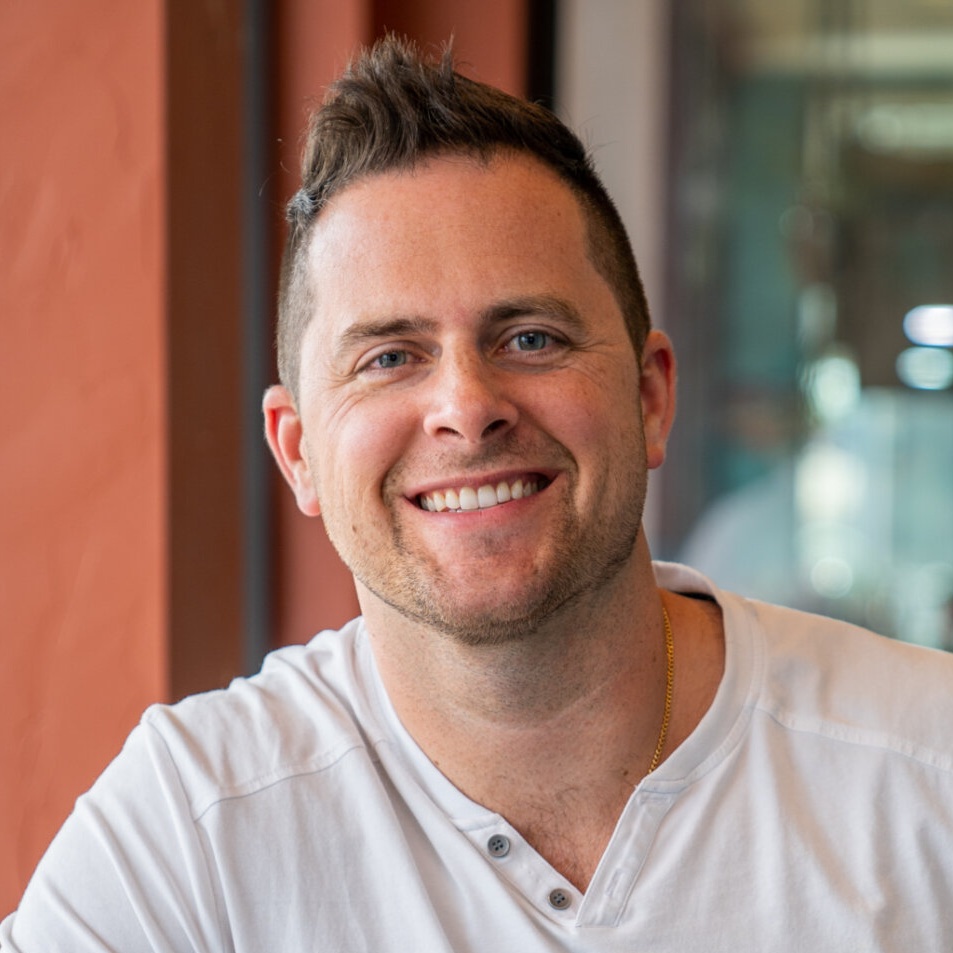
Patent Attorney and Founder
“So how did this start?”
“Charles, how did you actually build this? Are you more of a software guy or hardware?”
He gives a small, almost tired smile. It’s a familiar question for him.
“I used to code,” he says. “Built a company and sold it in about 18 months.”
That detail changes how people see him in the room. He’s not guessing his way through startups. He’s done it before.
“So after I sold that company,” he continues, “I basically went straight into building this.”
There’s a pause, then the obvious question comes.
If you already had a successful exit, why not just fund this yourself?
“I did at first,” he says. “I put in about $50,000 of my own money just to get things moving.”
Then he leans forward slightly.
“Since then, I’ve raised around half a million dollars from angel investors.”
That number sits in the air for a moment. Not huge in Silicon Valley terms, but enough to signal momentum.
“So what are you using the money for?”
He answers without hesitation.
“Manufacturing. That’s really it. Getting the product built properly at scale.”
No fluff. Just execution.
“The market is already moving your way”
One of the investors shifts in his seat. He’s not looking at the product yet. He’s thinking bigger than that.
“Across Europe, Canada, Mexico, and the U.S.,” he says, “there’s a clear trend. Drinking and driving laws are tightening.”
He pauses.
“In some places, it’s already moving toward zero tolerance.”
He glances at Charles.
“That kind of shift matters. It creates demand for what you’re building.”
Then he adds something more personal.
“I’ve spent years in sensor-based companies. That’s where my focus is. And honestly, I think this whole category is only going to grow.”
It’s not hype. It sounds like conviction based on experience.
Then he makes the move.
“I’ll offer $500,000 for 20%.”
Clean. Direct. No hesitation.
“Let’s see how the room reacts”
Charles doesn’t answer right away. He lets the moment sit.
That pause is intentional. He’s not reacting emotionally. He’s reading the room.
Another investor jumps in, trying to stay involved.
“Could I co-invest on that?” he asks.
The first investor shakes his head immediately.
“No. I want this clean.”
He leans back slightly and explains.
“I’m not interested in splitting this up into pieces. Retail or short-term upside doesn’t matter here. This is about long-term scale.”
There’s a subtle shift in tone. This isn’t just funding anymore. It’s positioning.
“A different structure appears”
Another investor enters more carefully.
“I’ll do $250,000 for 15%,” he says.
That offer changes the energy in the room. It’s less aggressive, but more founder-friendly.
Charles nods slightly. He’s clearly thinking through trade-offs now, not just reacting to numbers.
“The goal,” he says, “is to close a full $1 million round within the next 60 days.”
He looks across the table.
“Mostly angel investors in Silicon Valley.”
Then he adds something important.
“I’m open to multiple investors. I think there’s real value in having the right group involved.”
That sentence quietly opens the door to complexity.
“Not everyone agrees on the structure”
One investor leans back, arms loosely crossed.
“Why not just let the sharks fund the whole round?” he asks.
It’s direct. No sugarcoating.
Charles pauses for a second.
“I don’t really want to work with all of them,” he admits.
It’s honest, but it also exposes a tension most founders face. Control versus capital. Simplicity versus speed.
The room picks up on it immediately.
Because investors aren’t just betting on products. They’re betting on how well someone handles pressure when things get complicated.
“The round starts to stack fast”
Another voice jumps in quickly.
“You want a million, right?”
“Yes.”
“Then I’ll add $250,000, but only if Kevin joins.”
Heads turn slightly toward Kevin.
He doesn’t hesitate.
“I’ll match it.”
Now the pace changes.
The numbers move fast, almost too fast.
They’re suddenly at $750,000 total for 30% equity.
That’s already three times the original raise target, and it happened in minutes.
The momentum feels exciting, but also slightly unstable.
“Concerns start to surface”
Not everyone in the room is fully comfortable.
One investor leans back.
“They don’t even fully understand what they’re investing in,” he says.
It’s not an attack. It’s caution.
Another investor responds, but the concern doesn’t really go away. The pace of the deal is outpacing the depth of the discussion.
This is where early-stage deals can get risky. Excitement fills gaps that diligence hasn’t closed yet.
Charles tries to ground things again.
“I like being around people smarter than me,” he says with a slight half-smile.
It’s light, but it also signals something important. He’s trying to build trust while the structure is still forming.
“Another offer changes the tone”
Then a different angle comes in.
“I’ll match $250,000,” one investor says, “but for 10%, and I’ll handle manufacturing.”
That’s a different kind of offer.
It’s not just capital. It’s operational control.
That means supply chain, production timelines, vendor relationships, the parts that often decide whether startups survive or stall.
Then he adds a warning, almost casually.
“Just be careful. Too many partners can slow things down. It gets messy fast.”
That line lands harder than it sounds.
Because everyone in the room knows it’s true.
“What happened after the deal energy”
Looking back now, the outcome tells a more complicated story.
A patent application was filed, but it never reached issuance. It was eventually abandoned.
At one point, the intellectual property was assigned to a company connected with Silicon Valley Bank, which later collapsed in 2023.
That detail doesn’t explain everything, but it hints at instability in how the business structure evolved.
The bigger issue came later.
The Federal Trade Commission eventually stepped in.
The reason was serious.
The product, a smartphone breathalyzer, produced inaccurate readings.
That kind of failure is not a small technical issue. In this category, it goes straight to consumer safety and legal responsibility.
The result was forced refunds.
Full refunds. Across customers.
No negotiation. No partial fix. Just reversal.
“Where things really broke”
The idea itself wasn’t the problem.
A portable alcohol detection device before driving makes sense. The demand is obvious. The use case is real.
The breakdown happened in execution.
Especially testing.
Because once a product starts influencing real-world decisions, like whether someone drives or not, accuracy stops being optional.
Even small error rates become dangerous.
And in this space, disclaimers don’t protect you the way people assume they do.
People act on the reading in the moment. Not on the fine print.
“What should have been done instead”
A slower, more structured approach likely would have changed everything.
First would have been proper validation testing.
Not small internal checks, but real controlled environments.
Blinded testing. Large sample sizes. Repeatable conditions.
For example:
- Over 1,000 test samples
- Independent lab conditions
- No technician awareness of outcomes during testing
- Full result comparison after completion
That kind of structure removes guesswork and bias.
Then comes regulatory alignment.
A proper FDA 510(k) process would likely have applied here.
It’s more approachable than people think:
- Around $5,600 filing cost
- Roughly $50,000–$60,000 total with support
- About six months, depending on preparation
But the real value isn’t the paperwork.
It’s the forced validation.
The process makes you prove your device works under real-world standards, not internal assumptions.
“Would that have changed the outcome?”
Most likely, yes.
Because proper testing almost always exposes weak points early. That’s the purpose of it.
And in this case, even a small error rate matters more than usual.
Users are often right at the edge of legal limits. That’s exactly where precision becomes critical.
A slightly incorrect reading doesn’t just create confusion. It creates risk.
“The bigger takeaway”
Looking at everything together, a few patterns stand out.
Charles moved fast and gave up equity early to maintain momentum. Investors moved quickly based on trend alignment more than technical validation. And the product didn’t go through enough rigorous testing before real-world exposure.
Any one of those might have been manageable on its own.
But together, they created pressure that the company couldn’t absorb.
“Final reflection”
The idea still isn’t the issue. Devices like this exist today because the problem is real and ongoing.
But this story shows something simple that often gets missed in early-stage deals.
Attention comes from ideas.
But survival comes from execution.
And in hardware, especially anything tied to safety, execution isn’t optional. It’s the whole foundation.