
Before spending time and money pursuing a patent, every inventor should ask one question:
“Will this patent help me accomplish my goals?”
That’s exactly what we’ll explore in this chapter.
Reading Time: 10 minutes
Video: 2-3 minutes
Alex’s light bulb prototype was finally working.
Friends loved it. Manufacturers were interested.
One investor even said, “This could be huge.”
Alex felt unstoppable.
Then someone asked a question he hadn’t considered.
“Have you filed for a patent?” Alex shrugged.
“I don’t know if I need one.” After all…
Could he simply be first to market?
Couldn’t he rely on branding?
Could he keep parts of the invention secret?
Was a patent really worth tens of thousands of dollars?
Those are exactly the questions every inventor should ask.
The answer isn’t always “yes.”
But the reasons might surprise you.
One of the biggest misconceptions about patents is that they’re legal documents.
They’re not. They’re business assets.
The best inventors don’t file patents because they love intellectual property.
They file because patents help accomplish business objectives.
Just like a company may purchase insurance hoping never to use it, a patent often creates value simply because it exists.
Competitors notice. Investors notice.
Potential partners notice. Even customers notice.
A patent changes conversations before it ever changes a courtroom.
If you’ve spent years solving a difficult technical problem…
why should someone else copy your work tomorrow?
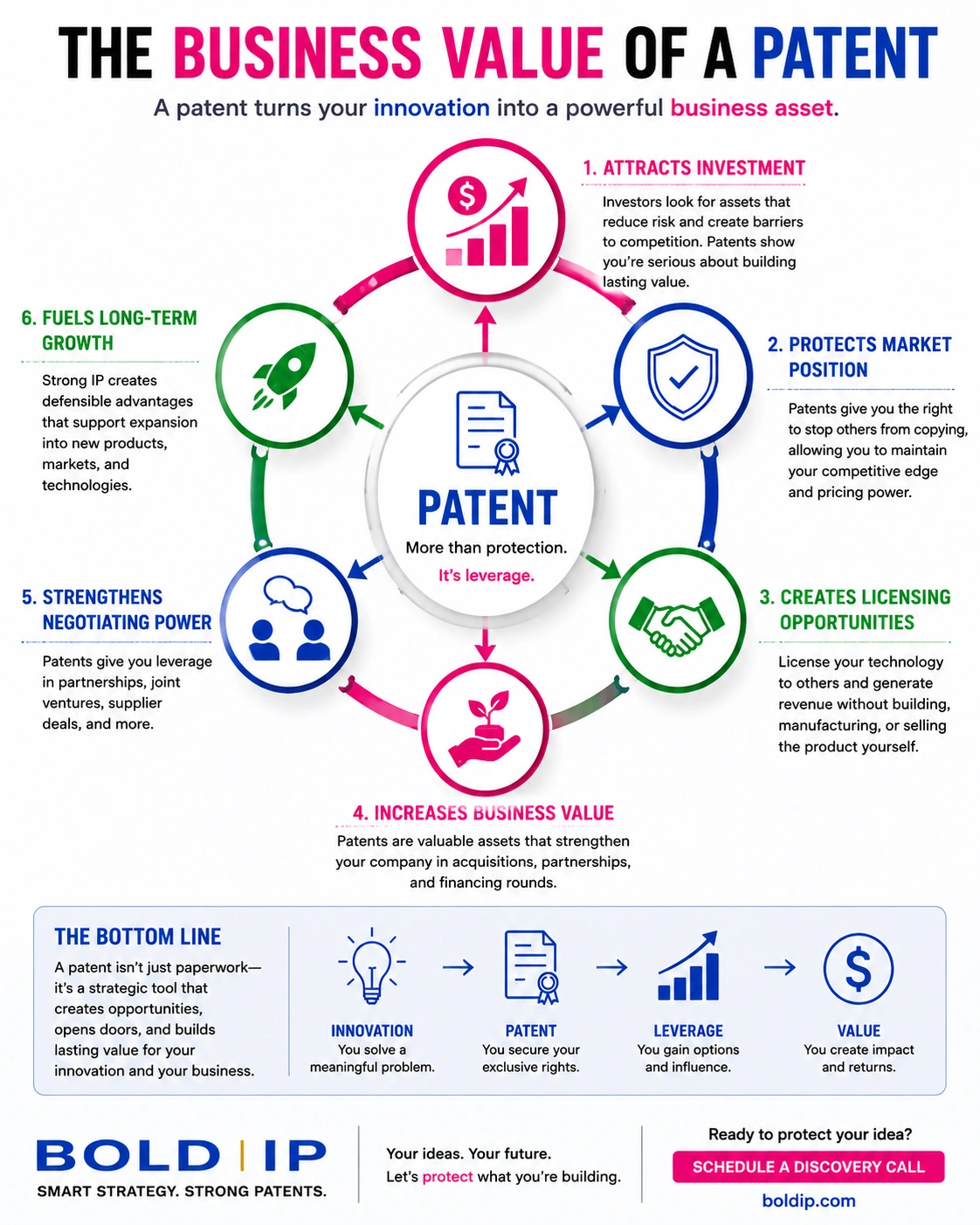
A patent gives you the ability to stop competitors from freely exploiting your innovation.
It’s not about preventing competition.
It’s about rewarding innovation.
Imagine two startups.
Company A
“We have a great idea.”
Company B
“We have a filed patent application protecting our core technology.”
Which one appears more investable?
Patents demonstrate commitment.
They show you’ve thought strategically.
They create tangible intellectual property investors can evaluate.
Many venture-backed companies begin filing patents long before becoming profitable because intellectual property is often one of their most valuable early assets. This reflects the same dynamic Alex encounters when investors begin asking, “What do you own?”
You don’t have to manufacture your invention.
Many inventors earn revenue by licensing patents.
Think of your patent as real estate.
You don’t always have to live there.
Sometimes it’s more valuable to lease it.
Licensing can create:
Patents often become valuable corporate assets.
During acquisitions…
Investments…
Joint ventures…
Partnership negotiations…
Potential buyers aren’t simply evaluating products.
They’re evaluating barriers to competition.
A strong patent portfolio often increases valuation because it reduces uncertainty.
You get the benefits of coaching combined with legal clarity. That creates safer deals, stronger leverage, and a clearer path forward.
Patents don’t always prevent litigation.
Sometimes they prevent the need for litigation altogether.
Competitors behave differently when they know intellectual property exists.
Suppliers negotiate differently.
Partners negotiate differently.
Potential acquirers negotiate differently.
Sometimes simply having patent rights changes the conversation.
Let’s be honest.
Patents won’t:
❌ Make customers buy your product.
❌ Guarantee funding.
❌ Eliminate competition.
❌ Fix poor execution.
❌ Replace great marketing.
Patents amplify good businesses.
They rarely rescue weak ones.
A small startup today can accomplish what once required a large engineering team.
That’s exciting.
It’s also dangerous.
Ideas move faster.
Competitors move faster.
Copying moves faster.
Which means protecting meaningful innovation becomes even more valuable.
AI is lowering the cost of invention.
Patents preserve the value of invention.
No. And that’s okay.
Some inventions succeed because of:
Sometimes a patent is the right strategy.
Sometimes it isn’t.
Good patent strategy begins with asking:
“What business problem am I trying to solve?” Not:
“Should I file because everyone else does?”
After speaking with a patent attorney, Alex realized something important.
He wasn’t buying paperwork. He was buying options.
Options to: License. Raise capital. Negotiate.
Expand internationally.
Protect years of engineering work.
The patent didn’t guarantee success.
It created opportunities that otherwise wouldn’t exist.
That changed everything.
Think about companies like:
Dyson
Tesla
Qualcomm
Medtronic
Apple
None rely on patents alone.
But every one of them uses patents strategically to support larger business objectives.
Patents don’t replace innovation.
They reinforce it.
✓ Will this invention create meaningful business value?
✓ Could competitors copy it?
✓ Would investors ask about intellectual property?
✓ Might someone license this technology?
✓ Would stronger IP improve my negotiating position?
If you answered “yes” to several of these questions, a patent strategy deserves serious consideration.
Patents are not trophies.
They’re strategic business assets. They create leverage.
They attract investment. They strengthen negotiations.
They increase company value.
And in today’s AI-powered economy, where innovation moves faster than ever, protecting meaningful breakthroughs may be more important than at any time in history.
🎥 Video: Five Reasons Every Inventor Should Consider a Patent
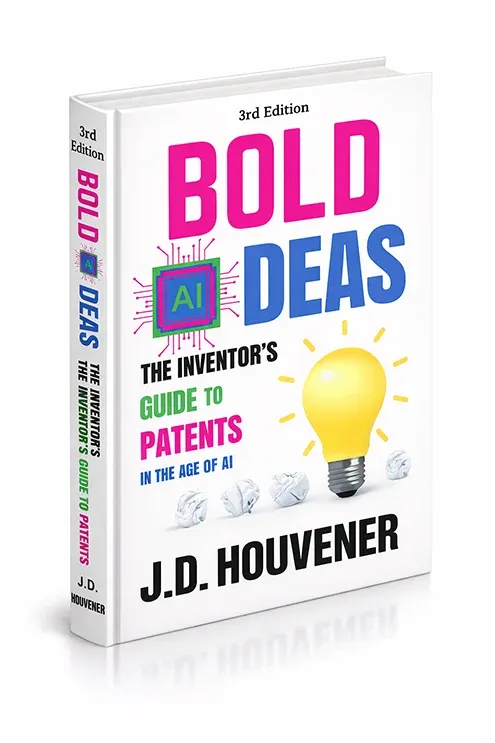
Written by Patent Attorney J.D. Houvener, this updated edition provides inventors, entrepreneurs, and startups with practical guidance for protecting ideas, avoiding costly mistakes, and navigating the patent process with confidence.
Whether you’re exploring a new invention, building a startup, or preparing to file a patent application, our team is here to help you move forward with confidence. Get personalized guidance from experienced patent professionals who understand the challenges inventors face.





We are a full-service patent and trademark prosecution firm. We help inventors and entrepreneurs research, protect, and monetize their intellectual property in the marketplace.
Schedule a Discovery Call 601-298-8425
Copyright © 2026 - Bold Patents• All Rights Reserved. Digital Marketing By: 