Boca Raton’s position on the coast bolsters its thriving innovation in industries like logistics, life sciences, and cleantech. When you make a new invention that benefits these or other industries, you want to protect that advancement so you can use it to support your financial future. A Boca Raton patent attorney can seek crucial patent protections that provide you with a competitive market advantage.
You can hire a patent attorney from Bold Patents with years of experience in patent law. Our team also knows the complexities of important industries in Boca Raton. Our firm can represent you, whether you run a small business, are beginning a new start-up, or are an independent inventor.
It can be complicated to get that protection. The attorneys at Bold Patents can help you file a patent application and pursue the rights you deserve.
There are three types of patent protection available under U.S. patent laws. They include:
An invention needs to meet the definition of one of these patent types, along with the general requirements of a patentable invention. These include being new, not an obvious derivative, and actually existing, with instructions on how to make and use the invention.
Innovators and inventors should be aware of several important industries in Boca Raton. This is because the growth in these industries can affect the landscape where your invention is made, and new advancements can open or close opportunities for patenting. Some important industries in the city include:
Several organizations and forces in the area support and grow these industries. These include:
Both small businesses and major corporations bolster innovation in their respective sectors. In Boca Raton, there are key:
In Palm Beach County, the healthcare and social assistance industry had 100,604 employees in 2023.
The City of Boca Raton Office of Economic Development supports innovation in many ways, from grants and incentives for small businesses to the development of the city. In 2025, the city’s five economic development projects led to about $90 million in investments and 600 new jobs.
Institutions like Florida Atlantic University, Lynn University, and Everglades University push innovation in many ways. These schools:
Several local resources can help inventors in Boca Raton, providing networking, financial funding, and facilities. These include:
Local investors. Entrepreneurs and inventors can secure financial support through local investors. In Boca Raton, Marc Bell Ventures has made 147 investments in the area. Other key investors include the Florida Institute for the Commercialization of Florida Technology, Forefront Venture Partners, and LongevityTech.fund.
It’s important to get targeted patent guidance for your specific industry. Find your industry below to discover specialized patent requirements, strategic approaches, and how our attorneys can transform your ideas into protected intellectual property and assets.
It’s possible to sell your invention idea without a patent, but there are more risks. You also have to take additional steps to provide some level of protection. When you begin discussions about selling the idea, you will need non-disclosure agreements to prevent your idea from being taken and used without being compensated. It’s also important to note that it’s harder to sell an invention idea if you do not have an existing prototype that functions.
An invention may be disqualified from a patent for several reasons, such as if:
The USPTO does not allow patenting of laws of nature, abstract ideas, suggestions, or physical phenomena. You also cannot patent atomic weapons that use nuclear material or atomic energy.
A patent attorney’s cost in Boca Raton depends on the attorney you hire and your invention’s specifics. Generally, a patent attorney charges an hourly fee. This fee depends on factors like:
More experienced attorneys likely have higher rates, although you should always check their case history yourself. If your invention is more complicated, it can take longer to prepare an application, thereby increasing your costs.
The fees for a patent in Florida include:
These fees vary significantly, depending on the type of patent you are applying for and whether you can get a fee discount of 60% or 80% as a small or micro entity. Application fees can range from $240 for a plant patent to $350 for a utility patent.
Reach out to Bold Patents today to learn more about your unique patent case.
Principal Patent Attorney, Bold Patents
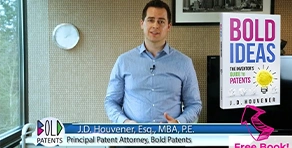





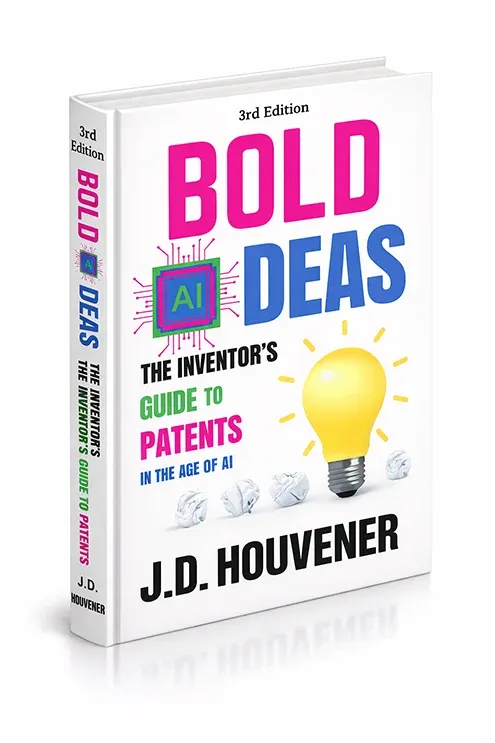
Written by Patent Attorney J.D. Houvener, this updated edition provides inventors, entrepreneurs, and startups with practical guidance for protecting ideas, avoiding costly mistakes, and navigating the patent process with confidence.
Whether you’re exploring a new invention, building a startup, or preparing to file a patent application, our team is here to help you move forward with confidence. Get personalized guidance from experienced patent professionals who understand the challenges inventors face.




We are a full-service patent and trademark prosecution firm. We help inventors and entrepreneurs research, protect, and monetize their intellectual property in the marketplace.
Schedule a Discovery Call 601-298-8425
Copyright © 2026 - Bold Patents• All Rights Reserved. Digital Marketing By: