
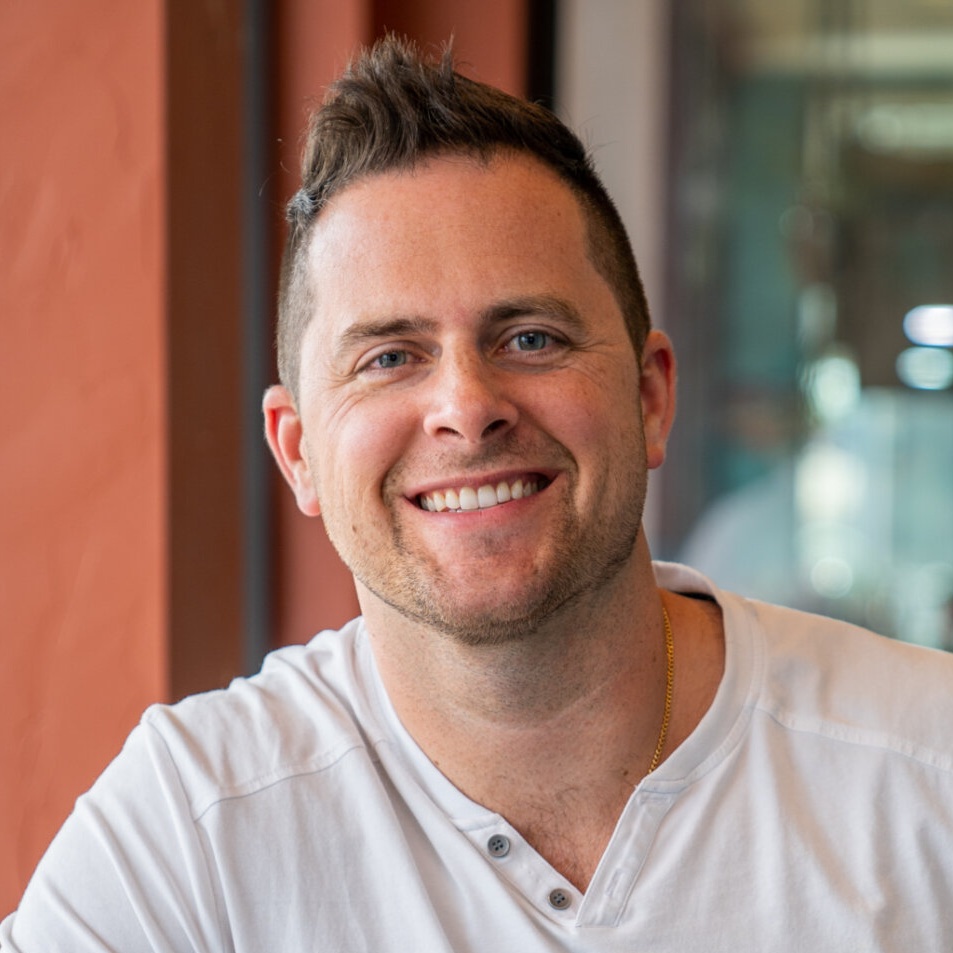
Patent Attorney and Founder
What if aging isn’t inevitable?
In this fascinating episode of the Bold Inventor Show, hosts J.D. Houvener and Matt Kulseth sit down with Dr. Bill Andrews, renowned scientist, inventor, and founder of Sierra Sciences. With decades of research focused on telomeres and telomerase, Dr. Andrews shares his groundbreaking perspective on why humans age, what most longevity experts get wrong, and how emerging technologies may one day extend human healthspan far beyond what we currently believe possible.
Whether you’re an inventor, entrepreneur, scientist, or simply curious about the future of human longevity, this conversation offers a thought-provoking look at innovation, patents, and one of humanity’s biggest challenges.
Bold Inventor Show Transcript
J.D. Houvener:
Hey everybody, welcome to the Bold Inventor Show. I’m your host, J.D. Houvener, joined by Matt Kulseth, my trusty co-pilot.
Matt Kulseth:
Hello, hello!
J.D. Houvener:
We’ve got a great guest waiting backstage today: Dr. Bill Andrews, PhD. We’re talking about the science of extending life, which is a topic that’s becoming more relevant as I enter my forties.
Before we bring him on, Matt and I were discussing AI and some recent patent and trademark questions from online forums. It’s amazing how much AI has improved when it comes to answering high-level intellectual property questions.
But let’s get to our guest.
J.D. Houvener:
Dr. Bill Andrews, welcome to the Bold Inventor Show.
Dr. Bill Andrews:
Glad to be on your show.
J.D. Houvener:
Tell us a little about yourself and how long you’ve been studying the science of aging.
Dr. Bill Andrews:
I’ve been studying aging my entire life. Since high school and college, I was involved in anti-aging clubs and discussions focused on questions like:
- What is aging?
- Why do we age?
- Could we evolve not to age?
- How exactly does aging happen?
Over the years, I’ve combined everything I’ve learned into a framework for understanding, and potentially curing, the aging process.
I consider aging a disease. Through my research, I’ve concluded that aging isn’t necessary. It evolved as a biological mechanism that limits lifespan after reproduction, allowing younger generations to adapt more rapidly to changing environments.
At Sierra Sciences, that’s our sole focus: solving the aging process so people can remain healthy, energetic, and functional much longer.
J.D. Houvener:
What do most longevity experts and anti-aging gurus get wrong?
Dr. Bill Andrews:
Many people believe aging is primarily caused by environmental damage, wear and tear, or DNA damage.
The problem with that theory is that humans already possess powerful repair mechanisms.
We’re not like an old truck rusting in a field.
When cells become damaged, healthy cells divide and replace them. We constantly repair ourselves. A sunburn disappears because our bodies regenerate the damaged tissue.
The real question is: why doesn’t this repair continue forever?
That answer emerged from discoveries made in the 1960s and later expanded upon in the 1990s.
Human cells can only divide a limited number of times.
Every time a cell divides, structures called telomeres, located at the ends of chromosomes, become slightly shorter.
Think of telomeres like the plastic tips on shoelaces. They protect the chromosomes. Each cell division shortens them slightly until they eventually become too short to support further division.
When that happens, cells enter a state called senescence and lose their ability to regenerate tissue effectively.
That’s one of the primary biological mechanisms behind aging.
J.D. Houvener:
So telomeres are essentially the biological clock?
Dr. Bill Andrews:
In many ways, yes.
Back in college, before we understood telomeres, my colleagues and I imagined cells carrying something like amusement park ride tickets.
Every time a cell divided, it would lose a ticket. Eventually, the tickets would run out.
Years later, I realized telomeres were those “ride tickets.”
Each division uses one.
Once they’re gone, the cell can no longer divide.
That discovery became foundational to my work.
J.D. Houvener:
What role does telomerase play?
Dr. Bill Andrews:
Telomerase is an enzyme that can restore those lost “tickets.”
It rebuilds telomeres.
Our reproductive cells naturally use telomerase to maintain telomere length. Otherwise, every generation would be born with shorter telomeres than the generation before it.
The fascinating thing is that all our cells contain the genetic blueprint for telomerase, but most cells switch that gene off early in development.
As a result, telomeres gradually shorten throughout life.
My research has focused heavily on understanding how to reactivate telomerase safely and effectively.
J.D. Houvener:
Many people are talking about CRISPR and gene editing. Does that change the future of aging research?
Dr. Bill Andrews:
Absolutely, although it’s important to recognize that gene editing existed long before CRISPR.
CRISPR became a household name because it was marketed exceptionally well.
The same thing happened with artificial intelligence.
I’ve been studying AI since the 1970s. The field isn’t new, it has simply become more powerful due to advances in computing.
The same principle applies to gene editing technologies.
These tools continue improving, and they may become important components in future longevity therapies.
J.D. Houvener:
Let’s shift to invention and patents. You’ve accumulated an impressive patent portfolio throughout your career.
Dr. Bill Andrews:
I hold more than fifty patents.
Ironically, I’ve never personally written a patent application. I’ve always relied on excellent patent attorneys who understand the science.
For me, patents have primarily served a defensive purpose.
I don’t use them to block others.
I use them to prevent others from blocking my research.
My goal isn’t to stop innovation. My goal is to ensure the work continues.
If another company succeeds in curing aging before I do, I’ll be first in line to receive the treatment.
J.D. Houvener:
So your focus has always been advancing the science rather than commercializing products?
Dr. Bill Andrews:
Exactly.
I invent technologies and then look for partners who can bring them to market.
I currently have dozens of inventions available for licensing.
Many of my licensing agreements are designed primarily to fund continued research rather than maximize profits.
My mission is simple: solve aging.
J.D. Houvener:
Are there any products currently available that stem from your research?
Dr. Bill Andrews:
One example is a nutraceutical product called Telo-Vital.
It’s designed to help activate telomerase naturally through plant-derived compounds.
While it doesn’t fully reverse telomere shortening, it may help slow the process.
I also have pharmaceutical and gene therapy technologies licensed through various companies focused on longevity science.
The ultimate goal remains the same: developing therapies capable of restoring telomeres more effectively and potentially reversing aspects of biological aging.
J.D. Houvener:
For inventors listening today, what’s the biggest takeaway?
Dr. Bill Andrews:
Keep pursuing the problem you’re passionate about.
I’ve spent decades working on what many people considered impossible.
Scientific breakthroughs often require long-term commitment, persistence, and a willingness to challenge conventional thinking.
The most meaningful inventions come from solving problems that truly matter.
Matt Kulseth:
This has been fascinating, Dr. Andrews. Your passion for the subject really comes through.
Dr. Bill Andrews:
Thank you. I appreciate the opportunity to share what we’re working on.
J.D. Houvener:
Dr. Bill Andrews, thank you for joining us and sharing your insights into longevity, telomeres, innovation, and the future of aging research.
Dr. Bill Andrews:
My pleasure.
J.D. Houvener:
And thank you to everyone listening to the Bold Inventor Show. Until next time, go big, go bold.