

Patent Attorney and Founder
Someone asked me a simple question the other day.
A friend of a friend had just received a patent. It was for a bitless bridle, a real, physical product. Something tangible you could hold, something you could use on a horse. A real win.
Now she was thinking about hiring a patent broker. And she wanted to know what to look for.
That question comes up more often than you might think.
When a patent is granted, it feels finished. You get the notice. You see your name in print. You might even frame it. There’s a sense of closure, like the hardest part is over.
But that feeling is misleading.
A patent sitting on a shelf doesn’t do anything. It doesn’t generate revenue. It doesn’t call potential buyers. It doesn’t explain itself. It doesn’t negotiate deals.
Someone has to do that work.
That’s where a patent broker comes in.
A broker’s job is to connect an inventor with someone who wants the rights to that patent. It might be a company that wants to manufacture and sell the product, a brand that wants to license the technology, or an investor who sees an opportunity others missed.
On paper, it sounds simple. In reality, it almost never is.
Finding the right broker matters more than most inventors realize.
I’ve seen great brokers open doors inventors could never reach on their own. Deals that would never have happened without the right introduction, the right framing, and the right timing.
I’ve also seen bad brokers drain momentum. Months go by. Sometimes years. Nothing happens. The inventor is left frustrated, confused, and wondering whether the patent itself was ever valuable.
Often, the problem isn’t the patent. It’s the broker.
So let’s talk about what actually matters when choosing one.
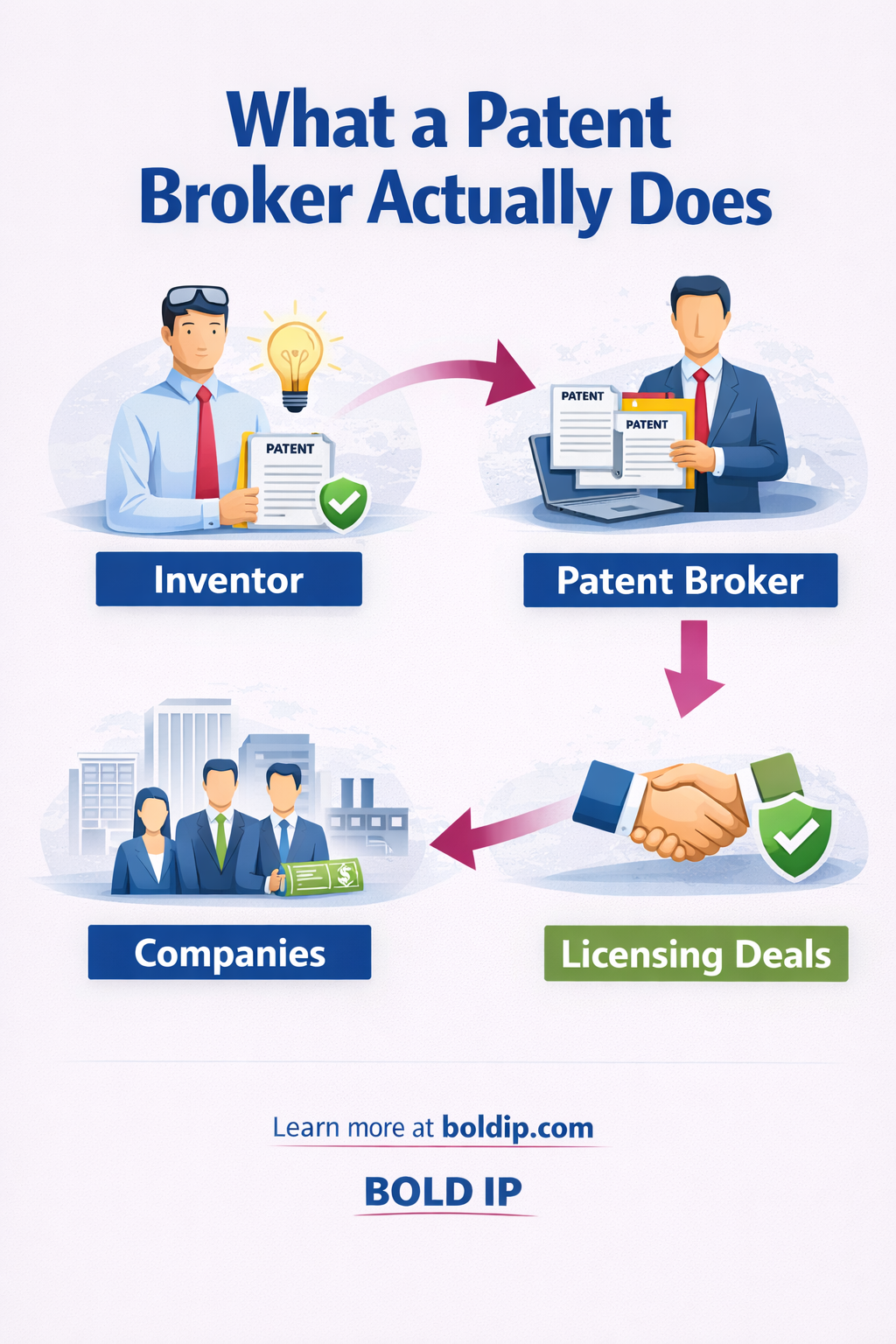
What a Patent Broker Really Does
First, it helps to understand what a broker does, and what they don’t do.
A broker does not magically create demand. They don’t force companies to care. They don’t wave a wand and make deals appear.
They work their network. They pitch. They explain. They follow up. They negotiate when interest appears.
Think of it like real estate.
A real estate agent can market a house well. They can list it properly, show it to the right buyers, and guide the transaction. But if the house is overpriced, poorly maintained, or in the wrong location, no one buys it.
It’s the same with patents. The broker is part of the equation, not the entire equation.
This is a point inventors often miss. They assume hiring a broker automatically means deals will happen. That’s rarely true. A broker can accelerate the process, but they can’t create demand where none exists.
Track Record Matters
The very first thing to ask about is track record. Not promises. Not enthusiasm. Not confidence. Actual results.
Ask what deals they’ve closed. How many patents they’ve sold or licensed. What industries they’ve worked in.
Then listen.
If the answers are vague, that’s a signal. If everything is “almost,” “close,” or “in talks,” be cautious.
Real success stories don’t need hype. They’re specific. You don’t necessarily need company names if confidentiality applies. But you do need details:
- What kind of patent was it?
- Was it a sale or a license?
- Roughly how long did it take?
- What stage was the patent at when they started?
Time matters here. Some deals close in a few months. Most don’t.
I remember one inventor who had a patent for a unique type of ergonomic keyboard. He hired a broker based solely on charm and confidence. Months passed. The broker made calls, sent emails, and talked about interest that never materialized. When the inventor asked for specifics, the answers were vague. It was frustrating. In the end, the patent wasn’t the problem, the broker’s lack of execution was.
That’s why track record is your first line of defense. Ask for specifics. And listen carefully to what isn’t said as well as what is.
Understanding the Process
Ask how they actually work. Who do they contact? How do they identify targets? Do they rely on cold outreach, warm introductions, or existing relationships?
There’s no single correct approach, but there must be a defined approach. If someone can’t explain it in plain language, that’s a red flag.
Communication is just as important.
- How often will you hear from them?
- Do you get regular updates?
- Do you see which companies they’ve contacted?
- Do you get feedback when companies pass?
Silence kills trust.
A good broker stays in touch, even when nothing is happening. And sometimes nothing happens for a while. That’s normal.
I’ve worked on deals where months passed without any real movement. It felt like nothing was happening. But when the broker maintained clear, regular communication, we stayed aligned. When a company finally expressed interest, the deal moved fast. Communication prevents frustration from turning into lost opportunity.
Fees and Compensation
Most patent brokers work on commission, typically 20–40% of the deal value, depending on the broker, the patent, and the scope of work.
Some charge upfront fees for marketing materials, valuation work, or outreach campaigns. That’s not automatically bad, but it must be justified.
Ask exactly what you’re paying for. Are you paying for actual effort and resources, or just access to a mailing list?
If there’s an upfront fee, ask what happens if nothing happens. Does the broker continue to actively work the patent, or does effort drop off once the check clears?
I once saw an inventor pay a significant upfront fee, expecting the broker to pitch their patent for several months. Instead, the work slowed dramatically after payment cleared. The patent languished. The inventor felt stuck. That situation could have been avoided with clear upfront discussion and expectations.
Contracts and the Tail
Brokerage agreements usually run for a fixed term, often six or twelve months. During that time, the broker represents you, pitches your patent, and tries to generate interest.
Many contracts include a “tail,” meaning the broker still earns a commission if a deal closes after the agreement ends. This isn’t sneaky, it’s common. Deals take time.
But the details matter. How long is the tail? Six months? A year? Two years? Does it apply to all companies or only those the broker contacted?
Read that section carefully. Never rush a brokerage agreement. I’ve seen inventors sign contracts without reading the tail clause, only to be surprised months later when a commission was owed for a deal that closed long after the relationship ended.
Who the Broker Is
I’ll admit my bias here. Brokers who deeply understand patents often do better work. And that often means they’re patent attorneys.
A patent isn’t just an idea. It’s a legal right defined by claims. If someone doesn’t understand claim scope, limitations, and design-around risks, they can oversell, or undersell, a patent.
Overselling kills credibility. Underselling leaves money on the table.
An experienced attorney can explain what the patent covers and what it doesn’t. They can answer tough questions when buyers push back. I’ve seen deals nearly die because no one could clearly explain the patent. One sentence would have saved it.
If the broker isn’t an attorney, ask how legal questions are handled. Do they work with one? Bring one in for negotiations? Or avoid technical questions altogether? Guesswork is expensive when real money is involved.
Valuation and Expectations
There’s no set price for a patent. Some brokers throw out unrealistic numbers; others lowball to make deals easier. Ask how they estimate value. Do they look at market size, competitive landscape, cost of designing around, existing products or substitutes? There’s no perfect method, but there should be a method.
And set expectations. Most patents do not get licensed. Most do not sell. That’s not an insult, it’s reality.
A good broker will be honest about that. They won’t sugarcoat it. They won’t pressure you into bad deals just to close something.
Pressure is a red flag. Fear-based selling is a red flag. Good deals don’t come from panic.
Exclusivity and Readiness
Most brokers want exclusive rights to represent your patent during the term. Exclusivity isn’t bad, it can focus effort. But the term needs to be reasonable. Six to twelve months is common. Years without performance is not.
Ask what happens if nothing happens. Can you walk away? Are there penalties? What obligations survive termination? Read the contract.
Finally, ask yourself: are you ready for this stage?
Brokerage works best when the patent is solid, clear, and market-ready. Not half-formed. Not constantly changing. Not uncertain.
Sometimes the smartest move is to wait. Build traction. Get users. Prove demand. Then bring in a broker. Timing matters more than most inventors realize.
Wrapping Up
Back to the bitless bridle example. It’s a physical product, which helps. Buyers can see it, touch it, and test it. That often makes deals easier than abstract software or method patents.
But the market still matters. Is it for hobby riders? Competitive riders? Trainers? Is it safer? Cheaper? Better for the horse?
A broker needs a clear story. If you can’t explain the value in one minute, neither can they.
Before hiring anyone, write down:
- Who would buy this
- Why they’d care
- What problem it solves
- Why it can’t be easily copied
Preparation makes everything else easier.
Trust is key. Trust between inventor and broker. Trust between broker and buyer. That trust grows from skill, clarity, and honesty. Titles and confidence matter less than competence and accuracy.
If a broker listens more than they talk, that’s a good sign. If they ask hard questions, even better.
Choosing a patent broker is like choosing a partner. You’re letting someone speak for you, explain your work, and negotiate on your behalf. That’s not small.
Slow down. Ask real questions. Read the fine print.
A broker can help unlock value, but they can’t create it from nothing. The patent has to carry its weight.
If you find someone who understands that, you’re on the right path.