
Patent Attorney and Founder
Can You Get Sued for Selling a Product You Bought?
Yes, anyone can sue you. But that doesn’t mean they’ll win.
Copyright vs. Patent
These are different:
- Copyright protects creative stuff, like books, songs, and movies.
- Patents protect inventions, like gadgets or tools.
They’re handled by different offices. Copyrights go to the Library of Congress. Patents go to the Patent Office.
Selling a Patented Item
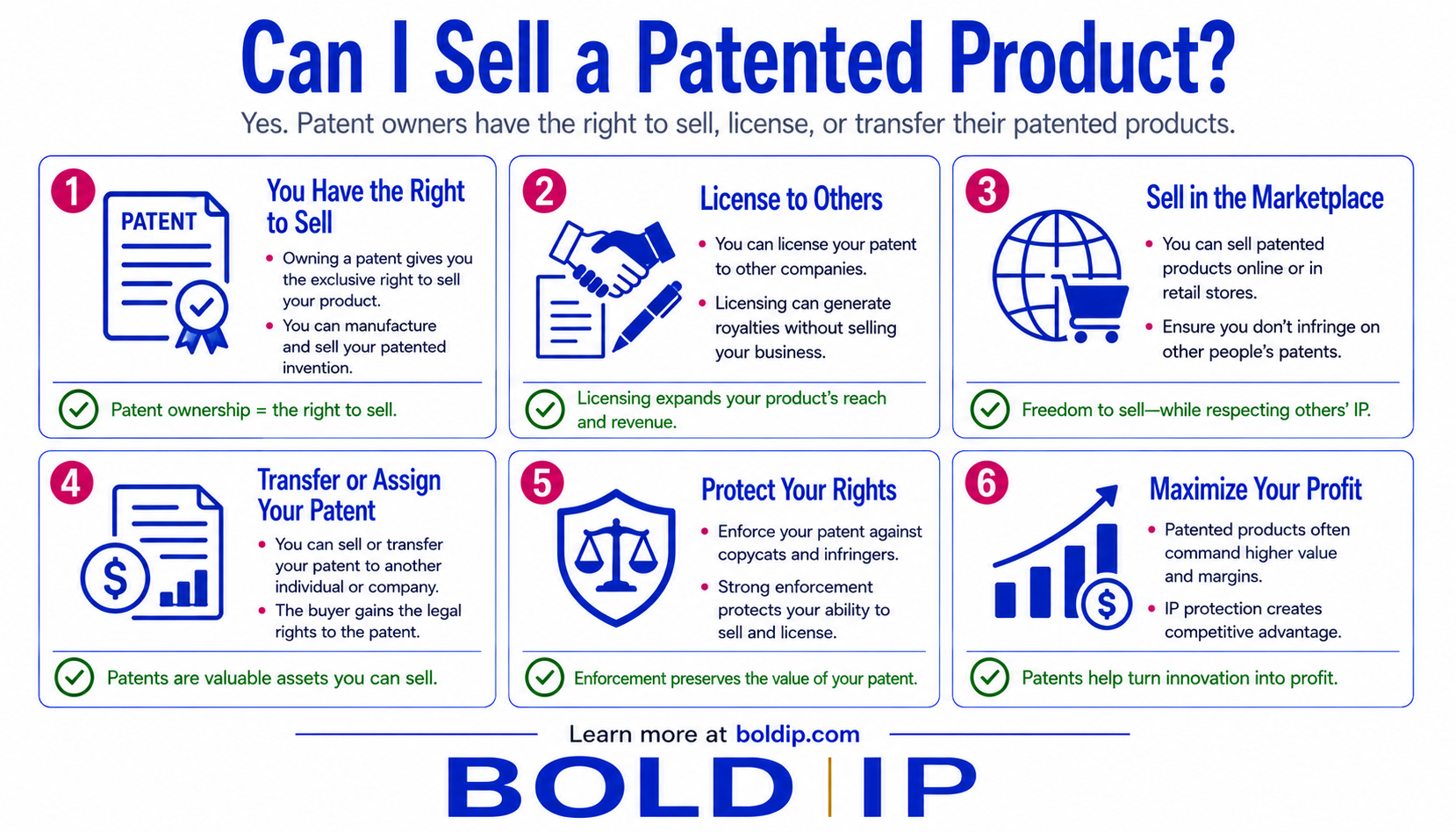
If you sell something that’s patented, it could be a problem. Patent owners have the right to stop others from making, using, or selling their invention.
But if they sold the product first, patent exhaustion might apply. That means you can resell the one you bought—but you can’t copy it or make more to sell.
Selling a Copyrighted Item
Copyright has a similar rule: the First Sale Doctrine. Once you buy a book or DVD, you can sell that exact copy.
For example, you buy a book on Amazon. Later, you sell it to someone else. That’s fine. But if you rewrite the book or make copies, that’s illegal.
What About Software?
Software is different. You don’t really buy it; you pay to use it. Companies use licenses to stop you from reselling it.
For example, if you subscribe to Microsoft Word, you can’t sell your account. You’re just renting the software.
In Short:
- Selling patented items? Only if you’re reselling something you bought.
- Selling copyrighted items? Fine if it’s a single copy, like a book.
- Software? You don’t own it, so you can’t sell it.
If you’re unsure, ask a lawyer.