
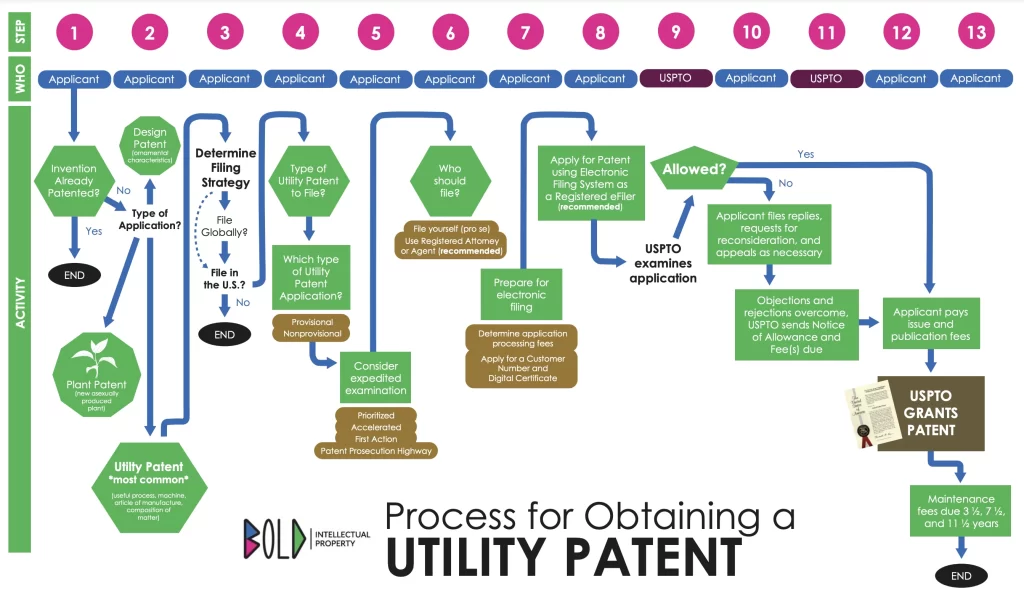
In a world that thrives on innovation and original ideas, protecting your invention with a utility patent is more important than ever. Utility patents safeguard your rights to exclusively manufacture, sell, or use your invention, keeping copycats at bay. This article offers a comprehensive guide on the complex yet crucial process of obtaining a utility patent.
When considering applying for a utility patent, it’s critical to understand what constitutes patentable subject matter. The invention needs to be novel, meaning it hasn’t been disclosed publicly in the exact form previously. Additionally, the invention must be non-obvious, implying that the invention wouldn’t be obvious to someone with skills and knowledge in the particular field. Lastly, it has to serve a specific, practical purpose, justifying its classification as “useful”.
Different types of patents protect different types of inventions. A utility patent covers the creation of a new or improved—and useful—product, process, or machine. If the invention falls within these parameters, the next crucial step is to determine whether the invention is indeed unique.
Key Parts of the Application: A utility patent application consists of several key parts. The specification describes the invention in detail and includes a written narrative and any necessary diagrams. Claims, arguably the most crucial part of the application, precisely define the invention’s legal boundaries, effectively determining the patent’s breadth. The abstract provides a brief summary of the invention, while the drawings offer visual representations, essential for understanding the invention’s design and function.
Provisional v. Non-Provisional Application: Deciding whether to file a provisional or non-provisional application is a crucial step in the patent application process. A provisional application is often the first step taken by inventors. It’s a relatively low-cost filing that allows the inventor to claim “patent pending” status for their invention for up to 12 months. Provisional applications do not require formal patent claims or an oath or declaration, making them simpler and faster to prepare than non-provisional applications. They serve as a placeholder, giving inventors time to perfect their inventions or assess the market potential before committing to the more complex and expensive non-provisional application process.
On the other hand, a non-provisional application is a formal application examined by a patent examiner at the USPTO and can lead to an issued patent. It is more complex and time-consuming to prepare than a provisional application, but it starts the official examination process towards securing a patent. If a provisional application was filed, the non-provisional application must be filed within 12 months to benefit from the earlier filing date.
Electronic Filing System: The Electronic Filing System (EFS-Web) is the online patent application submission portal provided by the USPTO. It allows inventors or their representatives to submit patent applications securely and conveniently. This system also facilitates real-time tracking of applications and faster response times compared to paper submissions. Overall, it offers a streamlined, user-friendly platform that simplifies the patent application process.
After your utility patent application has been filed, it will enter the examination process, which is conducted by the USPTO. Initially, a patent examiner will review your application to verify that it complies with the formal requirements. They will then conduct a thorough search of existing patents and publications to compare your invention against the known prior art.
Subsequently, the examiner will assess the patentability of your invention, examining whether it is novel, non-obvious, and useful. They will then issue an “Office Action,” a document that may contain a mix of rejections, objections, and inquiries about your application. This often includes specific details about which claims are rejected or allowed and why, enabling you to understand the examiner’s concerns and objections.
In response to an Office Action, you or your representative will need to file a response. This often includes argumentation or amendments to overcome the examiner’s objections and rejections. The examiner will review your response and, if satisfied, may issue a “Notice of Allowance,” indicating that your patent will be granted upon payment of the issue fee. However, if not satisfied, the examiner may issue a “Final Rejection.” At this point, you can either abandon the application, respond with further arguments or amendments, appeal the rejection to the Patent Trial and Appeal Board (PTAB), or pursue other options such as filing a continuation application.
Upon receiving a Notice of Allowance, your next step is to pay the issue fee to the USPTO. Once the issue fee is paid and processed, the USPTO will issue the patent and publish it in the Official Gazette. With the patent now in hand, you have the legal right to exclude others from making, using, selling, or importing your patented invention in the United States. This right, however, doesn’t automatically enforce itself. It’s your responsibility as the patent holder to monitor for potential infringements and, if necessary, take legal action to enforce your rights.
Maintaining your utility patent involves paying maintenance fees to the USPTO at intervals of 3.5, 7.5, and 11.5 years from the date of the patent grant. These fees are crucial in keeping your patent rights in force. If you fail to pay the maintenance fees, your patent rights will expire before the end of the maximum 20-year term. Regularly monitoring these deadlines can help ensure that you don’t unintentionally lose these valuable rights.
Securing a utility patent can be a pivotal step in safeguarding your invention, fostering innovation, and potentially driving significant economic gains. However, the patent application process can be complex and meticulous, requiring a thorough understanding of patent law and careful attention to detail.
A patent attorney at Bold Patents can provide you with expert guidance, significantly increasing your chances of success and allowing you to focus on what you do best—innovating. Take your invention to the next level by ensuring it has the robust protection a utility patent can provide. Contact Bold Patents today for a free screening and consultation call!
NPA EXAMPLE:
How Bold Patents Does NPAs
PATENT CLAIMS:
Additional insight on Patent Claims can be found in Chapter 7 of our book, “Bold Ideas”
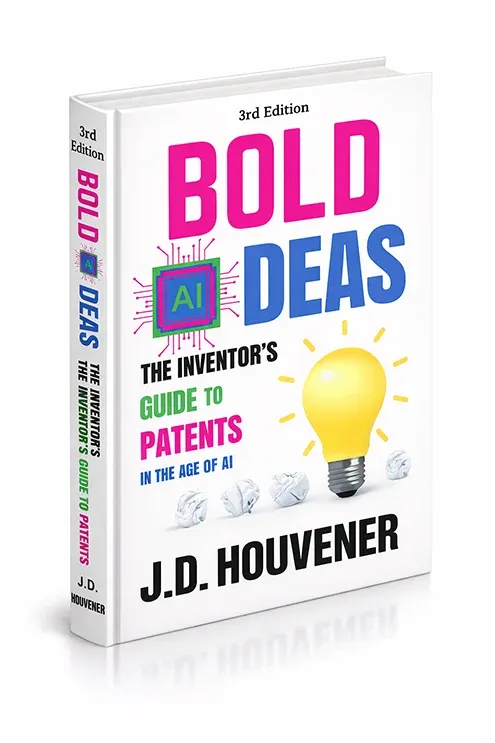
Written by Patent Attorney J.D. Houvener, this updated edition provides inventors, entrepreneurs, and startups with practical guidance for protecting ideas, avoiding costly mistakes, and navigating the patent process with confidence.
Whether you’re exploring a new invention, building a startup, or preparing to file a patent application, our team is here to help you move forward with confidence. Get personalized guidance from experienced patent professionals who understand the challenges inventors face.





We are a full-service patent and trademark prosecution firm. We help inventors and entrepreneurs research, protect, and monetize their intellectual property in the marketplace.
Schedule a Discovery Call 601-298-8425
Copyright © 2026 - Bold Patents• All Rights Reserved. Digital Marketing By: 