Last Modified on August 24, 2026

Confused by the patent process? Learn why taking one small step at a time can help you protect your invention and move forward with confidence.
Have you ever looked at the patent process and thought, “This is way too confusing. Maybe I just shouldn’t start”?
If so, you’re not alone.
I’ve worked with a lot of first-time inventors, and one of the biggest obstacles isn’t necessarily the invention itself. It’s the uncertainty surrounding everything that comes next.
What should you file? When should you file? Do you need a prototype? What happens after you file? What if someone copies you? And what happens if a much bigger company infringes your patent?
That’s a lot of questions.
And when you don’t have the answers, it’s easy to fall into what I call analysis paralysis. You start overthinking every decision, researching every possible outcome, and convincing yourself that you need to understand the entire patent system before you can take the first step.
Here’s the mindset shift I want you to consider:
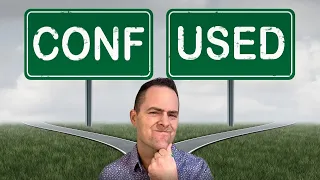
Confusion isn’t a stop sign. It’s a starting point.
You don’t have to understand everything today. You just need to understand the next step.
What We’ll Cover
In this guide, I’ll walk you through:
- Why the patent process can feel so overwhelming
- Why taking one small step can reduce uncertainty
- Three real-world examples of inventors who moved forward without having everything figured out
- Why your invention can become clearer as you develop it
- How to approach your own patent journey with more confidence
Why the Patent Process Feels So Confusing
Let’s be honest: patents involve a lot of moving pieces.
You may hear terms like provisional application, non-provisional application, claims, prior art, patent prosecution, office actions, maintenance fees, licensing, and infringement.
If you’re new to intellectual property, it can feel like you’re learning an entirely new language.
And then there’s the fear that comes after filing.
You might think:
“What if someone copies my invention?”
Or:
“What if a huge company takes my idea?”
Or:
“What if I spend all this money and the patent doesn’t help my business?”
Those are legitimate questions. But there’s a difference between asking smart questions and allowing uncertainty to prevent you from doing anything.
I’ve seen inventors spend so much time trying to eliminate every possible risk that they never actually move forward.
That’s where you need to change your approach.
Don’t Try to Understand Everything at Once
Think about learning to ride a bicycle.
You don’t study every possible mechanical failure before you get on the bike. You don’t memorize every traffic law before taking your first ride around the block.
You learn the basics.
Then you take the first ride.
Then you learn from the experience.
The patent process can work the same way.
You take one step.
Then you figure out the next step.
Then the next.
Before you know it, you’ve moved much farther than you would have if you’d spent six months simply worrying about where to begin.
That doesn’t mean you should rush into filing a patent without understanding your options. It means you shouldn’t demand perfect certainty before taking responsible action.
For example, you might start by learning whether your invention could qualify for a utility patent, which generally protects how an invention works or is used, or a design patent, which protects the ornamental appearance of a product.
If you’re not sure which applies to your invention, start with the basics:
Learn more about utility patents
Learn more about design patents
That’s one step.
And one step is progress.
Three Inventors Who Didn’t Have Everything Figured Out
One of the reasons I encourage inventors to take action is that history gives us plenty of examples of innovation developing through the process.
1. Whitney Wolfe Herd and Bumble
You’ve probably heard of Bumble.
Whitney Wolfe Herd wasn’t a patent attorney or a technical inventor who had spent years studying intellectual property. She was an entrepreneur who helped build a new approach to online dating.
Bumble launched in 2014, and the company has continued developing technology and intellectual property around its platform.
The bigger lesson for inventors isn’t that you need to know everything about patents before building a company.
It’s the opposite.
You can learn as you build.
You identify the important technology or functionality. You investigate your intellectual property options. You protect what makes sense. Then you continue developing the business.
You don’t need to have the entire roadmap on day one.
2. Amos Winter and the Leveraged Freedom Chair
Here’s another great example.
Amos Winter, an MIT engineer, worked on the Leveraged Freedom Chair, a wheelchair designed to help people navigate difficult terrain, particularly in developing countries.
The concept used a lever-driven system to provide mechanical advantage, essentially allowing the user to adjust how the wheelchair converts their effort into movement.
There were prototypes. There was testing. There was refinement.
And eventually, there was patent protection.
That’s an important lesson.
Your first version doesn’t necessarily have to be your final version.
You can develop an invention, learn from testing, improve it, and refine what you’re trying to protect.
That’s part of innovation.
3. Spencer Silver and the Post-it Note
This one is one of my favorites.
Spencer Silver was a 3M scientist working on adhesives when he developed an unusual adhesive that wasn’t especially strong. In fact, its ability to stick lightly and then be removed made it seem like it might not have much practical value.
Then another 3M researcher, Art Fry, found an application for it: repositionable notes.
And eventually, the product we know as the Post-it Note emerged.
Think about that.
The original discovery wasn’t immediately accompanied by a perfect business plan.
The application became clearer over time.
The technology evolved.
The commercial opportunity became clearer.
And that’s exactly why I don’t want inventors to believe they need to have every answer before they start.
Sometimes Clarity Comes After You Take Action
This is probably the biggest lesson I want you to take away from these examples.
You don’t always get clarity before you move forward. Sometimes you get clarity because you move forward.
That’s a big difference.
You might start by describing your invention.
That process may force you to think about exactly what makes your invention different.
You might conduct a patent search.
That research may reveal competitors or prior art you hadn’t considered.
You might build a prototype.
That prototype may reveal a better version of your original idea.
You might talk to potential customers.
Their feedback could completely change how you approach the market.
None of those things mean your original idea was a failure.
They’re part of the process.
Your Patent Journey Is a Series of Steps
Instead of thinking:
“I need to understand the entire patent process.”
Try thinking:
“What’s the next responsible step?”
That question is much easier to answer.
Your next step might be:
- Write down how your invention works.
- Identify what makes it different.
- Conduct an initial patent search.
- Evaluate whether patent protection makes sense.
- Talk with a patent professional.
- Decide whether to file a provisional or non-provisional application.
- Continue developing your invention and business.
The right sequence depends on your specific circumstances, but the mindset remains the same.
One step at a time.
And remember, filing a patent is only one part of the larger intellectual-property strategy.
You also need to think about what the patent could ultimately be worth, how it fits into your business, whether licensing makes sense, and how you would respond if someone uses your patented invention without permission.
If you’re concerned about the financial side, you can also learn more about:
And if commercialization is part of your plan:
What About Patent Infringement?
This is another place where inventors can get overwhelmed.
You might think, “Okay, I finally get my patent. Now what happens if a big company copies me?”
First, remember that a patent doesn’t automatically stop everyone from making or selling something similar. A patent gives you certain legal rights, but enforcing those rights can involve additional analysis and, in some cases, litigation.
If someone uses your patented invention without permission, what lawyers call patent infringement, you may have legal options.
But you don’t need to solve your hypothetical infringement case before you’ve even taken the first step toward protecting your invention.
That’s putting the cart before the horse.
Learn about your options. Understand the risks. Build a strategy.
Then keep moving.
If you want to understand more about enforcement, here’s a useful resource:
What If a Patent Isn’t the Right Answer?
Here’s another important point: not every invention needs a patent.
Sometimes another form of intellectual property protection may make more sense.
For example, a trade secret is information that derives value from not being generally known and that you take reasonable steps to keep secret.
Think about Coca-Cola’s famous formula. The value isn’t necessarily in telling everyone how it works. The value can come from keeping certain information confidential.
Depending on your situation, you might consider patents, trade secrets, trademarks, copyrights, or a combination of protections.
That’s why the first step isn’t always “file a patent.”
The first step is understanding what you’re trying to protect and why.
Learn more about trade secrets
Don’t Let Fear Make the Decision for You
I want to come back to where we started.
The patent process can absolutely feel confusing.
There are legal requirements. There are costs. There are deadlines. There are strategic decisions.
But confusion doesn’t mean you should give up.
And fear doesn’t have to make the decision for you.
Instead, break the process down.
Ask yourself:
What’s one thing I can learn today?
Then:
What’s one thing I can do tomorrow?
That’s how progress happens.
You don’t need to know everything about patents before you begin. You need enough information to make the next informed decision.
And if you aren’t sure what that next decision should be, that’s where talking with a patent attorney can help.
You can also use our patent glossary to get familiar with some of the terminology you’ll encounter along the way.
The Bottom Line: Confusion Is a Starting Point, Not a Stop Sign
If you’re sitting on an invention right now because the patent process feels overwhelming, don’t beat yourself up.
Take a breath.
You don’t have to solve everything today.
The examples of Bumble, the Leveraged Freedom Chair, and the Post-it Note remind us of something important: innovation often develops through experimentation, refinement, and action, not perfect certainty from day one.
So take the first step.
Then take the next one.
And then the next.
The question I’d ask you is this:
What’s one small step you could take toward protecting or developing your invention this week?
It may be smaller than you think, and that’s okay.
It is my hope that this article gives you the knowledge and clarity you need to Go Big and Go Bold℠!
If you have questions about protecting your invention, book a free discovery call with Bold Patents. We’d love to help you figure out what your next step could be.
Legal Note
Legal Note: This blog article does not constitute legal advice. Although the article was written by a licensed USPTO patent attorney there are many factors and complexities that come into patenting an idea. We recommend you consult a lawyer if you want legal advice for your particular situation. No attorney-client or confidential relationship exists by simply reading and applying the steps stated in this blog article.