Last Modified on October 06, 2026

If you’ve ever wondered whether a band name could create a trademark problem, whether you can get an “international design patent,” or what happens when someone copies your patented invention, you’re asking the right questions.
These are exactly the kinds of intellectual property questions inventors, entrepreneurs, creators, and business owners run into as their ideas and brands become more visible.
In this article, I’ll walk through several real-world IP questions and explain how I’d think about them as a patent attorney.
In This Guide, We’ll Cover
- When a famous album title could create a trademark problem
- How international design patent protection actually works
- Why trademark applications can get surprisingly complicated at the USPTO
- When using another company’s brand in your content could create legal problems
- What patent litigation actually means, and what a patent does not do for you
1. Can a Band Name Conflict With an Existing Album Title?
Here’s an interesting one.
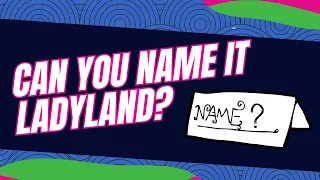
Suppose you’re forming a band and want to call it Lady Land. Then you discover that Jimi Hendrix had an album called Electric Ladyland.
Does that automatically mean you’ve got a trademark problem?
Probably not.
The important question isn’t simply whether the words are similar. You have to look at how the name is being used and whether consumers are likely to be confused about the source of the goods or services.
In other words, an album title isn’t necessarily functioning as a trademark in the same way a band name does.
A trademark generally identifies the source of goods or services. A band name, for example, can function as a brand identifying the musical entertainment services provided by that band.
An album title can be different.
That doesn’t mean you should skip the trademark search.
If you’re planning to build a serious business around a band name, I’d still recommend having an attorney conduct a search of the USPTO database and other relevant sources before investing heavily in the name.
You want to know:
- Is another band already using the name?
- Is a music producer using something confusingly similar?
- Is the name registered as a trademark?
- Are the goods or services related?
- Could consumers reasonably believe the businesses are connected?
The age of the other work isn’t necessarily the deciding factor.
Even if the other album came out decades ago, you still want to understand what rights exist today.
Trademark Protection for Musicians
If you’re building a music brand, there can also be more than one trademark category to consider.
For example, Class 41 can cover entertainment services such as live musical performances.
You may also need to think separately about the branding associated with sound recordings.
The larger point is this:
Don’t assume your brand only needs one trademark filing.
The right filing strategy depends on what you’re actually doing, or plan to do, with the brand.
If you’re new to trademarks, check out the Patent Glossary to get familiar with some of the terminology you’ll encounter.
2. Is There Such a Thing as an International Design Patent?
Here’s another common misconception I hear:
“How long does it take to get an international design patent?”
Technically, there’s no single worldwide “international design patent” that gives you protection everywhere.
Patent rights are generally territorial. That means you need protection in the countries or jurisdictions where you want enforceable rights.
But there are international filing systems that can make the process much more efficient.
For industrial designs, one important system is the Hague Agreement.
The Hague system can allow applicants to seek protection for an industrial design in multiple participating jurisdictions through a centralized international application.
That can save time and reduce some of the administrative burden compared with starting completely separate processes from scratch in every country.
But there’s an important distinction:
An international filing system isn’t the same thing as a single worldwide patent.
Individual countries or jurisdictions can still apply their own substantive rules.
Depending on where you’re seeking protection, you may eventually need to work with local counsel or comply with specific national requirements.
How Long Does International Design Protection Take?
There’s no universal timeline.
It depends on:
- The countries you’re targeting
- Whether the design qualifies for protection
- Examination requirements
- Whether objections or other issues arise
- Whether local counsel becomes necessary
- How many jurisdictions you’re pursuing
Design patents can sometimes move more quickly than utility patents because the focus is primarily on the ornamental appearance of the product rather than a lengthy set of functional claims.
But don’t treat that as a guarantee.
Every application is different.
If you’re considering a design patent in the United States, learn more about filing a design patent.
If you’re trying to decide whether your invention needs protection for its function rather than its appearance, check out the utility patent guide.
3. Why Can the USPTO Sometimes Seem Like It Doesn’t Make Sense?
This is one of the frustrations I hear from business owners all the time.
You might have a trademark that’s been registered for years, only to encounter a completely unexpected problem later.
Here’s a real-world type of situation I’ve seen.
A client had an existing trademark registration. When it came time to deal with the registration and its associated filing requirements, we discovered that the original application had been filed too broadly.
The company wasn’t actually selling all of the products listed in the application.
Eventually, the USPTO took the position that the trademark wasn’t being used across the claimed goods and services.
That meant we had to narrow things down and ultimately pursue a new application.
Then the situation became even more complicated.
Another trademark with a similar name had been registered during the period when the client’s earlier registration existed. Another similar application was also filed.
From the business owner’s perspective, it can feel like:
“How did the USPTO allow that trademark to register if our trademark was already there?”
That’s a fair question.
Trademark examination isn’t a perfect system.
Applications can be examined at different times, facts can change, identification of goods and services can differ, and issues that seem obvious to a business owner may not be evaluated in exactly the way the business owner expects.
That’s why having an experienced trademark attorney involved can be valuable when the situation becomes complicated.
Sometimes the answer isn’t simply, “The USPTO made a mistake.”
You have to look at the specific applications, registrations, goods and services, filing dates, evidence, and procedural history.
Don’t Overreach With Your Trademark Application
There’s another lesson here that’s worth emphasizing.
When you file a trademark application, you don’t necessarily want to claim every possible product or service you might sell someday.
Your application needs to accurately reflect your business and your legitimate use or intended use, depending on the filing basis.
Overreaching can create problems later.
Your trademark strategy should be connected to your actual business strategy.
4. Can You Use Another Company’s Brand Name in Your YouTube Channel?
Let’s say you and your partner are traveling around the country and documenting your adventures online.
You come up with a clever channel name that plays off a famous outdoor shoe brand.
Maybe you’re thinking:
“We’re tiny. Nobody is going to care.”
That might be true.
But what happens if your channel suddenly goes viral?
That’s when things can get more interesting.
If your name creates the impression that you’re affiliated with, sponsored by, or endorsed by the brand owner, you could potentially have a trademark problem.
The Difference Between Mentioning a Brand and Building Your Brand Around It
There’s an important distinction here.
Imagine you’re reviewing a pair of shoes and you mention the brand during your video.
That’s very different from naming your entire travel channel something like:
“Nike Adventures.”
In the first example, you’re talking about someone else’s product.
In the second, you’re potentially using someone else’s trademark as part of your own brand.
That distinction matters.
You also have to consider the context.
Ask yourself:
- Are you reviewing the company’s product?
- Are you using its logo?
- Is the brand name in your video title?
- Is it part of your channel name?
- Are viewers likely to think the company sponsors you?
- Are you making money from the association?
- Is the third-party brand famous?
The more your business appears to trade on someone else’s brand recognition, the more carefully you should analyze the situation.
And here’s something else to remember:
Getting permission changes the analysis.
If a brand owner actually gives you permission to use its trademark, that’s very different from simply assuming you’re allowed to use it because you’re small.
If you’re building a media business or online brand, it’s worth thinking about trademark clearance before you build an audience around a potentially problematic name.
5. What Is Patent Litigation?
Now let’s move from trademarks to patents.
What exactly is patent litigation?
In plain English, patent litigation is what happens when a patent owner takes legal action against someone they believe is infringing their patent rights.
A patent gives its owner certain exclusive rights.
For example, depending on the type of patent and the claims involved, those rights can relate to making, using, selling, offering for sale, or importing a patented invention.
But here’s the important part:
The USPTO doesn’t enforce your patent for you.
There’s no USPTO police force that’s going to show up at a competitor’s factory because you discovered they’re making something you believe infringes your patent.
If you believe someone is infringing your patent, you generally have to take action yourself.
That’s where enforcement, and potentially litigation, comes in.
Utility Patent Infringement
With a utility patent, the analysis focuses heavily on the claims.
Think of the claims as the legal boundaries of your patent.
If an accused product doesn’t meet every required element of a particular claim, you may not have infringement of that claim.
That’s why patent claims are so important.
It’s not simply:
“Their product looks like mine.”
You have to analyze the specific legal scope of the patent.
Design Patent Infringement
Design patents work differently.
With a design patent, the focus is on the patented ornamental design.
One important question is whether an ordinary observer would view the accused design as substantially the same as the patented design.
That means the visual appearance of the products becomes central to the analysis.
If you’re interested in understanding the different types of patent protection, read our guides to utility patents and design patents.
Most Patent Disputes Don’t Start With a Trial
When people hear “patent litigation,” they sometimes picture two companies walking into a courtroom for a dramatic trial.
That’s not necessarily how it plays out.
Many disputes are resolved before reaching trial.
A patent owner might first investigate the situation, communicate with the alleged infringer, negotiate, pursue licensing discussions, or take other legal steps.
Depending on the circumstances, the parties may ultimately settle.
That doesn’t mean litigation isn’t serious.
It means that litigation is one part of a much larger enforcement and dispute-resolution process.
And if you’re considering enforcing a patent, you should understand the potential costs and risks before jumping in.
You can learn more about the subject in our guide to patent litigation.
You may also want to consider whether patent licensing could accomplish your business objectives without taking the dispute all the way to litigation.
Your Patent Is a Business Asset, Not a Police Badge
This is probably the biggest takeaway I want you to remember.
Getting a patent is not the end of the process.
It’s a legal asset.
You still need to decide what you’re going to do with it.
Are you going to:
- Manufacture the product yourself?
- License the technology?
- Sell the patent?
- Use it to attract investors?
- Keep competitors out of a particular market?
- Enforce it against an infringer?
Those are business decisions.
And they should be part of your patent strategy from the beginning.
That’s also why understanding patent costs matters. You don’t want to spend money obtaining intellectual property without having a realistic plan for how that intellectual property fits into your business.
The Bottom Line
Intellectual property questions rarely exist in isolation.
A band name can raise trademark questions. A viral YouTube channel can create brand issues. An international product launch can raise design-patent questions. And a successful patent can eventually lead to an enforcement decision.
The key is to think about your IP before you have a problem.
Here are the big takeaways:
- Don’t assume an existing album, product, or company name automatically prevents you from using a similar name. Look at the actual trademark rights and likelihood of confusion.
- There is no single worldwide design patent. International filing systems can simplify the process, but protection still depends on the relevant jurisdictions.
- USPTO trademark examination isn’t always predictable. Your application should accurately reflect your business and be strategically prepared.
- Mentioning another company’s brand isn’t necessarily the same as using it as your own trademark. Context matters.
- The USPTO doesn’t enforce your patent for you. Patent owners generally have to take action when they believe someone is infringing.
- Patent litigation isn’t the only option. Licensing, negotiation, and settlement can all play important roles.
So here’s the question I’d encourage you to ask yourself:
If your invention or brand became wildly successful tomorrow, would your intellectual property strategy be ready for it?
That’s the kind of question worth answering before the problem shows up.
It is my hope that this article gives you the knowledge and clarity you need to Go Big and Go Bold℠!
If you have questions about protecting your invention, brand, or other intellectual property, book a free discovery call. We’d love to help.
Legal Note
Legal Note: This blog article does not constitute legal advice. Although the article was written by a licensed USPTO patent attorney there are many factors and complexities that come into patenting an idea. We recommend you consult a lawyer if you want legal advice for your particular situation. No attorney-client or confidential relationship exists by simply reading and applying the steps stated in this blog article.