Last Modified on June 23, 2026

Today I want to tackle a big question: how do you file a utility patent application?
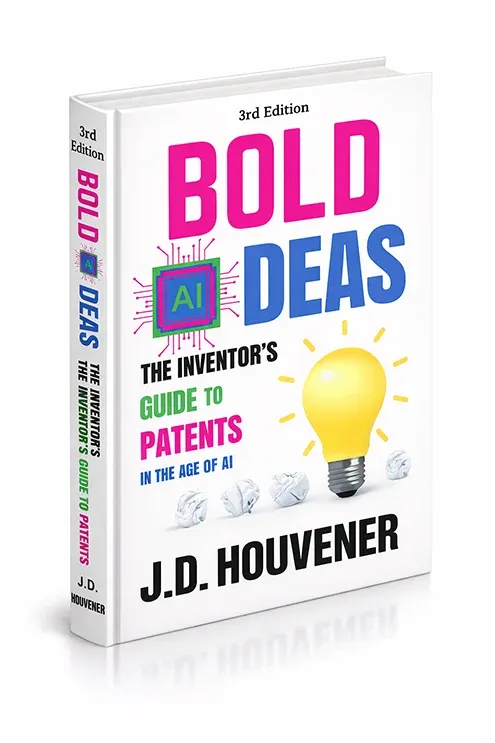
I’m JD Houvener, founder and patent attorney here at Bold Patents Law Firm. I also wrote Bold Ideas: The Inventor’s Guide to Patents. If you want a deeper dive, you can grab a free PDF copy in the Bold Inventor’s Kit linked below.
Let’s break the process into four main steps.
Step 1: Prepare your application
Start with what you already have. Collect sketches, notes, prototypes, or even those napkin drawings from years ago. The goal is to pull together as much detail as you can about your invention.
This is also where a patent search comes in. You need to know if your idea is truly new. A professional search looks through patents, books, and even online articles to make sure no one else has done it before. If it passes the test, you’ve cleared the first hurdle.
Step 2: Draft the documents
A patent application has several parts:
- Specification – the written description of your invention.
- Claims – the numbered points that define exactly what you own.
- Abstract – a short, plain-English summary.
- Drawings – optional, but almost always helpful. Good drawings can make or break your application.
- Oath/Declaration – a signed statement saying you’re the true inventor.
- Application Data Sheet – basic info about you or your company.
At Bold Patents, we also use professional drafters when an invention needs clear technical drawings. It’s often worth it.
Step 3: File with the USPTO
Once everything’s ready, you file electronically through the Patent Office system. It’s not the easiest platform to navigate, but that’s where we step in. Our team handles filings every day, so clients don’t have to wrestle with the forms and portals.
Step 4: Wait for the examiner
Here’s the hard truth: it’s a waiting game. It usually takes 9–12 months before an examiner reviews your case. And don’t be surprised if you get a rejection. In fact, most applications are rejected at least once, often two or three times.
That doesn’t mean you’ve failed. It’s just part of the process. A good patent attorney will respond, argue your case, or adjust your claims until your invention is allowed.
So that’s the big picture: prepare, draft, file, and respond. It takes patience, but with the right guidance, you can protect your idea and move it forward.
If you’re ready to talk through your invention, or if you’re unsure whether it’s patentable, schedule a free discovery call with us at Bold Patents. We’ll help you figure out the next step.
I’m JD Houvener, thanks for watching. Go big. Go bold.