Last Modified on November 25, 2026

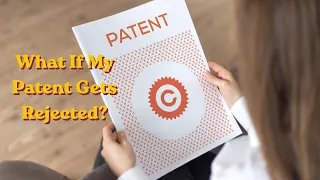
Facing a patent rejection? Learn why USPTO rejections are normal, how to respond strategically, and how to turn setbacks into stronger patent protection.
Introduction: Don’t Let a Patent Rejection Stop You
So, you’ve submitted your patent application, waited months for a response, and finally received a letter from the United States Patent and Trademark Office (USPTO).
But there’s one problem: Your patent application has been rejected.
What now?
First, don’t panic. Getting a patent rejection doesn’t necessarily mean your invention isn’t valuable, that someone already owns your idea, or that your journey toward patent protection is over.
In fact, rejection is a normal part of the patent application process. Even strong inventions can face multiple rounds of questions, objections, and rejections before receiving approval.
Here’s something worth remembering: The USPTO averages approximately 2.2 rejections per patent application. That means rejection is something inventors should anticipate rather than automatically interpret as failure.
As a patent attorney, I want you to understand that the process isn’t simply about submitting an application and hoping for a yes. It’s about refining your invention’s protection, addressing the examiner’s concerns, and developing claims that clearly establish what makes your invention unique.
In this article, we’ll explore:
- Why patent rejections happen and what they actually mean.
- How prior art searches can help you avoid unnecessary expenses.
- Why rejection can lead to stronger patent claims.
- What famous innovators can teach us about overcoming setbacks.
- How persistence and preparation can help move your invention toward success.
Let’s break it down.
1. Why Patent Rejections Are a Normal Part of the Process
One of the biggest misconceptions inventors have is that a patent rejection means they’ve failed.
That’s simply not true.
When you submit a patent application, a USPTO patent examiner reviews it to determine whether your invention meets the requirements for patentability.
The examiner isn’t necessarily looking for reasons to stop you from getting a patent. Their job is to evaluate your application against existing patent laws and previously disclosed inventions.
This process can uncover issues that need to be addressed before your application moves forward.
What causes a patent application to be rejected?
There are several common reasons.
Lack of novelty: Your invention may already have been publicly disclosed in an earlier patent, publication, or another qualifying source. Patent law generally requires an invention to be new.
Obviousness: Even if nobody has disclosed your exact invention before, the examiner may determine that the differences between your invention and existing technology would have been obvious to someone skilled in that field.
Insufficient description: Your application needs to explain your invention clearly enough to satisfy the applicable disclosure requirements.
Claim-related issues: Your patent claims may be too broad, unclear, or otherwise fail to meet the requirements for patentability.
These issues don’t all mean the same thing, and they don’t all require the same response.
For example, an examiner might identify an existing patent that describes a similar mechanical component. That doesn’t automatically mean your entire invention is unpatentable. There may be important differences in how your component operates, how its parts interact, or what additional functionality it provides.
The key is understanding exactly what the examiner is saying.
Think of rejection as feedback, not failure
Consider a patent rejection an opportunity to evaluate your application more closely.
It may reveal weaknesses in your original claims, identify relevant prior art, or help you explain the unique features of your invention more effectively.
The goal isn’t simply to argue with the examiner. It’s to develop a stronger application that accurately protects what you’ve created.
2. The Power of a Patent Search: Know What’s Already Out There
Here’s a mistake I see inventors make: They get excited about an idea, immediately start spending money on patent protection, and only later discover that similar technology already exists.
That’s an expensive way to learn a lesson.
Before investing heavily in your patent application, you should understand what’s already out there.
That’s where a patent search becomes incredibly valuable.
What is prior art?
Prior art refers to existing information relevant to determining whether an invention is patentable.
Depending on the circumstances, this can include:
- Previously issued patents.
- Published patent applications.
- Technical publications.
- Research papers.
- Public disclosures.
- Other publicly available information relevant to the invention.
A patent search helps you identify inventions and technologies that may be similar to yours.
It gives you a better understanding of the existing landscape before you commit significant time and resources.
Why searching before filing matters
Imagine you’ve developed a new product that makes a common household task easier.
You’re convinced nobody has created anything like it before. You spend thousands of dollars developing your application, only to discover that an earlier patent describes nearly the same mechanism.
Could you have identified that issue earlier?
Possibly.
A well-conducted patent search can help you:
- Identify similar inventions before filing.
- Understand what makes your invention different.
- Evaluate potential patentability concerns.
- Develop more focused patent claims.
- Make better decisions about where to invest your resources.
Of course, a patent search cannot guarantee approval. Even a thorough search may not uncover every relevant reference, and the USPTO may identify additional prior art during examination.
But going into the process with more information puts you in a much better position.
If you’re considering filing, start by learning about the utility patent application process.
3. How a Patent Rejection Can Lead to Stronger Patent Claims
Here’s something many first-time inventors don’t realize: Your initial patent application isn’t necessarily the final version of the protection you’ll receive.
Patent prosecution—the process of working with the USPTO to obtain a patent, can involve multiple rounds of communication between your patent attorney and the examiner.
This is where the application can evolve.
Understanding patent claims
Patent claims are the specific legal statements that define the boundaries of your patent protection.
Think of them as the fence around your invention. They establish what you are claiming the exclusive right to protect.
If your claims are too broad, the examiner may identify existing technology that prevents those claims from being allowed.
If your claims are too narrow, you may end up with protection that doesn’t adequately cover the commercially important aspects of your invention.
Finding the right balance is critical.
Responding strategically to an examiner
When the USPTO issues a rejection, your next step should be to understand the examiner’s reasoning.
Depending on the rejection, a response might involve:
- Explaining why the examiner’s interpretation of an existing patent is incorrect.
- Identifying differences between your invention and the cited prior art.
- Amending certain patent claims.
- Providing additional arguments supporting patentability.
- Clarifying the technical features of your invention.
For example, imagine you’ve developed a new medical device with a unique internal mechanism.
The examiner identifies an earlier patent describing a similar device.
At first glance, the two inventions may appear almost identical. However, your device might use a different arrangement of components that produces a specific technical advantage.
A carefully prepared response could explain those differences and help establish why your invention deserves separate patent protection.
The important point is that you shouldn’t treat every rejection as a reason to abandon your application.
Sometimes, the path forward involves refining how your invention is described and protected.
A stronger patent isn’t necessarily one with the broadest claims. It’s one with claims that are both commercially meaningful and legally supportable.
4. What Thomas Edison and Google Teach Us About Rejection
If there’s one thing successful innovators have in common, it’s that they don’t always get things right the first time.
Innovation involves experimentation. And experimentation involves setbacks.
Consider Thomas Edison.
Edison is widely associated with persistence and experimentation in developing practical electrical lighting. His work involved repeated testing, learning, and refinement before achieving commercial success.
The lesson isn’t that every failed experiment automatically leads to a breakthrough.
It’s that progress often requires you to learn from what doesn’t work.
The same mindset applies to patenting.
Your first application might not contain the strongest possible claims. Your first patent search might reveal unexpected competition. Your first conversation with an examiner might uncover issues you hadn’t considered.
None of those things automatically means your invention has no future.
The Google lesson: Keep improving the idea
Google is another example of how innovation and business success require more than simply having an idea.
Building a successful technology company involves continuous development, experimentation, and adapting to challenges.
The lesson for inventors and entrepreneurs is straightforward: An idea is only the beginning.
You need to develop it, refine it, protect it, and figure out how to bring it to market.
Patent protection is one part of that larger journey.
Don’t let an initial setback convince you that your invention isn’t worth pursuing. Instead, evaluate the feedback, understand your options, and determine what needs to change.
5. Medical Innovation: Why Persistence Matters
The medical technology industry provides another powerful example of why persistence is essential.
Developing a medical device or healthcare technology can involve years of research, engineering, testing, and regulatory review.
Getting an invention from concept to commercial use isn’t always straightforward.
There are different requirements depending on the type of product and the regulatory pathway involved.
For example, medical devices may need to undergo review or clearance through the Food and Drug Administration (FDA), depending on their classification and intended use.
At the same time, inventors may pursue patent protection through the USPTO to protect qualifying aspects of their technology.
These are two separate processes serving different purposes:
- USPTO: Evaluates patent applications to determine whether an invention qualifies for patent protection.
- FDA: Regulates medical products to help ensure applicable safety and effectiveness requirements are met.
Receiving a patent doesn’t automatically mean a medical device is approved for commercial sale. Likewise, pursuing FDA approval or clearance doesn’t automatically provide patent protection.
Both processes require preparation, careful documentation, and an understanding of the applicable requirements.
The bigger lesson for medical inventors
If you’re developing a medical innovation, expect challenges.
You may need to improve the design, conduct additional testing, address regulatory concerns, or refine your patent claims.
The important thing is to understand which challenge you’re facing and develop the right strategy to address it.
Persistence matters, but persistence combined with informed decision-making is even more powerful.
6. How to Build Resilience When Your Patent Gets Rejected
Let’s get practical.
You’ve received a rejection. You’re frustrated, you’ve already invested time and money, and you’re wondering whether continuing is worth it.
What should you do?
Here are five strategies to help you move forward.
1. Don’t take the rejection personally
A patent rejection isn’t a judgment of your intelligence, creativity, or entrepreneurial potential.
The examiner is evaluating your application against specific legal requirements.
Separate your emotions from the technical and legal issues that need to be addressed.
2. Understand exactly why the application was rejected
Don’t just look at the word “rejected” and assume the worst.
Read the Office Action carefully. An Office Action is an official communication from the USPTO explaining issues identified during examination.
Pay attention to:
- Which claims were rejected.
- Which prior art references were cited.
- What legal grounds the examiner identified.
- Whether there are additional objections or requirements.
- What deadlines apply to your response.
Understanding the details is the first step toward developing a solution.
3. Work with an experienced patent attorney
Patent prosecution can become complicated, especially when an examiner identifies multiple prior art references or raises complex claim-related issues.
An experienced patent attorney can help evaluate the rejection, explain your options, and develop an appropriate response strategy.
Remember, the goal isn’t simply to get the rejection removed. It’s to obtain meaningful protection for your invention.
If you’re evaluating the financial side of patent protection, take a look at our guide to patent costs and our patent attorney pricing page.
4. Be willing to refine your invention’s protection
Sometimes, your original claims need to change.
That doesn’t necessarily mean changing the invention itself.
It may mean focusing on a particular feature, technical improvement, or combination of components that distinguishes your invention from existing technology.
Your attorney can help determine whether amendments are appropriate and what impact they may have on your protection.
5. Keep your long-term business goals in mind
Don’t lose sight of why you wanted a patent in the first place.
Are you trying to manufacture and sell a product? License your technology? Attract investors? Build a company around your invention?
Your patent strategy should support your broader business objectives.
For example, if licensing is part of your plan, the scope and commercial value of your patent protection matter.
You can learn more about this approach in our guide to patent licensing.
The bigger picture is important. You’re not pursuing a patent just to have a certificate hanging on your wall. You’re building an intellectual asset that could contribute to your business’s future.
7. Turn Your Patent Rejection Into Your Next Opportunity
Let’s bring everything together.
Getting rejected by the USPTO can feel discouraging, especially when you’ve invested months or even years developing your invention.
But rejection doesn’t automatically mean the end of the road.
It can be an opportunity to:
- Better understand existing technology.
- Identify weaknesses in your patent claims.
- Clarify what makes your invention unique.
- Develop a more strategic patent application.
- Strengthen your overall intellectual property strategy.
Remember, innovation isn’t a straight line from idea to success.
There will be challenges along the way. What matters is how you respond to them.
So, here’s a question worth asking yourself:
If your patent application received a rejection tomorrow, would you see it as a reason to quit—or an opportunity to make your invention and its protection even stronger?
The best inventors understand that setbacks are part of the process. They stay curious, keep learning, and make informed decisions about their next steps.
Final Thoughts: Don’t Give Up on Your Innovation
A patent rejection isn’t necessarily a failure. It’s part of a process designed to evaluate whether your invention qualifies for patent protection.
The USPTO examiner’s feedback can help you identify issues, refine your claims, and better understand the existing technology in your field.
That’s why preparation matters. Conducting a patent search before filing, developing a thoughtful application, and working with an experienced patent attorney can make a meaningful difference.
Most importantly, don’t let the fear of hearing “no” prevent you from pursuing an invention that could have real value.
You’ve already taken the first step by developing your idea. Now it’s about being strategic, staying resilient, and taking the right steps to protect it.
It is my hope that this article gives you the knowledge and clarity you need to Go Big and Go Bold℠!
If you have questions about a patent rejection or protecting your invention, book a free discovery call with Bold Patents. We’d love to learn about your innovation and help you explore your options.
Legal Note
Legal Note: This blog article does not constitute legal advice. Although the article was written by a licensed USPTO patent attorney there are many factors and complexities that come into patenting an idea. We recommend you consult a lawyer if you want legal advice for your particular situation. No attorney-client or confidential relationship exists by simply reading and applying the steps stated in this blog article.