
Last Modified on September 23, 2026

Understanding Patent Publication: What Inventors Need to Know
As an inventor, protecting your intellectual property (IP) is crucial. One of the key aspects of safeguarding your invention is understanding the patent application process, particularly when your application becomes public knowledge. This article delves into the timeline of patent publication and the options available to keep your invention confidential until it’s granted.
When Does a Patent Application Get Published?
The short answer: not immediately. Understanding the publication timeline can help you strategize your patent filings better.
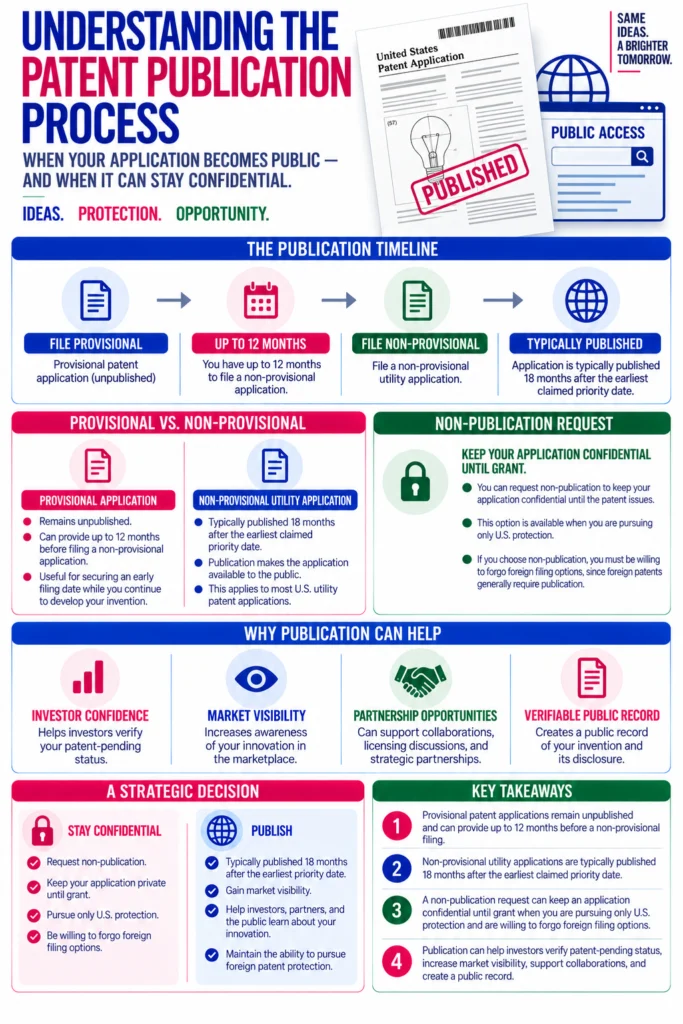
When you file a provisional patent application, it remains unpublished. This initial step gives inventors 12 months to refine their invention, seek investors, or assess the market potential without exposing their idea to the public. It’s only when you file a non-provisional (utility) patent application that the timeline for publication begins.
For example, if you file a provisional patent on January 1st, 2024, you have until January 1st, 2025, to convert it into a non-provisional application. Once the non-provisional application is filed, it typically takes another 18 months from the priority date before the USPTO publishes it. This means by June 2025, your patent application will likely be available to the public.
The Option to Prevent Publication: Non-Publication Request
There is a lesser-known strategy to maintain confidentiality—filing a non-publication request. This option is particularly useful for inventors who intend to market their invention exclusively in the United States and are willing to forgo international patent rights.
By filing a non-publication request, you can ensure that your application remains confidential until the patent is granted. This conservative approach can be beneficial for those with a strictly domestic market focus. However, it’s important to weigh the potential risks, as you would be giving up the possibility of filing for international patents.
Why Publication Can Be Beneficial
While keeping your patent application confidential might seem appealing, there are significant advantages to allowing it to be published. A published application:
- Attracts Investors: Potential investors can reference the official publication from the USPTO, giving them confidence in the legitimacy of your patent-pending status.
- Aids Market Development: As your application becomes public, it can be referenced by others in the industry, potentially leading to partnerships or collaborations.
- Builds Trust: Publishing your patent application provides a verifiable public record, adding credibility to your invention.
For most inventors, especially those looking to bring a product to market or seek investment, publication is a strategic move that can enhance the visibility and credibility of their invention.
Takeaways
- Provisional Patents remain unpublished, giving you 12 months of confidentiality.
- Non-Provisional Patents are published 18 months after the priority date.
- Non-Publication Requests keep your patent confidential but limit your rights to the U.S. market.
- Publication can boost investor confidence and market visibility.
Navigating the patent process can be complex, but you don’t have to do it alone. At Bold Patents, we specialize in guiding inventors through every step, from filing provisional patents to making strategic decisions about publication. If you’re ready to take the next step in protecting your invention, book a free discovery call with one of our experienced patent attorneys today. Go big, go bold!