Last Modified on October 30, 2026

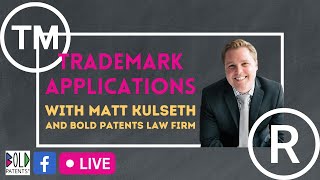
Featuring Matt Kulseth, Senior Trademark Attorney at Bold Patents
Your business name is more than a name. It represents your reputation, the customers you’ve built relationships with, and the goodwill you’ve developed over time. But how do you protect that brand? When should you apply for a trademark? And what rights do you actually get once your trademark is registered?
In this episode of the Bold Inventor Show, J.D. Houvener sits down with Matt Kulseth, a trademark attorney with 11 years of experience, to walk through trademark law from beginning to end. They discuss why trademarks matter, how trademark searches work, when to file, the difference between word marks and design marks, and how trademark protection can help businesses defend their brands.
Whether you’re starting a business or have been using the same name for years, understanding trademark law can help you make smarter decisions about protecting your brand.
1. What Is a Trademark and Why Does It Matter?
J.D. Houvener: We’re highlighting Matt Kulseth today, our resident trademark expert. We’re going to have him walk us through trademark law from start to finish: what it is, when you need it, how to get started, and what happens after you get a trademark. There may not even be an end to the process once you have one!
Matt, let’s start with the basics. What is a trademark, and why is it important?
Matt Kulseth: I’m a trademark attorney and have been practicing trademark law for 11 years. I work with Bold Patents, where most of my work involves trademark registration with the United States Patent and Trademark Office. We also handle a fair amount of trademark litigation.
Let’s talk about what trademarks are, why they’re important, and how you get one.
Trademark law goes back centuries. Historically, makers used symbols and identifying marks on their products to show who made them. You can find examples of this throughout history, including during the Middle Ages and in feudal Japan.
The idea of identifying the maker of a product has been around for a long time.
In the United States, modern trademark law is primarily governed by the Lanham Act, enacted in 1946. It’s fundamentally a consumer protection law. Its purpose is to protect consumers from confusion about the source of products and services.
A trademark is a source identifier. It tells consumers where a product or service comes from.
Think about Tide laundry detergent. When you go to the grocery store, you recognize the big orange bottle and the Tide name. You know which product you’re buying.
Without trademark protection, another company could potentially create a product that looks and feels very similar, making it difficult for consumers to know which company actually provides it.
That’s what trademark law is designed to help prevent.
We also talk about trademarks in terms of intellectual property and business ownership. A trademark represents the goodwill associated with a company, product, or service.
And that goodwill can be extremely valuable.
Consider a large company like Tesla. Its brand has enormous value beyond its physical products, factories, and other assets.
The same concept applies to small businesses. If you’ve spent 10, 20, or 30 years building a customer base under a particular business name, that brand can become an important part of the company’s overall value.
When you eventually sell your business, you may want to transfer the intellectual property rights along with it, including the trademark.
J.D. Houvener: So a trademark isn’t just about putting a name on a product. It’s about protecting the reputation and recognition you’ve built around that name.
Matt Kulseth: Exactly. It’s the goodwill associated with the brand.
2. What Rights Do You Get With a Federal Trademark Registration?
J.D. Houvener: Why are trademarks so important for businesses today? What do you actually get when you register one?
Matt Kulseth: A federal trademark registration provides important rights throughout the United States and its territories, subject to the scope of the registration and applicable trademark law.
You get the ability to enforce your trademark against confusingly similar names and brands. That protection isn’t necessarily limited to someone using your exact name.
For example, let’s use Bold Patents. If somebody started a business called Strong Patents, Bullish Patents, or Brave Patents, those names might raise trademark concerns.
Why? Because trademark conflicts aren’t limited to identical wording. We look at whether marks are similar in sight, sound, or meaning.
Those are the three concepts we consider when evaluating whether consumers could be confused.
Federal registration also provides important enforcement options. If you want to bring a federal trademark infringement claim in federal court, having a federal registration can provide significant advantages, although certain claims may also be available based on common-law rights.
Trademarks are also important on social media.
Businesses advertise on Facebook, YouTube, TikTok, LinkedIn, and other platforms. If someone is impersonating your business or using a confusingly similar brand, trademark rights can help you pursue enforcement through those platforms.
There are also benefits for businesses selling products on Amazon. If you want access to Amazon Brand Registry and its associated brand tools, a qualifying registered or pending trademark application may be required.
And if you’re planning to franchise your business, trademark rights are an important part of the process. Trademark registration can play a role in the franchise disclosure and documentation process.
There are many reasons to protect your brand beyond simply owning a name.
3. Can You Protect Your Business Name on Facebook and Other Social Media Platforms?
J.D. Houvener: Let’s go one level deeper on social media. Can anybody just create a Facebook business page? Who actually requires a trademark, and what issues can come up?
Matt Kulseth: Anybody can potentially sign up for Facebook and open a business page.
But if you own a federal trademark registration and somebody else is impersonating your business or using a confusingly similar name, you may be able to use your trademark rights to request that the page be taken down.
Facebook has processes for trademark enforcement. If someone uses the exact name or a confusingly similar variation, such as a plural or a name with an extra word added, you may be able to report the infringement and seek removal of the page.
J.D. Houvener: Should someone approach Facebook on their own, or should they speak with an attorney first?
Matt Kulseth: I would always recommend seeking legal counsel before sending cease-and-desist letters or filing takedown notices on social media.
There’s always the possibility that the other party has better rights to the name than you do. You don’t want to start enforcing a trademark without understanding the situation.
I’ve seen this happen with clients. They get a trademark registration and immediately want to enforce it.
I ask them to call or email me before taking action. It doesn’t take much work for us to look at the situation and give them advice about whether enforcement makes sense.
You want to make sure you’re not creating a bigger problem by trying to enforce your rights.
4. When Should You Start Protecting Your Business Name?
J.D. Houvener: Let’s go all the way back. Say I’m thinking about a really cool business name, but I’m still in the pre-business stage. What are the first steps? When should I hire you to help?
Matt Kulseth: That’s a good question, and my answer is to reach out early and often when you’re considering potential brand names and products.
There are a couple of reasons for that.
First, you want to make sure the name is available before you start investing in marketing, logo design, packaging, and other business expenses.
We want to clear the trademark so that when you eventually file the application, you have a reasonable basis for believing the mark can be registered.
Don’t invest heavily in a brand before you know whether you can protect it or whether you’re potentially infringing someone else’s trademark rights.
The second reason is that the USPTO process takes a long time.
It used to be that I could tell clients to contact me about six months before they planned to go to market. That gave us time to search the name, file the application, and potentially receive an initial examination result within a few months.
That’s much harder today.
The USPTO examination process has become significantly longer. At the time of this broadcast, we were seeing applications take approximately nine to ten months just to reach examination.
We’ve even had clients who filed their trademarks, became pregnant, and had a baby before the trademark registration came through!
J.D. Houvener: That’s a lifetime!
Matt Kulseth: It really is. The important thing is to understand that the process can take a long time. Anything you can do to begin protecting your trademark before going to market can save you time later.
5. What Does a Trademark Search Actually Involve?
J.D. Houvener: Let’s talk about the search process. What does a trademark attorney actually look for when someone comes to you with a potential brand name?
Matt Kulseth: There are a few things we need to understand first.
One, we need to know the client and their business. What do they do? What’s their specialty or niche? How do they make money? What are their long-term goals?
We need to understand the business before we can properly evaluate the trademark.
Then, depending on how unique or distinctive the proposed mark is, we may conduct a thorough formal trademark search.
There are three major things I’m concerned about:
- Availability for registration: Is there an existing trademark that could prevent the USPTO from registering the proposed mark?
- Freedom to operate: Are there existing trademark rights that could create a risk of an infringement claim if the client uses the name?
- Strength of the trademark: If we’re able to register it, how strong will the trademark be?
After the search, we prepare an opinion letter explaining our findings. We’ll tell the client whether we believe the name is a good candidate or whether there are potential problems.
If there are issues, we’ll explain the strategy we recommend.
Then we prepare the application, review it with the client, get their approval, and submit it to the USPTO. After filing, we monitor the application and respond to issues that arise throughout the process.
The search is a very important part of that work.
J.D. Houvener: Are there situations where you don’t recommend a formal search?
Matt Kulseth: Yes. There are a couple of reasons.
First, a formal search and opinion letter costs additional money. Some clients aren’t willing or able to pay for that, and we understand.
We still conduct a knockout search to look for major red flags. The last thing we want is to take a client’s money, file an application, and have them receive a denial when there was an obvious problem we could have identified beforehand.
Denials happen, and you can’t eliminate all risk. But the client should understand the potential issues before moving forward.
The other situation is when a client has what we call a coined trademark.
That’s a name they’ve essentially made up out of thin air. For example, imagine an HVAC company called “Zolio.” It’s a made-up word that doesn’t have an ordinary meaning or translation.
In that situation, we may recommend moving forward without a formal search and opinion letter.
6. Should You Trademark Your Business Name and Logo Separately?
J.D. Houvener: We have a question from LinkedIn: Is trademarking your name and logo the same process and cost? What if your name is already included in the logo?
Matt Kulseth: That’s a good question. It gets into the different types of trademark applications.
A trademark application includes several important details, such as who owns the mark, what the mark is, how it’s described, the goods or services involved, and when the mark was first used.
But what the question is really getting at is the difference between a word mark and a design mark.
Trademarks can take several forms. They can be words, logos, slogans, sounds, and even certain types of nontraditional marks, such as smells or trade dress.
Most of the time, though, we’re talking about word marks and design marks.
A word mark protects the wording itself, without limiting the protection to a particular font, color, or logo design.
A design mark protects a particular logo or visual design. That logo can include the name of the business, product, or service.
Generally speaking, if we can obtain a word mark, that’s often the best value for your money.
Why? Because the protection isn’t tied to the specific design elements of your logo.
If you change your logo in the future, you generally don’t need to file a new application just because the font, color, or design changed, as long as the wording remains the same and the mark is still being used appropriately.
With a design mark, the situation can be different. If you significantly change the logo, the existing registration may no longer protect the new design. You may need to file another application.
That’s why word marks are so important.
Some businesses choose to protect both their word mark and their logo, particularly when they have multiple products or services they want to protect.
J.D. Houvener: So if you can protect the name itself, that’s often a good starting point. Then you can consider protecting the logo separately.
Matt Kulseth: Exactly.
7. Can You Trademark a Business Name You’ve Already Been Using?
J.D. Houvener: We have another question. Someone has been running a business for a while and wants to know whether they can still secure a trademark if they’ve already been using the name.
Matt Kulseth: Absolutely. Trademark rights in the United States generally arise through use in commerce.
That means you’re actually using the mark in connection with selling or providing your products or services.
You don’t necessarily have to file a trademark application before you begin using a name. However, applying for federal registration can provide important benefits.
You can also apply based on an intent to use a mark before you’ve started using it commercially. But you generally won’t receive the registration certificate until you satisfy the use requirements and submit the necessary evidence.
There’s another interesting issue involving descriptive trademarks.
A descriptive trademark is one that describes the product or service being offered.
For example, imagine that instead of calling the firm Bold Patents, I called it “J.D.’s Patent Firm.” That name directly describes the business and who owns it.
Descriptive marks can be difficult to register on the Principal Register because they describe the goods or services rather than immediately identifying a particular source.
However, if a descriptive mark has been used long enough and consumers have come to recognize it as identifying a particular business, it may be possible to establish what’s called acquired distinctiveness, or secondary meaning.
For example, if J.D.’s Patent Firm had been used extensively for more than five years and developed strong recognition in the marketplace, we might be able to make an argument for registration on the Principal Register.
That’s generally where we want to be if the mark qualifies.
8. Do You Need to Trademark Different Misspellings of Your Brand?
J.D. Houvener: Let’s move to a question from our Bold community. Someone wants to trademark the word “Likable” for shoes. Should they also file applications for different misspellings?
Matt Kulseth: No. Don’t waste your time or money filing separate applications for every possible misspelling.
Remember, trademark protection isn’t limited to the exact spelling of a name. We look at whether another mark is similar in sight, sound, or meaning.
If someone uses a slightly different spelling of “Likable,” it may still create a likelihood of confusion with your trademark.
The average consumer may hear the name or see it for the first time and understand it to be the same brand, even if the spelling is different.
That’s one of the benefits of trademark registration. It can provide protection against confusingly similar variations, not just exact copies.
In this example, you would generally file for the name as you actually use it. You don’t need to file a bunch of separate applications for every possible spelling.
9. Are Shorter or Simpler Trademarks Easier to Register?
J.D. Houvener: Another LinkedIn question: Are simple names or shorter trademarks approved more quickly?
Matt Kulseth: Potentially, but it really depends on the brand.
We’ve registered trademarks consisting of one letter or two-letter acronyms. Sometimes those are actually harder to register than a longer, 10-letter word.
The length of the name doesn’t automatically determine how easy it will be to register.
It depends on the specific mark, how distinctive it is, and whether there are existing trademarks that could create a conflict.
There are certain circumstances where applications may qualify for expedited examination. For example, the USPTO has provided expedited examination options for certain qualifying medical products related to COVID-19.
But generally, you shouldn’t assume that a shorter or simpler name will move through the trademark process faster.
10. Does a Trademark Search Cover Shortened Versions of a Name?
J.D. Houvener: Here’s another question. If I search a trademark like “AAABBBCCC,” does that search also cover a shortened version like “AAABBB”? Do you have to conduct a separate search for every possible combination?
Matt Kulseth: It depends on the marks involved.
For example, if you’re trying to register “AAABBBCCC,” another business might have difficulty registering “AAABBB” because the names could be considered too similar.
The USPTO may refuse a later application if it determines that the marks are likely to cause consumer confusion with an earlier-filed or registered mark.
But there are a lot of trademarks out there. At the time of this broadcast, approximately 20,000 trademark applications were being filed every week in the United States.
That’s a lot of activity.
So the important thing is to have an attorney evaluate the particular name and the surrounding trademarks. Don’t assume that every shortened version or word combination will automatically be covered by one search or registration.
J.D. Houvener: So the answer depends on the specific names and how similar they are.
Matt Kulseth: Exactly. A potential client can email me, and we can talk through the situation.
11. Can You Copyright an Educational Curriculum or After-School Program?
J.D. Houvener: Let’s finish with a question that crosses over from trademark law into copyright.
Someone is the founder and director of an after-school creative arts program. The program includes theater, dance, singing, art, and creative journaling.
They want to know whether they can copyright the overall format, the written curriculum, the theater pieces, the program name, and the tagline.
How would you approach that?
Matt Kulseth: There’s a lot to unpack here because copyright and trademark protect different things.
Let’s start with the curriculum.
The general idea or method of organizing an educational program isn’t automatically protected by copyright. Copyright generally protects original expression, not the underlying idea, system, method, or concept.
However, the actual written materials can qualify for copyright protection.
For example, the original words, explanations, written theater pieces, and certain creative design elements may be protected.
You don’t necessarily have to register every piece of work with the U.S. Copyright Office before you have copyright protection. Copyright generally arises when an original work is fixed in a tangible form.
You can identify your work with a copyright notice that includes your name and the year it was created.
For example:
Copyright © J.D. Houvener, 2026
That’s one way to indicate that the work is protected.
The name of the program and its slogan are different. Those are trademark issues, and they may be eligible for registration with the USPTO if they meet the applicable requirements.
You also have to consider how the curriculum is organized. A standard or commonly used format, such as arranging lessons alphabetically or chronologically, generally isn’t something you can claim exclusive copyright ownership over.
But original creative expression in the way you explain, present, or develop the program may qualify for protection.
J.D. Houvener: So from a trademark perspective, you could potentially protect the name of the educational program, the slogan, or even the name of a particular event.
Matt Kulseth: Right. Educational services generally fall within International Class 41 at the USPTO.
The application would describe the educational services being provided, including the nature of the program and its intended audience.
The key is understanding which parts of your program are protected by copyright and which parts may qualify for trademark protection.
12. Final Thoughts: Why Trademark Protection Matters
J.D. Houvener: Matt, we’re wrapping up. Any final thoughts on trademark law?
Matt Kulseth: Trademarks are fun, they’re valuable, and they’re a relatively low investment compared with the value they can ultimately provide to a business.
They’re important for enforcement, but they’re also harder to obtain than ever.
We’re working with a limited English vocabulary, and there are a lot of businesses competing for distinctive brand names. There are also plenty of people interested in copying what other businesses are doing.
That’s why it’s more important than ever to work with a trademark attorney who can help you search, file, and ultimately register your brand.
J.D. Houvener: Well, Matt, you’re fun to work with, too. If you’re thinking about protecting your business name or logo, reach out and set up a meeting with Matt.
Thanks to everyone who joined us today. We’re here every week, so if you missed the live broadcast, be sure to catch the next episode.
From Matt, me, and everyone at Bold Patents, have a great rest of your week.
Go big, go bold!
Ready to Protect Your Brand?
Your business name, logo, and reputation are valuable assets. Don’t wait until someone else starts using a similar name to think about trademark protection.
At Bold Patents, our trademark team helps entrepreneurs and business owners evaluate potential brand names, conduct trademark searches, prepare applications, and protect their intellectual property.
If you’re considering a new business name or want to protect a brand you’ve already built, schedule a free discovery call with Bold Patents.
Contact Bold Patents: https://boldip.com/contact/
This article is for educational purposes only and does not constitute legal advice. Every trademark situation is different, and you should consult a qualified trademark attorney about your specific circumstances.
SEO Information
SEO Title: Trademark Law Explained: How to Protect Your Business Name and Brand
Suggested URL Slug: trademark-law-how-to-protect-your-business-name
Meta Description: Learn how trademark law works, when to register your business name, how trademark searches work, and how to protect your brand with insights from Bold Patents attorney Matt Kulseth.
Focus Keyphrase: trademark law
Additional Keywords:
- How to trademark a business name
- Trademark registration
- Trademark search
- Business name protection
- Word mark vs. design mark
- Trademark attorney
- Federal trademark registration
- Trademark infringement
- Copyright vs. trademark
- Brand protection