Last Modified on October 26, 2026

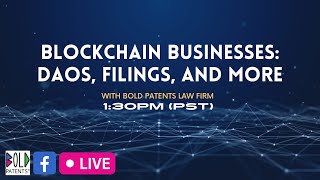
Blockchain, Web3, NFTs, and decentralized autonomous organizations (DAOs) are creating new opportunities for entrepreneurs, but they also raise important questions about intellectual property, business structure, ownership, and liability.
In this episode of the Bold Inventor Show, J.D. Houvener and Matt Kulseth sit down with Victor Look to explore how blockchain technology works, how businesses are using NFTs, and why legal planning matters when bringing digital products to market. The conversation also examines a Shark Tank investment in Round21 to explore NFT royalties, trademark protection, and the business decisions behind emerging technology.
For inventors, startup founders, and business owners exploring Web3, this episode offers a practical look at how innovation, commercialization, and intellectual property intersect.
Opening: Introducing Web3 and Blockchain
J.D.: We’re live! I’m J.D. Houvener, and I’m pleased to be here with my partner, Matt Kulseth, at Bold Patents Law Firm. We’re here for another episode of the Bold Inventor Show. Matt, this is our second time recording in the afternoon, so good afternoon!
Matt: Good afternoon!
J.D.: We just finished a quick debrief with our special guest, Victor Look, who’s waiting backstage and ready to discuss today’s topic: blockchain, Web3, NFTs, and what’s new in technology.
Before we get started, I want to share a link where you can schedule a free 20-minute discovery call with me or one of our patent attorneys. Matt also has a wealth of knowledge on the trademark side.
Matt: I’ve got about a decade of experience there!
J.D.: That’s awesome. You’ve got a couple of years on me, my friend!
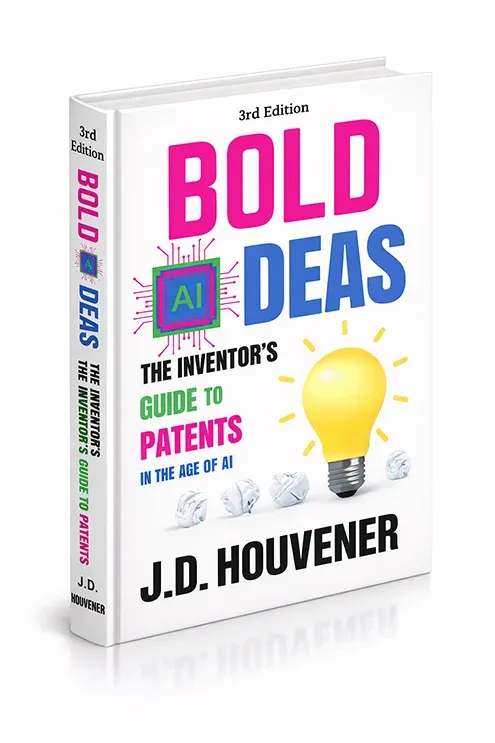
When you schedule a call, you’ll have a chance to tell us who you are and where you’re coming from. You’ll also receive a copy of our book, Bold Ideas: The Inventor’s Guide to Patents, second edition, which we released last year. It includes some great examples for inventors.
If you’re watching live, please like and share the show on social media. We’re here every week at 1:30 p.m. Pacific. We cover patents, trade secrets, copyrights, and anything related to intellectual property.
We’ve already got several people watching, and I’m guessing they’re here to listen to Victor rather than us!
Victor, welcome to the show.
Victor Look: Thank you! Thank you for having me. I’m excited to be here.
What Is Web3, and How Does It Differ From Earlier Versions of the Internet?
Victor Look: Let’s start with Web3. It’s a general term associated with decentralized technologies, particularly distributed ledger technology, which forms the backbone of blockchain.
Think about the history of the internet.
Web1.0 was what many of us remember from the early days of the internet, including AOL dial-up. You could visit a website and see static information, but there wasn’t much interaction.
Web2.0 brought us platforms like Facebook and Amazon. Users could interact with websites, post pictures, leave comments, and purchase products. Those interactions depended on centralized servers controlled by the companies operating the platforms.
Web3 moves toward decentralized systems, where information and transactions can be distributed across a network rather than controlled by one central platform.
J.D.: Did you skip Web1.0? You mentioned it briefly, but I want to make sure I understand. That was the static-web-page era?
Victor Look: Exactly. Web1.0 was largely static. You could visit a website and read the information, but you couldn’t interact with it the way you can today.
J.D.: Got it. Web1.0 had little interaction, while Web2.0 introduced much more interaction. I like your examples of Amazon and Facebook because they illustrate who controls the traffic and the platform.
If Facebook or Amazon decides to ban you, they have that power. Even if you’ve built a business around a profile with a million followers, you could lose access to that audience.
So Web3 is about decentralization and shared control?
Victor Look: That’s the general idea. Rather than thinking only about servers, it’s helpful to think about network nodes. The way those nodes operate depends on the protocol being used.
How Does Blockchain Actually Work?
Victor Look: A blockchain is essentially a shared or distributed ledger of transactions designed to be immutable.
Let’s use Bitcoin as an example. Suppose you have a digital wallet and I have one. I want to transfer one Bitcoin from my wallet to yours.
The transaction is broadcast to a network of nodes. With Bitcoin, miners participate in a consensus process that helps validate transactions and add new blocks to the chain.
Once the transaction is validated and included in a block, that block becomes part of the blockchain. The ledger provides a record of transactions that have occurred since the network began.
Matt: So the network makes it difficult for someone to intercept or change the transaction. That’s the beauty of it, right?
Victor Look: Right. The network uses a consensus mechanism to validate transactions. In Bitcoin’s proof-of-work system, miners compete to solve a computational puzzle. The successful miner can add a block and receive a reward.
That process requires substantial computing power, which is why you’ve heard about mining operations and large facilities dedicated to processing Bitcoin transactions.
J.D.: I could probably take a class on the technical structure of blockchain, but let’s move forward. Who is actually doing business on the blockchain? What are some examples of business models using this technology?
Decentralized Finance and DAOs
Victor Look: One example is OlympusDAO, which became known for its decentralized finance, or DeFi, model. It attempted to recreate aspects of traditional finance within Web3.
A DAO is a decentralized autonomous organization. In many DAOs, participants hold governance tokens that allow them to participate in decisions about how the organization operates.
For example, someone holding governance tokens might propose a change or suggest what the organization should do next. Other eligible token holders can vote on the proposal.
J.D.: So the tokens give people a way to participate in managing the organization?
Victor Look: Exactly, depending on how the DAO is designed.
In decentralized finance, liquidity is also important. Think about a stock exchange. If you want to buy a particular stock but there aren’t enough sellers, the exchange can’t effectively facilitate the transaction.
Some DeFi projects encourage participants to stake their tokens. In simple terms, participants commit their tokens to a protocol for a period of time, helping support the system’s liquidity. In return, they may receive rewards under the protocol’s rules.
J.D.: So it’s a little like a bank certificate of deposit. You commit your money for a certain period and receive a return?
Victor Look: That’s a useful comparison, although the risks and mechanics can be very different. A decentralized protocol isn’t necessarily backed by a traditional financial institution.
J.D.: Here’s a question. Doesn’t a DAO still require people to organize meetings, make decisions, and manage the organization? Where does the human interaction come in?
Victor Look: Absolutely. A DAO doesn’t mean humans disappear from the process.
The legal treatment of DAOs varies by jurisdiction. Wyoming, for example, has established a legal framework for DAO entities. The state has attracted attention from technology businesses looking for ways to organize these ventures.
J.D.: Let’s say the three of us wanted to start a crypto company or create our own DeFi protocol. What would we need to think about before forming a DAO?
Victor Look: First, we’d need to understand what we’re building. Are we creating a financial protocol, issuing tokens, selling NFTs, or operating another kind of business?
An NFT doesn’t automatically require a DAO. These are different concepts that can be combined depending on the project’s structure.
But if we’re going to build a DAO, we need to consider both the technology and the legal structure.
NFTs: Digital Ownership, Copyright, and Commercialization
Victor Look: NFT stands for non-fungible token. A fungible token is interchangeable with another token of the same type. A dollar bill is a simple example: one dollar is generally interchangeable with another dollar.
A non-fungible token is distinguishable from other tokens. NFTs became widely known through digital art and collectibles.
Projects such as CryptoKitties helped popularize the idea of unique digital assets. Later, CryptoPunks and Bored Ape Yacht Club attracted substantial attention, including from celebrities.
But owning an NFT doesn’t automatically mean you own the copyright to the underlying artwork.
J.D.: That’s an important distinction for inventors and entrepreneurs. If I buy a digital collectible, what rights do I actually receive?
Victor Look: It depends on the terms governing that particular NFT.
For example, the original CryptoPunks terms retained intellectual property rights with the creators. Owning one of those tokens didn’t automatically give the owner unrestricted commercial rights to the artwork.
Other projects, such as Bored Ape Yacht Club, offered token holders broader commercial-use rights under their terms.
One example involved a group of people who pooled their resources to acquire a Bored Ape NFT and then created a restaurant concept around it called Board and Hungry.
That illustrates how commercial rights can affect the business opportunities associated with an NFT.
J.D.: So two NFTs could look similar on the surface but come with very different rights. One might be limited to personal use, while another might allow the owner to create products or build a business around it.
Victor Look: Exactly. You need to understand the terms and conditions before assuming what you can do with an NFT.
The technology itself doesn’t answer every intellectual property question. You still have to examine the rights granted by the creator.
Why Legal Structure Matters for a DAO
J.D.: Let’s return to forming a DAO. Suppose the three of us wanted to launch a digital product or NFT project. What would we need to establish?
Victor Look: At a technical level, a blockchain-based DAO might rely on a smart contract and a wallet address on the blockchain where it’s deployed. Smart contracts can automate certain rules and transactions.
But technology alone doesn’t necessarily provide the legal protections a business needs.
If the three of us simply launched a venture without an appropriate legal structure, we could face questions about personal liability. Depending on the facts and applicable law, operating together without an entity could expose us to risks associated with a general partnership.
That’s one reason some founders consider legal structures specifically designed for DAOs.
J.D.: So the technology might work, but the founders could still have a problem if they haven’t thought about liability.
Victor Look: Correct. In Wyoming, for example, DAO legislation provides a framework for organizing these entities. Depending on the structure, a DAO may operate with features similar to an LLC.
You can have a written operating agreement that defines members’ rights and responsibilities, or you can use smart contracts to automate certain aspects of governance.
J.D.: Could we combine a traditional management structure with blockchain-based tokens?
Victor Look: Yes, depending on how the organization is established.
Imagine that we form an LLC. Matt and J.D. are managers, and I’m a non-managing member. The operating agreement establishes our respective rights and obligations.
We could potentially issue tokens or allow other participants to join the project under defined terms.
However, if token holders invest money expecting to profit primarily from the managerial efforts of others, securities laws may become relevant. The details of the offering and the rights attached to the tokens matter.
J.D.: That’s where it gets complicated!
Victor Look: It does. There’s a lot to consider, and the details depend on how the project is structured.
J.D.: I think we’ve reached the point where my brain is full! This is fascinating, but we could spend an entire series discussing it.
Let’s take a quick break and look at an example from Shark Tank. I think it will help connect some of these ideas to a real business discussion.
Bold Bite: Round21’s Shark Tank Investment
J.D.: In this segment, we’re looking at Round21, a company working at the intersection of physical and digital sports art.
In the clip, founder Jasmine discusses an investment offer of $250,000 in exchange for equity and a percentage of NFT sales. The negotiation explores the value an investor can bring beyond money, including business relationships, infrastructure, and commercialization opportunities.
The conversation also raises questions about royalties, company valuation, and how investors negotiate their share of a growing business.
J.D.: Victor, what stands out to you about this deal? When they’re talking about NFTs, valuation, and selling digital assets, is the commercial opportunity similar to what we’ve discussed with digital art?
Victor Look: It could be. From the discussion, Round21 appears to be building a platform connected to NFTs and physical sports products, with the investor offering additional business resources.
The offer of $250,000 for 11% of the company implies a valuation of roughly $2.27 million after the investment, assuming a straightforward equity calculation and no other adjustments.
The royalty component is another important part of the negotiation.
Smart contracts can be designed to distribute a percentage of certain transactions to designated parties. In NFT projects, creators have sometimes used these mechanisms to receive royalties when their digital assets are resold.
For example, imagine I buy an NFT, hold it for three months, and then sell it to Matt. Matt later sells it to J.D. If the marketplace and smart contract support the relevant royalty arrangement, the creator may receive a percentage of qualifying resale transactions.
J.D.: In this case, the investor is negotiating for a percentage of NFT sales, too. Is that the same as receiving a royalty directly from each NFT?
Victor Look: Not necessarily. The precise arrangement matters.
The creator might receive a royalty under the NFT’s terms, while the investor’s entitlement could be calculated as a percentage of those royalties or through a separate contractual arrangement. You’d need to examine the actual agreement to know how the payment works.
J.D.: That’s an important distinction. When an investor negotiates a deal like this, the terms need to spell out exactly what percentage they’re receiving and what revenue that percentage applies to.
What about the company’s other investors? Would they also have a share of the NFT revenue?
Victor Look: That depends on the agreements. Some investors may own equity in the company, while other arrangements might give someone a contractual right to a portion of revenue or royalties associated with particular digital assets.
Those are different rights, and the parties need to understand how they fit together.
Can a DAO or NFT Business Leave Its Founders Personally Liable?
J.D.: Earlier, you mentioned that founders who launch a DAO without an appropriate legal entity could face personal liability. How might that happen in practice?
Victor Look: Some people enter the DAO space because they’re excellent programmers and believe in the technology. They know how to build smart contracts and decentralized systems, so they launch a project without thinking through the business and legal implications.
But if someone claims they were defrauded or that a product wasn’t what they were promised, the founders could face legal claims. Whether they would be personally liable depends on the facts, the legal structure, and applicable law.
J.D.: So someone can be technically brilliant but still overlook the risks of operating a business.
Victor Look: Exactly. The people building the technology may be focused on advancing the system, while overlooking contracts, liability, fundraising, and other business issues.
In contrast, established business founders may already have a corporate structure in place before introducing blockchain technology.
J.D.: That’s a valuable lesson for anyone developing a new product. You need more than a working prototype or smart contract. You also need to think about the business structure and the legal relationships involved.
Trademark Protection for NFT and Digital Product Businesses
J.D.: Matt, let’s look at Round21 from the trademark perspective. What did you notice?
Matt: One interesting point is that the company appears to have a trademark registration covering sporting goods, but its activities may extend beyond that category.
Trademark registrations identify the particular goods and services a business offers. There are different international classes for different types of goods and services.
For a business like Round21, several areas might be worth evaluating, depending on what the company actually offers.
For example, sporting goods could fall within Class 28. Online retail store services may implicate Class 35. Downloadable digital products, including certain downloadable digital files, may fall within Class 9. A software-as-a-service platform could potentially involve Class 42.
The appropriate classes depend on the actual products and services, not simply the fact that a company uses NFTs.
Victor Look: Does that mean they didn’t have the foresight to register for everything they needed?
Matt: We can’t know why they chose their particular filing strategy just by looking at a registration. It’s possible they filed it themselves, but we shouldn’t assume that without more information.
One registration is certainly better than none, but a business should consider whether its trademark protection matches the products and services it actually offers or plans to offer.
If the company later expands into new areas, it may need additional applications.
J.D.: What about the date of first use? If they already have a trademark for their physical sporting goods, could they rely on that same date for NFTs?
Matt: It depends on the circumstances. The date of first use must be supported for the relevant goods or services. If the company began offering NFTs later than its physical products, the dates may differ.
You can’t automatically assume that an earlier date associated with one category applies to every new product or service.
J.D.: That’s an important point for founders. As your business expands, your intellectual property strategy needs to evolve with it.
Final Thoughts: Protecting Your Business in the Web3 Era
J.D.: Victor, this has been a fascinating conversation. We’re going to have to bring you back for another episode because there is so much more to explore.
Before we wrap up, can we share your contact information with our audience so people who have questions can reach out to you?
Victor Look: Absolutely. I’d be happy to connect with people interested in the space.
J.D.: Great. We’ll share the contact information in the show notes.
We have clients who are exploring blockchain-related businesses, whether that’s infrastructure, digital products, or bringing NFTs to market. It’s helpful to understand the business and legal considerations involved, particularly when it comes to limiting liability and structuring these ventures appropriately.
Victor Look: I appreciate that. Before I started working with Web3, I worked primarily with startups and technology companies, so I’m familiar with the business considerations involved in forming corporations and thinking through funding rounds.
J.D.: Excellent. Thank you for joining us, Victor. On behalf of Bold Patents, Matt and I appreciate your time and expertise. We’ll have you back on the show to continue this conversation.
And thanks to everyone who tuned in today. Take care, have a great rest of your day, and go big!
Matt: Thanks, everyone!
Victor Look: Thank you for having me!
Disclaimer: This episode is for educational and informational purposes only and does not constitute legal advice. The legal treatment of NFTs, DAOs, trademarks, royalties, securities, and personal liability depends on the specific facts and applicable law.