

Last Modified on June 24, 2026

In the realm of modern agriculture, genetically modified (GM) crops stand at the forefront of innovation, offering solutions to some of the most pressing challenges faced by farmers worldwide. These advancements, however, bring to light complex legal considerations under patent law. As GM crops blur the lines between nature and invention, they raise interesting questions about ownership, ethics, and accessibility. This blog aims to shed light on the relationship between genetically modified organisms and the legal framework that seeks to protect and regulate their use.
What Are Genetically Modified Crops?
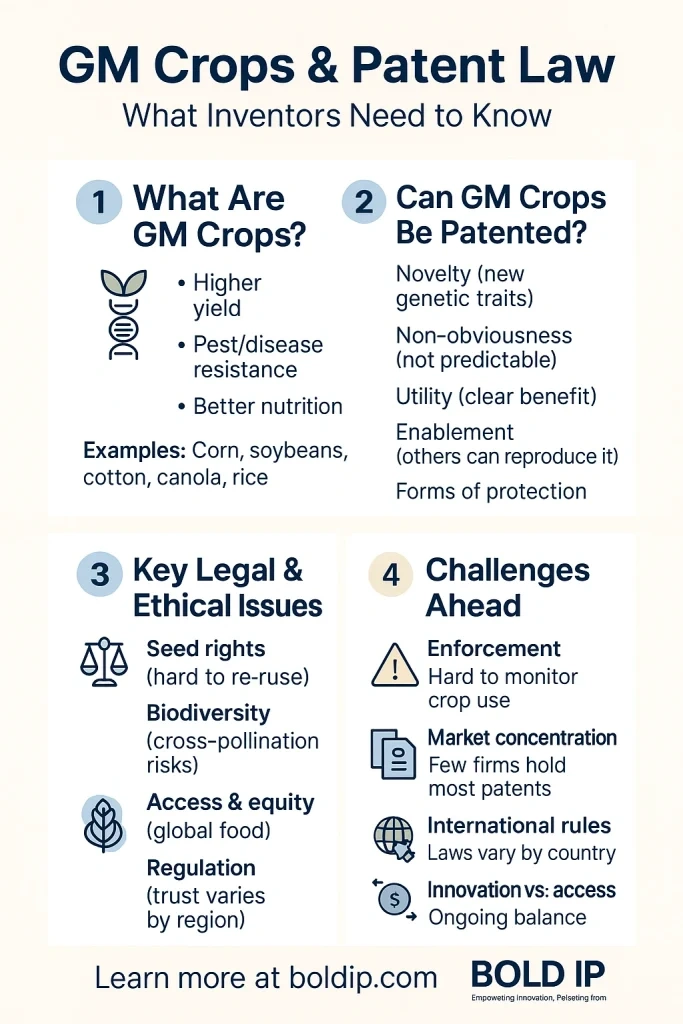
Genetically modified crops are at the heart of a revolutionary approach to agriculture, designed through precise genetic engineering to enhance desired traits such as increased yield, drought tolerance, and resistance to pests. Unlike traditional breeding methods, which rely on cross-pollination and can take years to achieve results, genetic modification allows for the direct insertion or modification of genes in plants. This technology enables crops to thrive in less-than-ideal conditions, produce more nutritionally rich food, and reduce reliance on chemical pesticides. By understanding the science behind these crops, one gains insight into their potential to address global food security challenges, while also considering the ethical and ecological implications of their widespread use.
The Basics of Patent Law and GM Crops
Patent law serves as a protective measure for inventors, granting them exclusive rights to their creations for a specified period. When it comes to GM crops, this legal framework recognizes these agricultural innovations as patentable subject matter because they embody unique genetic alterations not found in nature. For a GM crop to be eligible for a patent, it must meet three fundamental criteria: novelty, non-obviousness, and utility. This means the crop must present a new genetic composition, not be an obvious development to those skilled in the field, and offer practical application. The application of patent law to GM crops underscores the balance between encouraging scientific advancement and the monopolization of agricultural resources.
Legal Considerations for Patenting GM Crops
Patenting GM crops involves navigating several legal considerations that balance innovation with ethical and societal impacts. One primary concern is the ethical debate over patenting life forms, as patents on GM crops grant exclusive rights over a piece of biological matter. This raises questions about the ownership of living organisms and the implications for biodiversity.
Additionally, the potential for creating monopolies in the agriculture sector is a significant issue. Patents can limit farmers’ access to certain seeds, impacting agricultural diversity and farmer autonomy. Internationally, the legal landscape varies, with differing regulations and protections around GM crops, and requires careful consideration of global intellectual property rights. Moreover, the environmental and health safety standards for approving and patenting GM crops involve scrutiny to ensure they do not harm ecosystems or human health and highlight the complex interplay between law, ethics, and science in the realm of biotechnology.
Challenges and Controversies
The patenting of GM crops has sparked a range of challenges and controversies, central to which is the tension between intellectual property rights and farmers’ traditional practices of saving and replanting seeds. This dynamic often pits large biotech companies against small-scale farmers, with legal battles highlighting the power imbalances within the agricultural sector. Additionally, concerns about patents contributing to reduced biodiversity and potential environmental risks underscore the debate. The monopolization of seed varieties by a few corporations raises concerns about food security and the accessibility of agricultural innovations. These controversies reflect broader societal questions about the role of private ownership in shaping the future of food, the preservation of agricultural diversity, and the ethical dimensions of biotechnological advancements.
Bold Patents Can Help with Your Genetically Modified Crops Patents
Bold Patents can guide you through the complexities of patenting genetically modified crops. Our team offers skilled advice on securing patents, navigating legal challenges, and protecting your innovations. Let’s ensure your agricultural advancements flourish. Reach out to us today for a free discovery call that could shape the future of your endeavors in agri-tech.