Last Modified on November 06, 2026

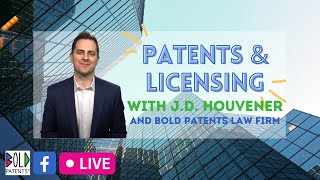
Bold Inventor Show | J.D. Houvener and Matt Kulseth
Introduction
How do you turn intellectual property into a business asset that makes money?
In this episode of the Bold Inventor Show, J.D. Houvener and Matt Kulseth discuss how inventors and business owners can monetize patents and trademarks through licensing, enforcement, and business sales.
They also break down an interesting example from Shark Tank: Bubba’s Q, a barbecue company founded by former NFL player Al “Bubba” Baker. His patented process for making boneless baby back ribs offers valuable lessons about combining patents, trade secrets, and branding.
Along the way, the hosts answer audience questions about licensing, pro bono patent services, patent ownership through an LLC, and making money while a patent application is still pending.
Welcome Back to the Bold Inventor Show
J.D.: Hey, everybody! Welcome to the Bold Inventor Show. I’m J.D. Houvener, and I’m here with Matt Kulseth. We’re hosting the show every week.
Matt, we’re doing it again! Welcome back. You were out last week.
Matt: Thank you very much. I was hiking and camping in Idaho, trying to catch an elk. We had a great time getting away.
J.D.: I’m jealous. You got to unplug and enjoy the outdoors. I came home to about 500 emails!
Today, we’re talking about patent and trademark monetization. That’s one of the main reasons people get patents and trademarks in the first place: to protect their businesses and make money.
Let’s get into it!
How Can You Make Money From a Trademark?
J.D.: Matt, let’s start with trademarks. Suppose a client has secured a federal trademark registration and wants to make money from it. What goes through your mind? How would you advise them?
Matt: There are several reasons to get a federal trademark registration.
When we talk about monetization, we’re talking about exclusive use of a brand for particular products or services. We’re also talking about licensing and, eventually, selling the business.
A trademark can be worth a lot of money. We don’t always think about trademarks in terms of dollar value, but brands have real financial value.
A brand builds goodwill. People recognize the name, trust the business, and associate it with certain products or services.
When someone buys a business, they’re often buying that established brand along with its other assets.
J.D.: That’s huge. You’re saying the goodwill of a business is tied to its brand.
If you take away the brand, people may not know who you are, where to find you, or whether they should trust you.
You could have an entire office full of employees, but without that brand recognition, the business might lose much of its value.
Matt: Exactly. How would people find you or recognize you?
If you’ve been in business for 10, 15, 20, or even 50 years, people know your name. They’ve seen your advertisements, your signs, and your products. Maybe their parents used your services.
If you change your name, customers may wonder whether you’re still the same company.
That name recognition is worth something. When you sell the business and the new owner continues using the established brand, that can represent significant value.
Why Trademark Enforcement Matters
J.D.: Let’s talk about the defensive side of monetization.
Suppose you’ve been in business for 10 or 20 years, established yourself in the market, and now you see new businesses entering your space with names that are confusingly similar to yours.
What can you do? Can you enforce your rights while still being reasonable?
Matt: The saying “If you don’t use it, you lose it” applies to trademarks in an important way.
Getting a trademark registration through the USPTO is one thing. Once you have that registration, it’s also your responsibility to monitor and enforce your rights against potential infringers.
If you don’t address potential infringement, other businesses may continue using similar branding and potentially develop arguments based on your delay or conduct.
For example, imagine someone starts using a name that’s very similar to Bold Patents.
If you know about it but do nothing for several years, that delay could complicate your ability to enforce your trademark rights later.
J.D.: Exactly. If you see something that makes you uncomfortable or could create confusion for your brand, reach out to your trademark attorney and get their perspective.
It’s better to address a potential problem early than wait until it becomes a bigger issue.
Can You License an Invention Without a Patent?
J.D.: We have a question from Celeste in South Africa:
“Doesn’t an inventor always need to patent their work in order to license it?”
That’s a great question.
When you’re structuring a license agreement, you need to identify the intellectual property asset being licensed and establish ownership or the legal right to license it.
A patent is one type of asset that can be licensed.
There are also agreements involving know-how, technical information, and confidential business information that don’t necessarily require an issued patent.
But those are different contractual arrangements.
A license agreement needs to identify the asset, the rights being granted, the time period, restrictions, termination provisions, and enforcement responsibilities.
Matt: I agree. The same general concept applies to trademarks.
You can license a brand you own to another business so they can produce and sell products under that brand.
That’s a straightforward trademark licensing arrangement.
Franchising is another example. A franchisor generally needs to establish its rights in the brand and provide the required franchise disclosure documentation to prospective franchisees.
The trademark is an important part of what the franchisee is receiving.
J.D.: Great. Hopefully that answers your question, Celeste!
How Can You Monetize a Patent?
J.D.: Let’s move over to patents.
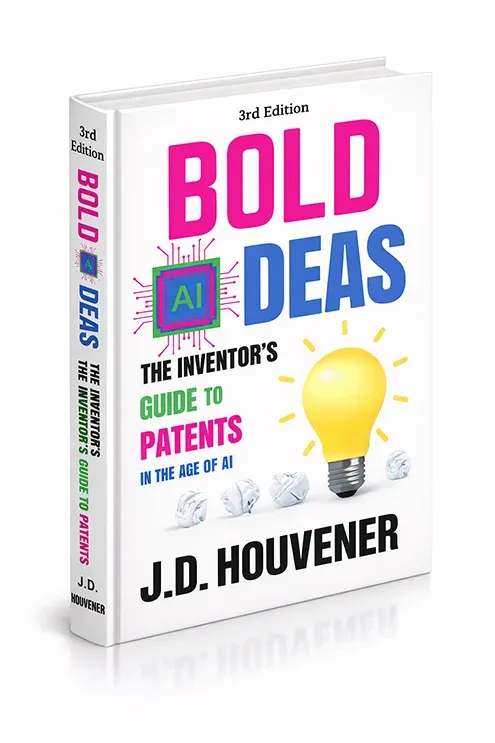
One resource I want everyone to check out is my book, Bold Ideas: The Inventor’s Guide to Patents. Chapter 18 is all about monetizing your patent.
There are several ways to make money from a patent.
First, you can enforce your patent rights against infringers. A patent gives its owner certain exclusive rights for a limited period.
Generally, utility patents have a 20-year term measured from the applicable filing date, while design patents generally have a 15-year term from issuance for applications filed on or after May 13, 2015.
The second major opportunity is licensing.
What’s interesting about patents is that you can structure licensing agreements around specific rights.
For example, you could allow one manufacturer to be the exclusive manufacturer of your patented product in the United States.
You could retain the rights to sell or import the product yourself.
Or you could grant non-exclusive licenses to several retailers, allowing them to sell the product without giving them the right to manufacture it.
You can divide and structure these rights depending on your business strategy.
Matt: That’s an important distinction. A licensing agreement needs to clearly define what the other party is allowed to do.
J.D.: Absolutely. And remember, a license is only as effective as the agreement and the effort you put into maintaining it.
For example, we have a licensing arrangement with another law firm that has a similar name in a different state.
We need to make sure they’re following the terms of that agreement. Otherwise, the protections and expectations we’ve established may not work as intended.
Enforcement, maintenance, and monitoring are all important considerations before entering into a licensing arrangement.
Are There Pro Bono Patent Attorneys?
J.D.: We have another audience question from Flavio:
“We’ve heard of pro bono lawyers. Are there pro bono patent attorneys? Could an attorney get paid later if the product becomes successful?”
That’s an interesting question.
At Bold Patents, we don’t typically structure our representation around taking a stake in an inventor’s business in exchange for legal work.
We prefer to work with inventors step by step, using flat fees and clearly defined stages of the patent process.
I want inventors to understand what they’re investing in and remain involved throughout the process.
In my experience, some of the strongest patent applications come from working closely with inventors. They’re the ones who understand the invention, and their input helps us develop the best application and arguments.
Matt: I agree. There can also be potential conflicts of interest when attorneys take an ownership stake in a client’s business.
It can create questions about whether the attorney is representing the client or has become personally invested in the business.
As for pro bono services, I remember that my law school had an intellectual property clinic that provided assistance.
There are also programs that connect qualifying inventors with patent assistance, although availability and eligibility can vary.
J.D.: One resource I recommend checking out is the USPTO’s Patent Pro Bono Program.
The program connects qualifying inventors and small businesses with volunteer patent professionals.
Bold Patents is a participant in the program, although our involvement varies.
Just remember that these programs can have eligibility requirements, waiting lists, and limited availability.
If you’re considering applying, visit the USPTO’s official Patent Pro Bono Program website to learn more.
Should Your LLC Own Your Patent?
J.D.: We have another question from Sean:
“I have a few things I want to patent myself through my LLC.”
Absolutely! That’s something worth thinking about when you’re building a business around an invention.
One important consideration is having the company own the patent rather than automatically keeping ownership in the individual inventor’s name.
There are two major considerations.
First, it can help separate the individual inventor from the business activities involving the product.
For example, if a product causes an injury and someone brings a claim, having the appropriate business entity and ownership structure may help separate business liabilities from personal assets. Of course, an LLC doesn’t eliminate every type of personal liability.
Second, it can make business transactions easier.
When you’re licensing intellectual property, negotiating with manufacturers, or working with other companies, having a business entity own the patent can simplify the commercial relationship.
Matt: I agree. We often see business-to-business agreements, sometimes with personal guarantees behind them.
If you’re operating a business to make money, or even running a nonprofit, you should consider having an appropriate legal entity.
Whether that’s an LLC, corporation, or nonprofit organization depends on your circumstances.
J.D.: Exactly. Setting up the right business structure early can save you headaches later.
Can You Make Money While Your Patent Application Is Pending?
J.D.: Celeste also asks an important follow-up:
“Patents take so long to get. What happens if you lose your chance to make money because the market trend has passed?”
I love this question.
Here’s something important to understand: You don’t necessarily have to wait until your patent is granted to explore licensing opportunities.
You can sometimes negotiate licensing agreements while a patent application is still pending.
In those situations, the application itself may be the intellectual property asset being licensed.
For example, if you have a well-prepared application, a credible patent search, and a strong understanding of the potential scope of protection, a company may be willing to evaluate the opportunity before the patent issues.
The potential licensee may conduct its own research and assess the application before making an offer.
So, yes, patents can take time, but that doesn’t mean you have to put every business opportunity on hold while waiting for approval.
Matt: That’s a good point. The commercial opportunity doesn’t always have to wait for the patent to issue.
J.D.: Exactly!
Bold Bite: Bubba’s Q and the Boneless Baby Back Rib Patent
J.D.: Now it’s time for our Bold Bite!
Matt, do you like ribs?
Matt: I love ribs!
J.D.: You’re going to like this one. We’re looking at Bubba’s Q, a barbecue business founded by former NFL player Al “Bubba” Baker.
He and his daughter appeared on Shark Tank to pitch their boneless baby back rib steaks.
Let’s take a look at the presentation.
Al (Bubba) – Shark Tank Clip: I’m Al “Bubba” Baker from Avon, Ohio, owner of the deboned baby back rib steaks.
I’m seeking $300,000 in exchange for 15% equity in my company.
I played professional football in the NFL for 13 years. Football was my job, but barbecue was my passion.
My wife didn’t like ribs because they were too messy, so I decided to find a way for her to enjoy ribs without the mess.
After 20 years, I found the perfect method. That’s how the deboned baby back rib steaks were born.
We’re the only people who have removed the bones from an actual slab of ribs while leaving the meat intact.
J.D.: That’s an interesting invention. You’re taking an actual slab of ribs, removing the bones, and keeping the meat intact.
Al (Bubba) – Shark Tank Clip: We cook the product with the bones in it. Once it’s fully cooked, we remove the bones, quick-chill it, and package it.
J.D.: One of the Sharks asked whether the process was patented.
Al (Bubba) – Shark Tank Clip: We have a patent for the product and a patent for the process.
J.D.: That’s an interesting answer. He also explained that he had the patent and the know-how behind the process.
It took him 20 years to develop the method, and he wasn’t giving away all the details.
Analyzing Bubba’s Patent
J.D.: Matt, what did you think? Did you think it was possible to get a patent on a food product like that?
Matt: I was initially skeptical about his patent claims.
I wanted to look it up and see exactly what he had protected.
J.D.: I pulled up the patent, and I was impressed.
The patent was issued in June 2011. It’s U.S. Patent No. 7,959,595, covering a process for preparing deboned rib meat.
The application was filed in 2010.
What really caught my attention was the independent claim. It’s relatively concise.
It describes a process involving cooking a length of rib meat with at least one rib bone embedded in it, at a temperature and for a period sufficient to allow removal of the bone while maintaining a substantially intact length of meat.
Then the bone is removed.
That’s the basic concept!
He really did obtain a patent covering a process for preparing ribs by cooking them and removing the bones while maintaining the meat’s structure.
Matt: That’s impressive. It’s a good example of how an invention doesn’t have to involve electronics, software, or complicated machinery to potentially qualify for patent protection.
J.D.: Exactly. Innovation can happen in the food industry, too.
Combining Patents and Trade Secrets
J.D.: One thing I really wanted to highlight was Bubba’s comment about having both a patent and trade secrets.
That’s an interesting intellectual property strategy.
A patent requires an inventor to disclose the invention in sufficient detail to satisfy the patent requirements.
There are also rules concerning the disclosure of the best mode known to the inventor at the time of filing.
At the same time, businesses can protect additional confidential information as trade secrets when the information qualifies for that protection.
For example, there may be additional know-how, operational details, or business information that a company keeps confidential.
Matt: That’s where things get interesting. You have to understand what belongs in the patent disclosure and what can legitimately remain confidential.
J.D.: Right. There’s a balance.
Patents provide limited-term exclusive rights in exchange for public disclosure. Trade secrets can potentially last indefinitely, as long as the information remains secret and the business takes reasonable steps to protect it.
Think about famous food recipes and methods associated with companies like Coca-Cola and KFC.
Those are examples of businesses that have built value around confidential information.
Combining patent protection with legitimate trade secret protection can be an important strategy for some businesses.
What About Bubba’s Q Trademark?
J.D.: Matt, let’s look at the trademark side. What did you think about the name?
Matt: Honestly, I wasn’t impressed with the trademark situation.
Looking at the name, I would want to conduct a proper trademark search before investing in that branding.
It appeared that there were already trademark rights involving the name, and I didn’t see a corresponding federal trademark registration or application for Bubba’s Q in the records we reviewed.
That’s a potential problem.
J.D.: So the lesson here is that even if you have a great invention and a strong patent, you still need to think about your brand.
You don’t want to build an entire business around a name without first considering whether you can protect and continue using it.
Matt: Exactly. You might get a product to market, but eventually, you need a brand that you can confidently build around.
Trademark clearance should be part of the business planning process, not something you leave until the end.
Final Thoughts: Protect Your Intellectual Property and Build Its Value
J.D.: That’s a great place to wrap up today’s show.
We’ve covered a lot: patent monetization, trademark licensing, enforcement, pro bono resources, business ownership, and even boneless ribs!
The biggest takeaway is that getting a patent or trademark is only one part of the process.
You also need to think about how that intellectual property fits into your business strategy.
Are you going to manufacture the product yourself? License it? Sell the business? Build a brand around it?
Those decisions can make a big difference in how you create value from your intellectual property.
Matt, thanks for joining me today!
Matt: Thanks, J.D. Always a pleasure.
J.D.: And thanks to everyone who joined us live. We’ll be back next week.
Remember, you can join us every Wednesday at 1:30 Pacific and 4:30 Eastern.
Until next time, from Matt and me here at Bold Patents: Go big, go bold!